

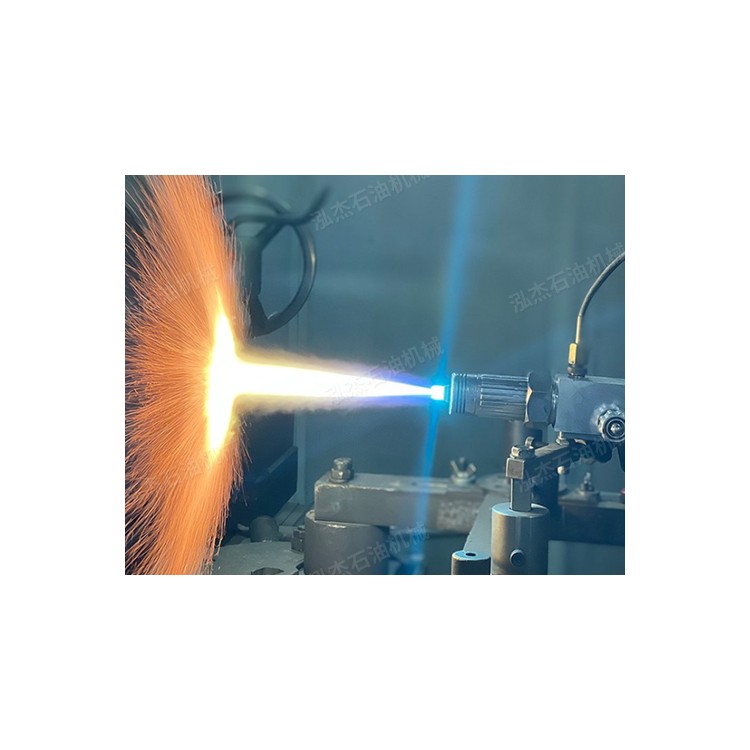


Supersonic Flame SprayIt is a high-temperature, high-speed flame jet formed by the combustion of hydrocarbon gases with high oxygen in a combustion chamber or specialized nozzle, with a flame flow velocity of 5 Mach (1,500 meters per second). Supersonic flame rates are high, yet the temperatures are extremely low.
SupersonicFlame SprayIt is a novel thermal spraying technology invented by Braun in the United States in 1981. The core of the High Velocity Oxygen Fuel (HVOF) spraying equipment is the spray gun, which consists of three parts: the combustion chamber (for fully heating and accelerating the sprayed material particles), the Laval nozzle (for accelerating the flame flow to supersonic speed), and the isometric long nozzle (for fully heating and accelerating the sprayed material particles).
For WC-Co hard alloy, effective control over the decomposition of tungsten carbide during the coating process is achieved. The coating boasts high bonding strength, excellent density, and superior wear resistance. Its wear resistance is significantly greater thanPlasma SprayCoating, equivalent to explosion-sprayed coating, also exceeds electroplated hard chrome and spray熔 layers. Widely applicable.
Before flame spraying, it's essential to understand the actual conditions and technical requirements of the part to be coated, then analyze and determine the coating thickness. Generally, machining must be done after flame spraying, so the coating thickness must allow for machining allowances and also consider thermal expansion and contraction during spraying. Measurement of the coating material. The selection criteria are that the coating material should meet the material, matching, technical, and working condition requirements of the coated part.
Select the bonding and work layer materials to determine parameters: pressure, powder particle size, and corresponding movement speed within the components. Supersonic flame spraying with low oxygen content and suitable temperatures, high flame velocity, can reasonably prevent the oxidation and decomposition of powder coatings, making it particularly suitable for spraying high-wear-resistant carbonized coatings.

