
公司主营:
13724521715

Product Center
Company Qualification
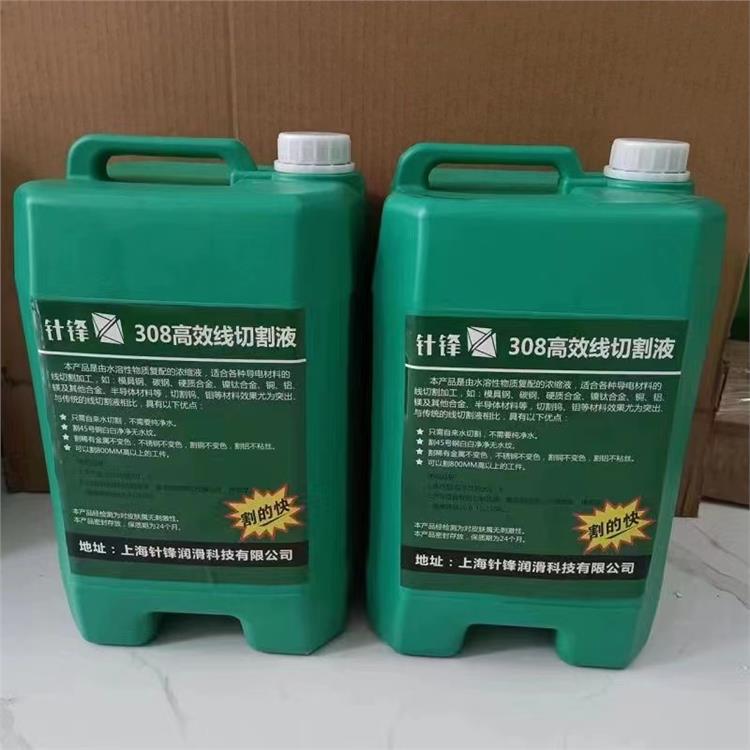
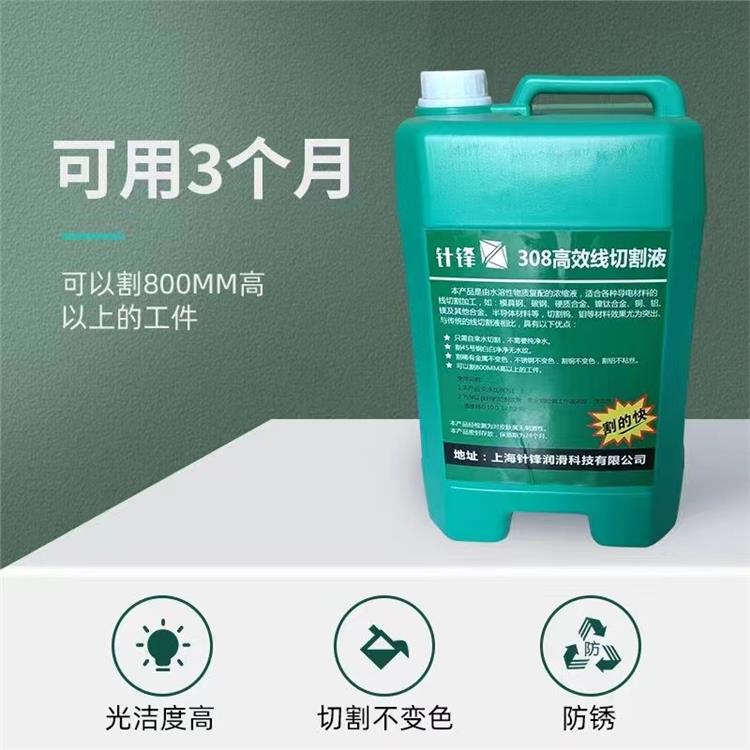
Xiangxi Cutting Concentrate, Wire EDM Accessories Wholesale, Odorless, Rustproof

Details Introduction
The cutting fluid used should have good stability, not producing sedimentation, stratification, oil separation, soap separation, or aging during storage and use. It should have some resistance to bacteria and mold, preventing mildew and biological degradation that could lead to odor and spoilage. It should not damage painted parts, be harmless to humans, and have no odor. It should produce minimal or little mist during use, be easy to recycle, have low pollution, and the waste fluid should be simple to treat, meeting the specified industrial wastewater discharge standards after treatment.
Common cutting fluids used in metal cutting processes include: water-soluble, emulsion, and cutting oils.
Aqueous solution
The main components of the aqueous solution are water and certain additives. It boasts excellent cooling properties, along with good corrosion resistance and certain lubricating capabilities. The liquid is transparent, making it easy for operators to observe.
Emulsifying Liquid
Emulsified fluid is obtained by diluting emulsified oil with water. The emulsified oil is a mixture of mineral oil, emulsifier, and additives, which, after being diluted with 95% to 98% water, turns into a milky white or semi-transparent emulsion.
Cutting Oil
The primary component of cutting oil is mineral oil, with some also using animal or vegetable oils, or blended oils. Pure mineral oil cannot form a durable lubricating film on the friction interface, resulting in average lubrication performance. In practice, oiliness additives, anti-wear additives, and rust-proof additives are often added to enhance its lubricating and rust-proof properties.
A blend of oil-based and water-based cutting fluids, which forms an emulsion when water is added. It offers excellent lubrication and cooling properties, suitable for various processing needs. However, using soluble oil requires strict control of the dilution ratio and water quality to prevent corrosion and bacterial growth, ensuring the process's integrity and efficiency.
The use of cutting fluid: Generally diluted with tap water, typically used for general cutting and wire cutting with a concentration of 5-10% (diluted 10-20 times with water), and for grinding with a concentration of 3-4% (diluted with more than 2 times water).
Selecting the appropriate cutting fluid is crucial for ensuring quality and precision in machining. Different materials require different cutting fluid needs. For lightweight metals like aluminum: due to their tendency to adhere and their soft nature, it's recommended to use water-based cutting fluids with high cooling capacity and low viscosity. This type of cutting fluid effectively prevents chip accumulation and reduces friction during the machining process, thus preventing overheating and ensuring the smoothness of the machined surface.
The measurement of cutting fluid lubrication efficiency requires the use of a machine tool dynamometer. During the cutting process, the lubricating action of the cutting fluid reduces the feed force and cutting force. The lubrication efficiency of the cutting fluid can be calculated by determining the force changes. The cutting force increases with the increase in feed rate and decreases with the improvement of the cutting fluid's lubrication efficiency. If a constant feed force is applied, the higher the lubrication efficiency of the cutting fluid, the greater the feed rate. This testing equipment is highly sensitive to the friction changes between chips, but a separate device is needed to ensure a constant feed force applied to the chips.
季经理 (Mr.)
13724521715
13724521715
13724521715@139.com
88 Jianghai Road, Huangjiang Town, Huangjiang, Room 118
b2b.china9.net © Zhongshang 114 Hebei Network Technology Co., Ltd.Address: Room 6009, Oriental New World Center, No.118 East Zhongshan Road, Qiaoxi District, Shijiazhuang City, Hebei ProvincePlatform Service Hotline: 4006299930
