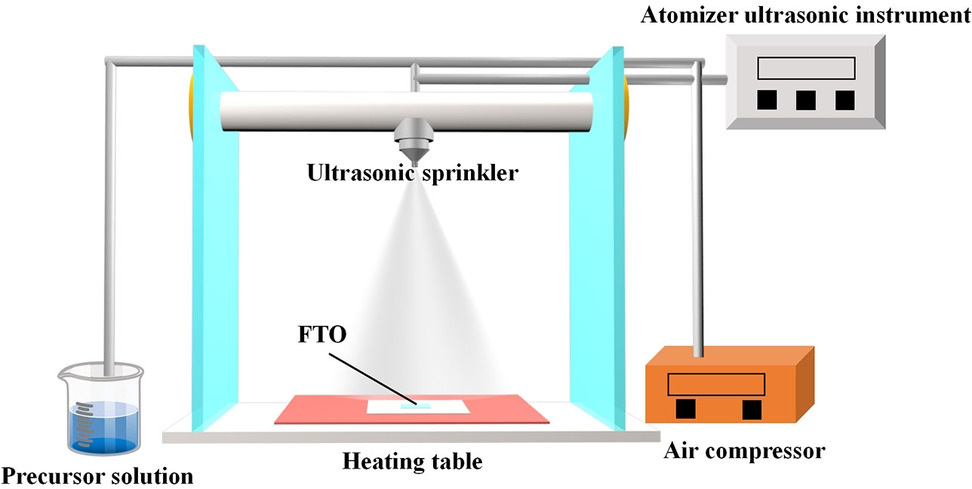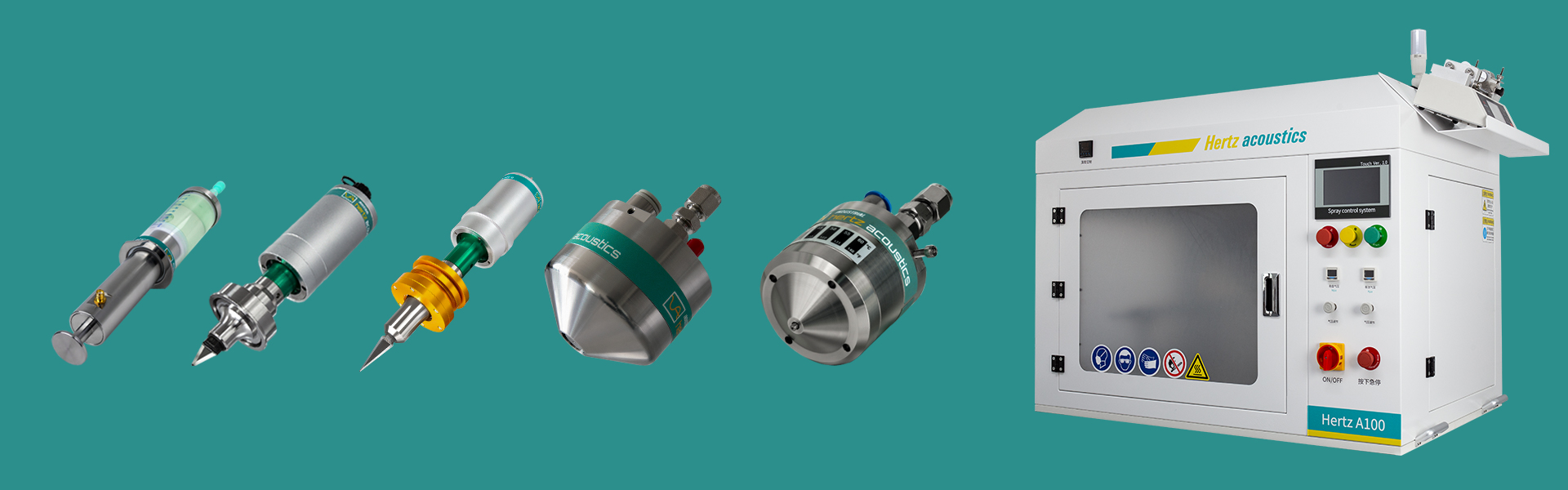

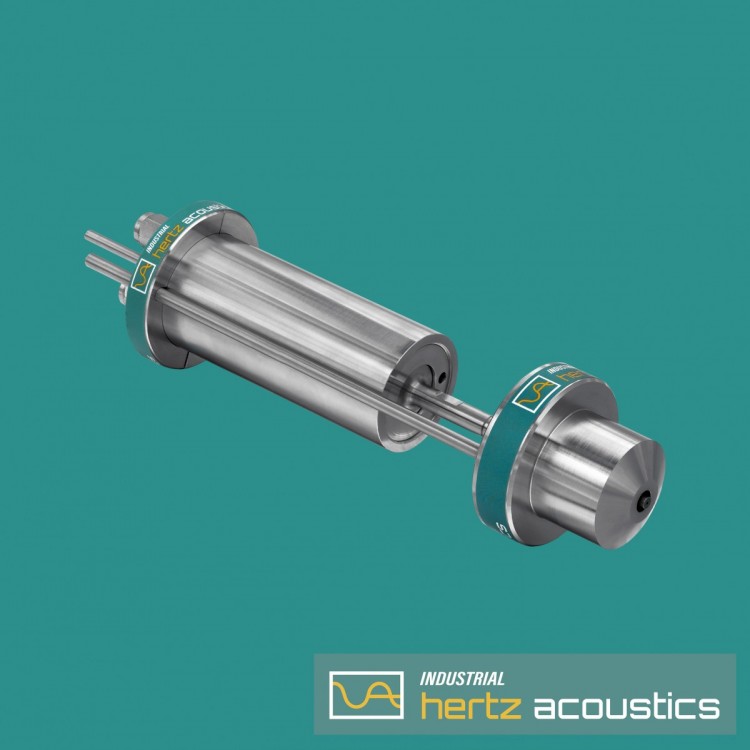

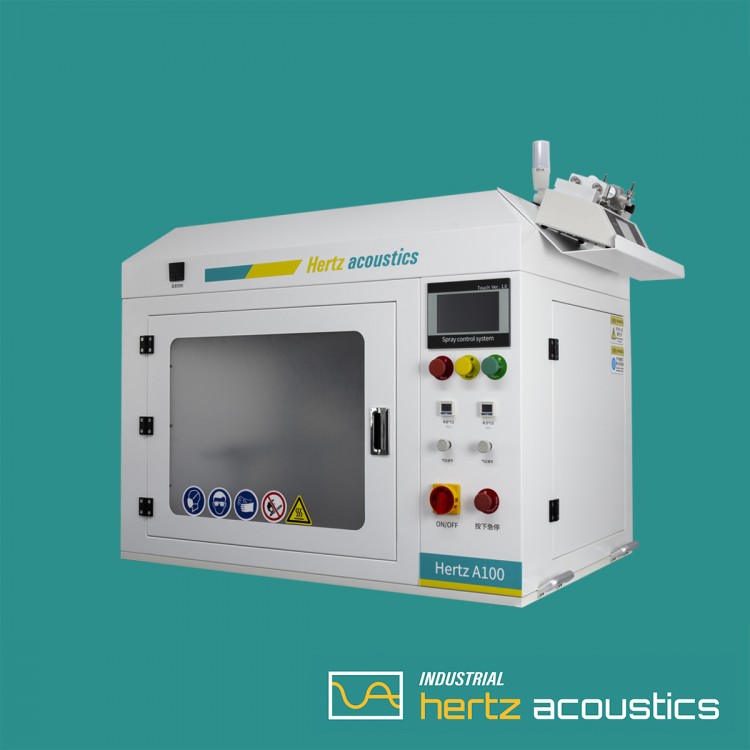
Ultrasonic pyrolysis nebulization is a technique that employs an eddy current nozzle to disperse precursor solutions or suspensions into minute droplets. It utilizes the high-frequency vibration and cavitation effect of ultrasonic waves to achieve this process. Subsequently, these droplets undergo chemical decomposition at high temperatures, forming fine powders or films. This technology is an essential method for synthesizing nanomaterials and coating films and substrates, characterized by its high efficiency, flexibility, and innovation. The nozzle can be used in an environment with a temperature of up to 600 degrees Celsius.
The working principle of the ultrasonic pyrolysis spray is to utilize the cavitation effect of ultrasound to vibrate the precursor solution or suspension through the orifice of the nozzle, forming uniform droplets. These droplets are then sent into a heated furnace via air flow, where they undergo chemical decomposition at high temperatures to form fine powder. The ultrasonic pyrolysis spray can control the particle size and distribution of the powder, generally between 10-100nm, and adjust parameters such as the composition, concentration, and viscosity of the precursor solution to influence the product's performance.
Ultrasonic pyrolysis spray technology has been widely applied in various fields such as optoelectronics, catalysis, energy, and environment. For instance, it can produce CdS sensitized ZnO thin films for quantum dot sensitized solar cells, LiFePO4 cathode materials for lithium-ion batteries, and SnO2 nanoflowers for gas sensors. Ultrasonic pyrolysis spray technology is an efficient, flexible, and innovative method for nanomaterial synthesis and thin film coating, with great research and development potential.