
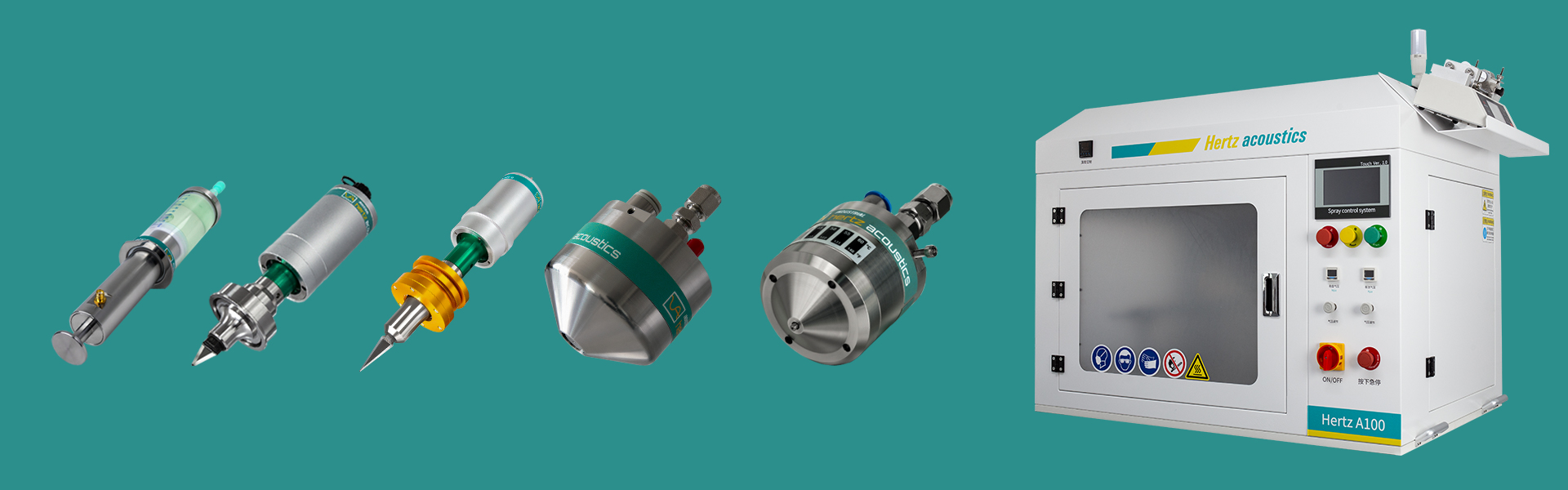


Ultrasonic spray drying is a technique that involves atomizing a liquid substance and then rapidly evaporating moisture or solvent using hot air or other drying mediums to produce spherical powder particles. This method is suitable for drying treatments of various thermosensitive, high molecular weight, biological, and nanomaterials. The drying temperature typically ranges from 100°C to 300°C, depending on the properties of the liquid substance and the type of drying medium.
This technology's advantages lie in its ability to produce extremely uniform and finely divided powder particles. These particles can reach the nanoscale in diameter, with shapes close to spherical, thereby enhancing the powder's performance. Additionally, it effectively protects thermally sensitive materials, preventing loss of activity or chemical changes due to high temperatures. Furthermore, it boosts processing capacity, accelerates evaporation rates, and reduces energy consumption and costs. Moreover, it minimizes the risk of nozzle clogging, enhancing the equipment's stability and reliability.
It boasts extensive application prospects in fields such as nanomaterials, fine chemicals, and biology, including: producing nanometer-scale metal oxides, carbon nanotubes, graphene, quantum dots, etc., for batteries, catalysts, sensors, and optoelectronic devices; and manufacturing special-functional polymers, proteins, enzymes, and antibodies, for drug delivery, biological diagnosis, and tissue engineering.

