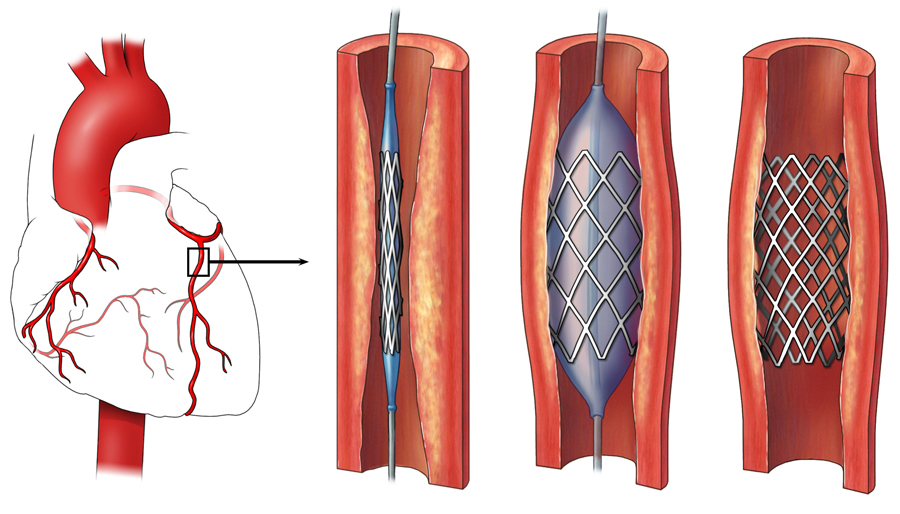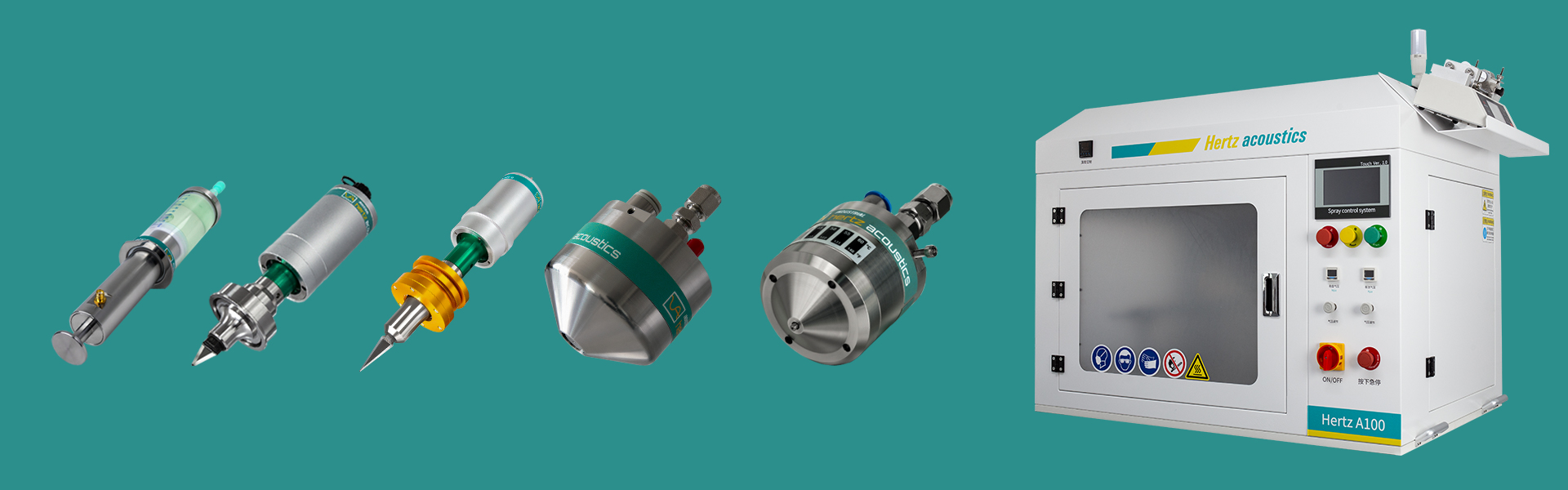

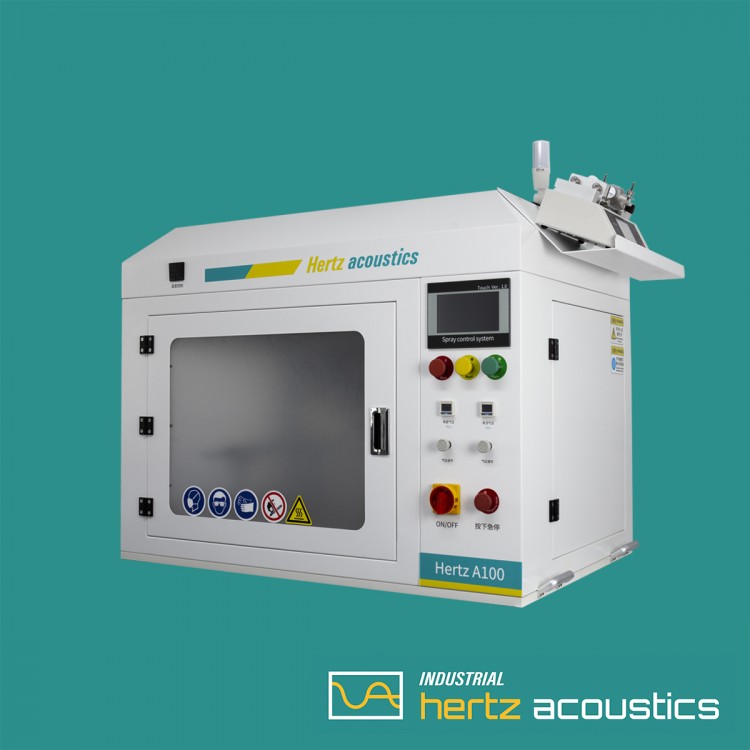
Balloon angioplasty with stent implantation is a widely accepted technique in the treatment of arterial diseases. To prevent the stent from being attacked by the human immune system, leading to re-occlusion of the artery, the stent surface must be coated. This is a challenging coating application as it has stringent requirements for the production process. Ultrasonic nozzles are a suitable device for this application, as they can produce very low flow rates, precise spray patterns, slow conveyance, and relatively small droplets.
Balloon angioplasty and stent implantation into arteries have become an accepted technique, especially for vessels involving stenosis or partial blockages. Stent implantation is a non-invasive curative method that uses a mesh-like tubular structure to expand arteries, suitable for vessels with stenosis or partial blockages. Stents are typically laser-cut from metals like stainless steel or nickel-titanium alloys. However, bare metal stents can be attacked by the human immune system, leading to the formation of cell clusters around the stent, which can cause the artery to become blocked again. This condition is known as "restenosis," occurring in approximately 25% of cases.
The operating requirements for this application are a flow rate of around 20-100 μl/min, with a spray diameter between 1-2 mm, and the median droplet diameter is extremely small. The ultrasonic nozzle can meet these requirements.
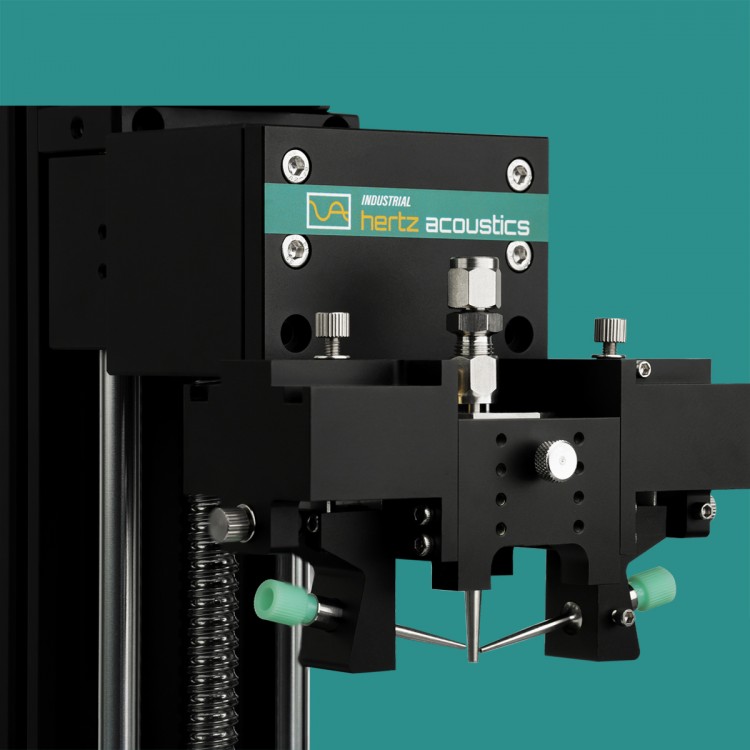
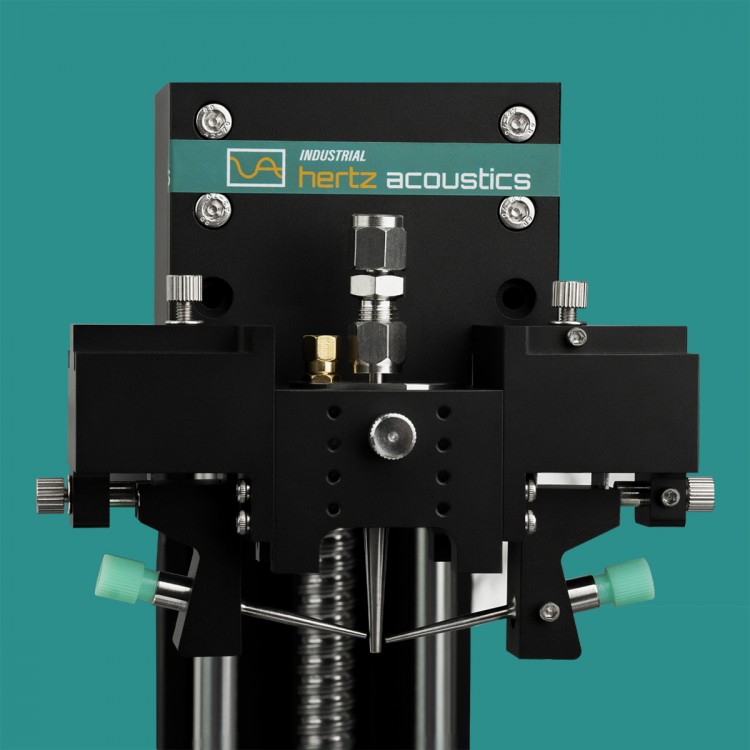
The bracket is placed on the mandrel connected to the rotating shaft. The nozzle is mounted above the bracket. The shaft can not only rotate but also translate, allowing the bracket to spray along its entire length. Usually, multiple lateral translations are required to achieve the appropriate coating quality.