


The primary advantages of the dynamic compaction method include: wide applicability, significant reinforcement effects, large effective reinforcement depth, simple construction equipment, material savings, cost savings, and environmental friendliness.
(1) Scope: Compaction method can be used to reinforce various sandy soils, silt, general clay, loess, and artificial fill. It is particularly suitable for reinforcing large stone soil that is difficult to reinforce by general methods, as well as mixed fill soil composed of shallow, domestic waste, or industrial waste. The replacement method can also be used to reinforce soft soil foundations.
(2) Enhanced Reinforcement Effect: After the foundation is treated with dynamic compaction, it can significantly improve the shear strength and bearing capacity of the soil, while reducing its compressibility.
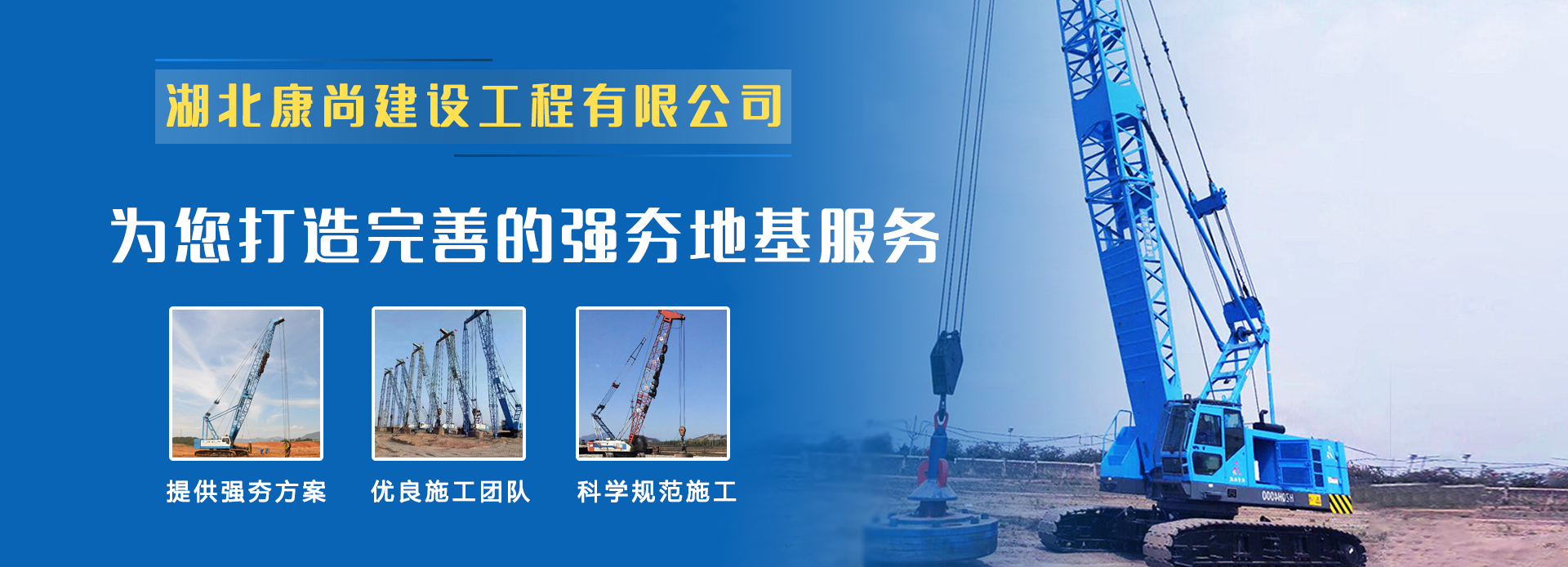
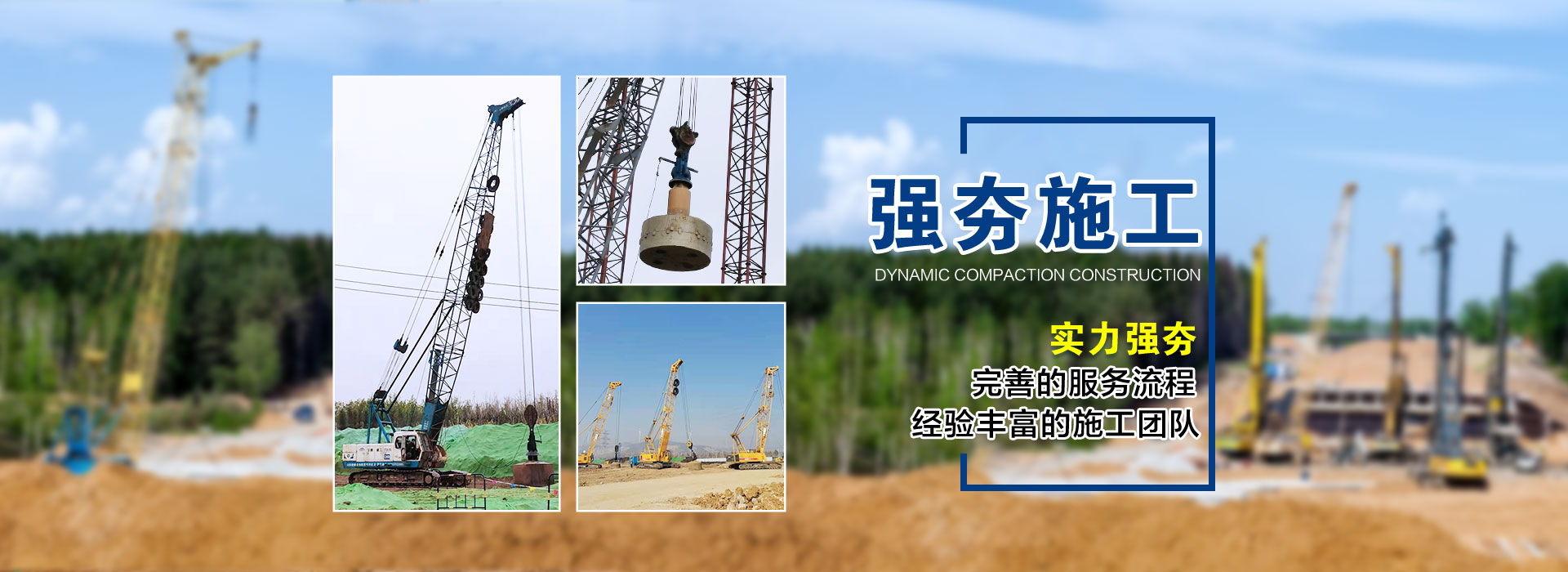
(3) Construction Equipment Simplicity: The main equipment for dynamic compaction is crawler cranes. Substitute dynamic compaction machines are used as needed, equipped with gantry frames and other facilities to enhance lifting capacity and stability.
(4) Material Savings: Compared to other ground treatment methods, the dynamic compaction method does not require steel, cement, and other construction materials, significantly reducing the consumption of construction materials.
(5) Cost Savings: The dynamic compaction method is cost-effective compared to commonly used ground treatment techniques, with a cost that is only 1/6 of CFG piles, 1/10 of mixed piles, and 1/2 of lime-soil piles.
(6) Eco-Friendly Construction: The compaction method does not consume high-energy-consuming materials such as steel and cement, nor does it pollute the surrounding environment. The main drawback of the compaction method is that it generates significant vibrations and noise during construction, which can affect the surrounding buildings and environment.
