

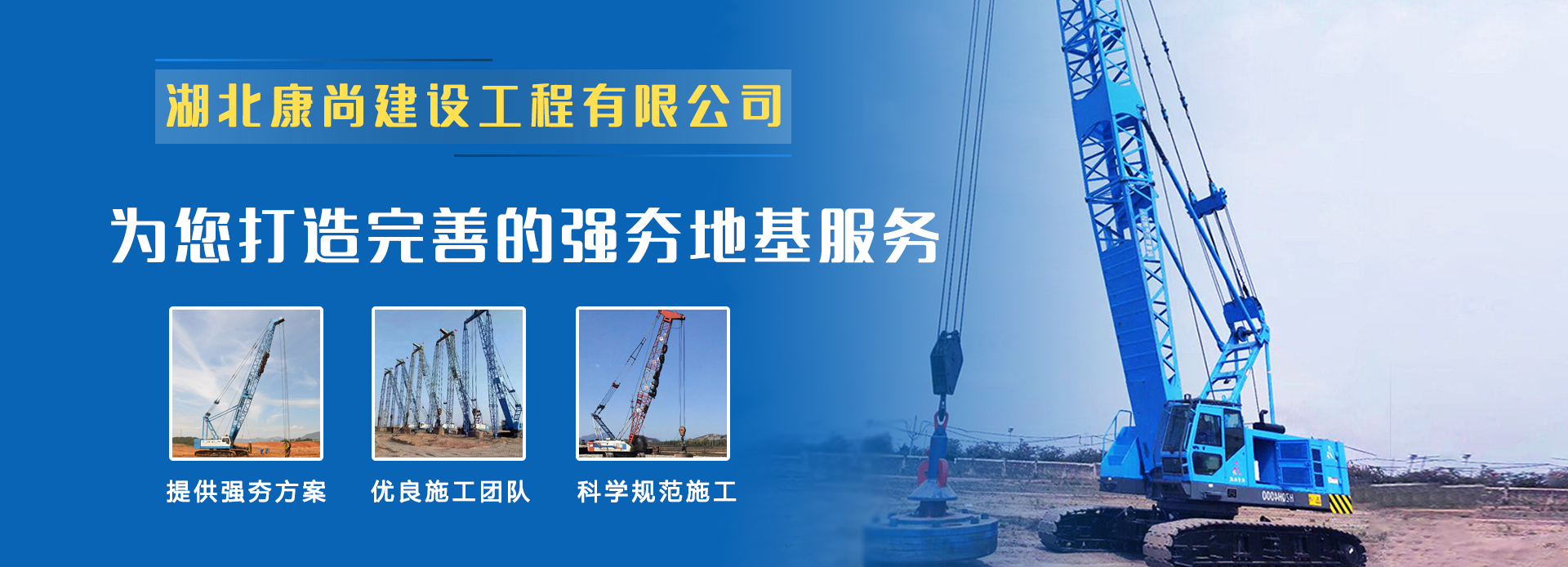

Soil treatment can enhance the properties of the subsoil used to support buildings, such as permeability, bearing capacity, and deformation characteristics. Due to the varying soil types, topography, and surrounding conditions in different regions, the properties of the original subsoil can differ significantly. Therefore, selecting the appropriate soil treatment method is crucial for construction. There are eight common types of poor subsoil, including soft soil, fill soil, alluvial soil, saturated loose sand, collapsible loess, expansive soil, organic matter-rich soil, and expansive soil. Among them, various poor subsoils such as soft soil, collapsible loess, fill soil, and sand are suitable for the adoption of soil treatment methods.Compaction EngineeringProcessing.
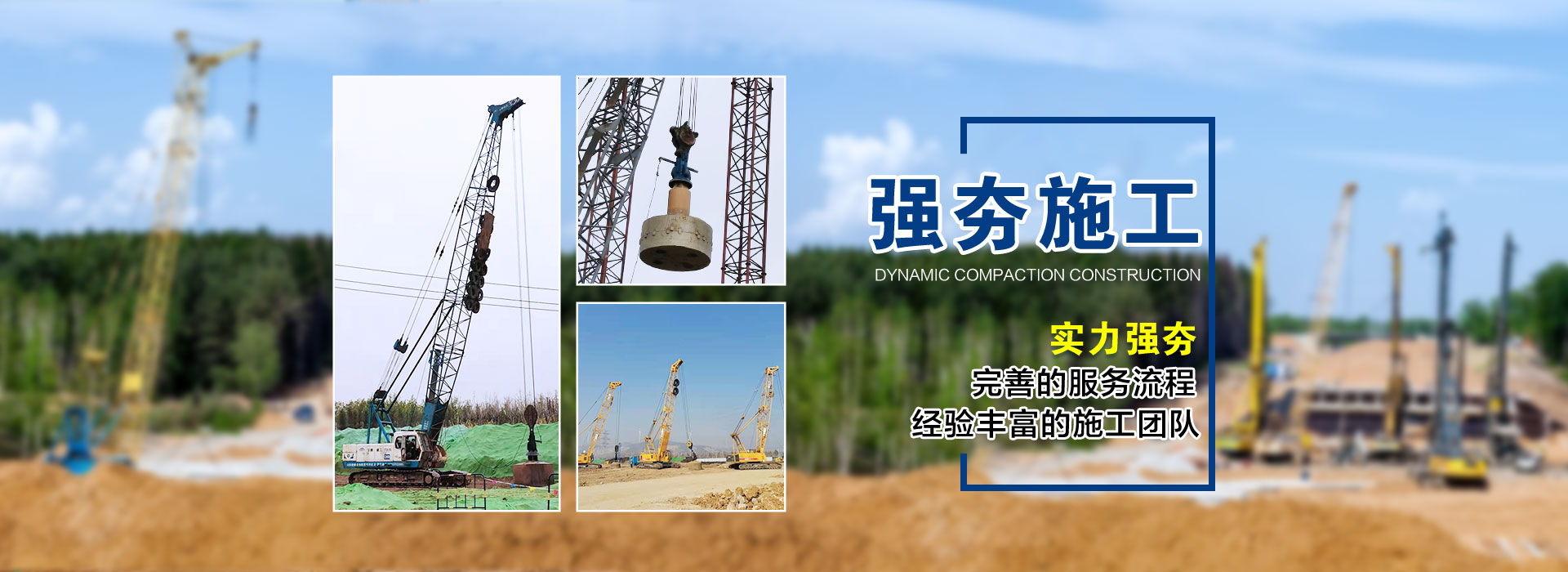
The method of using dynamic compaction to reinforce soft foundations involves the free-fall of heavy hammers to compact the ground, which has gained increasing popularity in recent years. For instance, with the treatment of granular fill (uneven fill material with low density and compressibility), the use of dynamic compaction for reinforcing granular fill foundations has been widely reported and utilized. After long-term verification, it has long become the mainstream technology for dealing with granular fill foundations. Our country's soft soil foundations are widely distributed in the southern coastal areas, characterized by thixotropy and overall unevenness. They are prone to deformation and settlement when subjected to external forces or loads. Dynamic compaction of the foundation can achieve over 80% of the actual settlement, ensuring good stability.
Another major feature of the dynamic compaction engineering is its low cost and economic practicality. The dynamic compaction method does not require the introduction of other building materials, and no wastewater is generated during the construction process. Compared to many地基 treatment methods that require additional purchase of building materials, it offers cost advantages, especially suitable for large-area foundation treatment. Additionally, the foundation treated by dynamic compaction, due to its higher density, can also reduce heat conduction downward within the building, making the overall structure more energy-efficient in some cases.
As industrial technology continues to advance, the use of the dynamic compaction method is gradually being combined with other techniques, such as the dynamic compaction replacement method (compacting out soft soil and backfilling with gravel and other granular fillers). This expands the application of related technologies in situations where the original dynamic compaction method is not applicable. The foundation is the cornerstone of building safety; it is crucial to verify meticulously.Hubei Kangshang Construction Engineering Co., Ltd.The possession of the necessary qualifications is also a vital condition for ensuring construction quality.
