
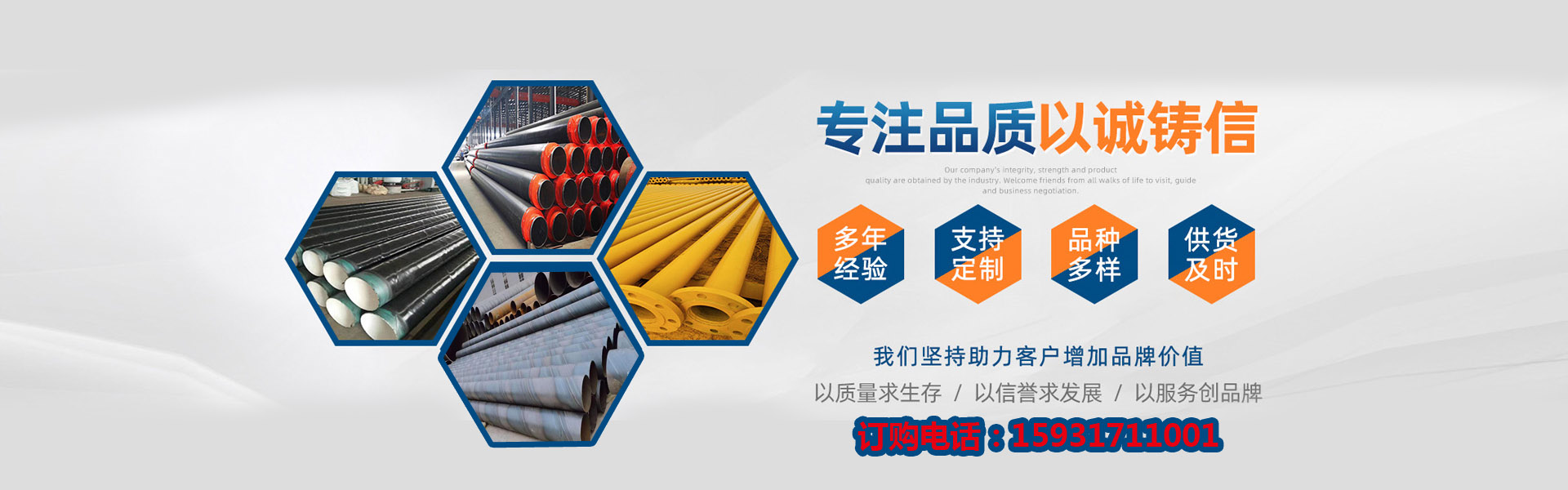
"Thermal Insulation Steel Pipe" is a type of steel pipe that is formed after undergoing thermal insulation processing. Below, we will provide a detailed introduction to the classifications of thermal insulation steel pipes and other related information. We hope that through our introduction, you can gain a thorough and detailed understanding of thermal insulation steel pipes, which will also facilitate your selection and purchase.

Category of Insulated Steel Pipes
1、Steel-clad steel composite thermal insulation pipe
Introducing the specific classifications of insulation pipes. Firstly, we must discuss the steel-clad steel composite insulation pipe, a type of pipeline that can be buried underground. It can be used without concrete, thereby reducing material costs and shortening construction time. The steel-clad steel composite insulation pipe can be categorized into internal sliding and external sliding based on the sliding form of the insulation structure.
The structure of this internally sliding pipe primarily consists of steel pipes for conveying media, outer steel pipes, composite silicate, or microporous calcium silicate, along with hard polyurethane foam plastic and glass fiber reinforced plastic for anti-corrosion protection, among others. This internally sliding thermal insulation pipe is highly reliable in various thermal treatment technologies. This is mainly due to its insulation structure, which includes a drag-reduction layer, an insulation layer, outer steel pipes, an external anti-corrosion layer, and an aluminum foil reflective layer.
The sliding-insulated steel pipe structure primarily consists of the inner steel pipe, zinc-rich primer, sliding guide brackets, high-temperature-resistant glass wool, outer steel pipe, air-insulating layer, aluminum foil reflective layer, and anti-corrosion coating for the outer steel pipe.
2、Polyurethane Insulation Steel Pipe
Next up, we introduce polyurethane-insulated steel pipes, which offer several advantages: they can reduce construction costs; they have low thermal loss, ensuring energy savings; the third advantage is their good corrosion resistance and insulation properties; plus, they have a long service life.
Section II: Application of Insulation Pipelines
Thermal insulation steel pipes are ideal for use within a temperature range of -50℃ to 150℃, and their applications are quite extensive. They can be utilized in central heating and cooling systems, cold storage facilities, coal mines, and petrochemical industries, among others.
Regarding the classification and applications of insulation pipes, our editor will introduce them briefly for now. For more information, please visit Hebei Tongtuo Pipeline Equipment Co., Ltd.'s website.
