

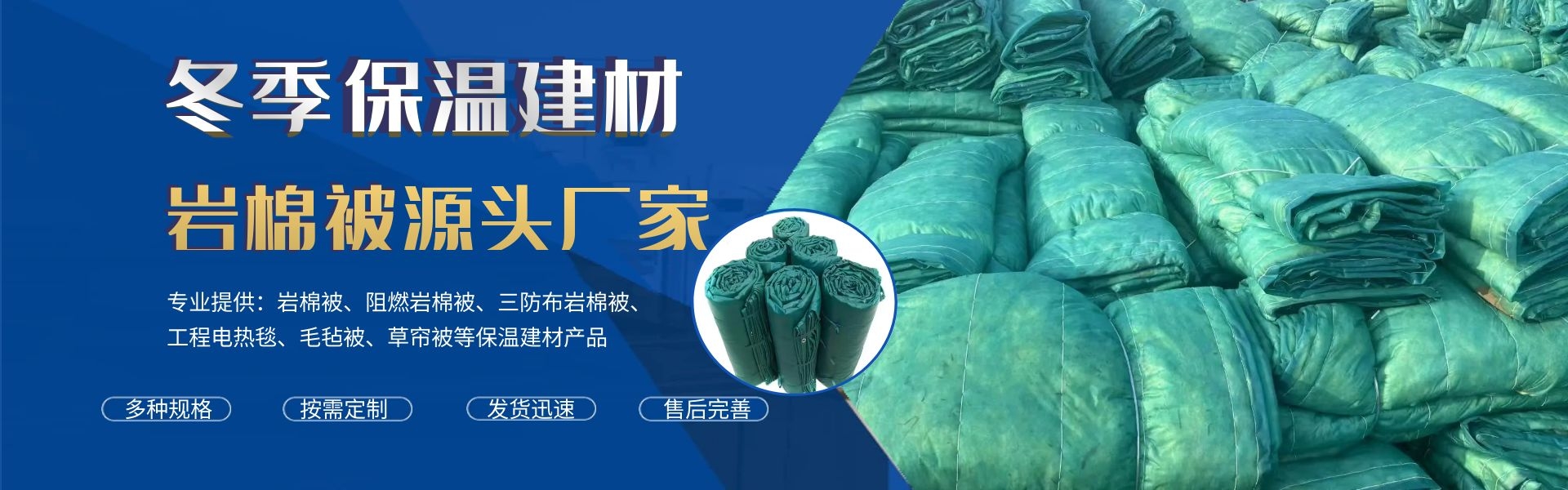

Fire-retardant thermal insulation blankets are made by filling flame-retardant fabrics with inorganic thermal insulation materials such as rock wool, glass wool, and aluminum silicate. Their primary uses are to keep warm during winter or to insulate against heat during summer. They can be divided into two main types: one for engineering applications, such as rock wool blankets and aluminum silicate thermal insulation blankets, and another for domestic use, with glass wool thermal insulation blankets being a typical example. Their main purpose is for greenhouse insulation or heat preservation. The distinction between the two lies in the choice of fabric. Those used on construction sites place greater emphasis on flame-retardant and thermal insulation properties, with less strict requirements for waterproofing, as they are typically used during winter construction in dry environments. The focus is more on affordability. Conversely, domestic blankets require high-quality fabrics that can withstand exposure to wind, sun, and fire, as well as offer waterproofing, sun protection, and abrasion resistance.
News Center Co., Ltd.
