
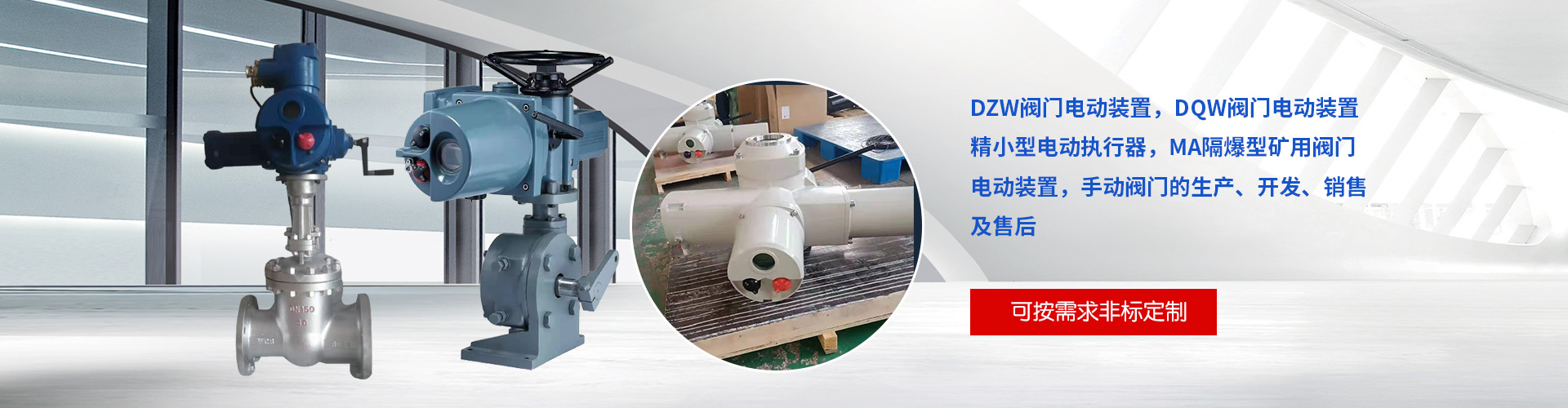

Installation Details for Electric Valves
Electric valve actuators have a higher torque-to-force ratio than standard valves. The switching speed of electric valves can be adjusted, with a simple structure and easy maintenance. During operation, due to the cushioning properties of the gas itself, they are less prone to damage from sticking. However, they require a gas source, and their control systems are also more complex. Such valves should typically be installed horizontally in pipelines.
Electromagnetic valve actuators are indispensable for the programmable, automatic, and remote control of valves, as their movement can be controlled by the stroke, torque, or axial thrust. Since the working characteristics and utilization of electromagnetic valve actuators depend on the type of valve, the operational specifications of the device, and the position of the valve on the pipeline or equipment, the correct selection of the actuator is crucial to prevent overloading phenomena (working torque exceeding control torque). Typically, the criteria for selecting the appropriate electromagnetic valve actuator are as follows:
Torque Requirement: Torque is the most critical parameter when selecting an electric valve actuator. The output torque of the electric actuator should be 1.2 to 1.5 times the maximum torque required for valve operation.
The main structure of the drive force electric valve actuator has two types: one without a thrust plate, which directly outputs torque; the other with a thrust plate, where the torque is converted into output thrust through the valve stem nut in the thrust plate.
The number of rotations of the output shaft for an electric valve actuator is related to the nominal bore size of the valve, the screw pitch of the valve stem, and the number of threads. It should be calculated using the formula M = H/ZS (where M is the total number of rotations the electric device should meet, H is the valve lift height, S is the pitch of the valve stem drive screw thread, and Z is the number of threads on the valve stem).
For multi-reversing lift-valve gates with rod diameter, if the maximum rod diameter that the electric device allows cannot pass through the valve rod of the matched gate, it cannot be assembled into an electric valve. Therefore, the inner diameter of the hollow output shaft of the electric device must be larger than the outer diameter of the lift-valve rod. For part-turn valves and blind rod gates in multi-reversing valves, although the rod diameter pass-through issue does not need to be considered, it is still important to carefully consider the rod diameter and keyway size when selecting, to ensure proper assembly and operation.
If the opening and closing speed of the output speed valve is too fast, water hammer phenomena may occur. Therefore, the appropriate opening and closing speed should be selected based on different operating conditions.
Electromagnetic valve assemblies have specific requirements, such as the ability to limit torque or axial force. Typically, electromagnetic valve assemblies use torque-limiting couplings. Once the specifications of the electric unit are determined, so is its control torque. They usually operate within predetermined time frames without overloading the motor. However, the following situations can lead to overloading: 1) low power supply voltage, resulting in insufficient torque and causing the motor to stop rotating; 2) incorrectly setting the torque-limiting mechanism, allowing it to exceed the stop torque, leading to continuous generation of excessive torque and motor shutdown; 3) intermittent use causing heat buildup exceeding the motor's allowable temperature rise; 4) a circuit fault in the torque-limiting mechanism due to some reason, leading to excessive torque; 5) operation in an excessively high ambient temperature, which reduces the motor's heat capacity.
In the past, methods to protect motors included fuses, overcurrent relays, thermal relays, thermostats, and the like, each with its own advantages and disadvantages. For variable load equipment such as electric motors, there is no absolutely reliable protection method. Therefore, various combinations must be employed, which can be summarized into two main approaches: one is to judge the increase or decrease of the motor's input current; the other is to assess the motor's own heating condition. Either way, the motor's thermal capacity and the given time margin must be considered.
Typically, the basic protection methods for overload are: using thermostats for overload protection during continuous or intermittent operation of the motor; employing thermal relays for protection against motor stalling; and using fuses or overcurrent relays for short-circuit accidents.
