

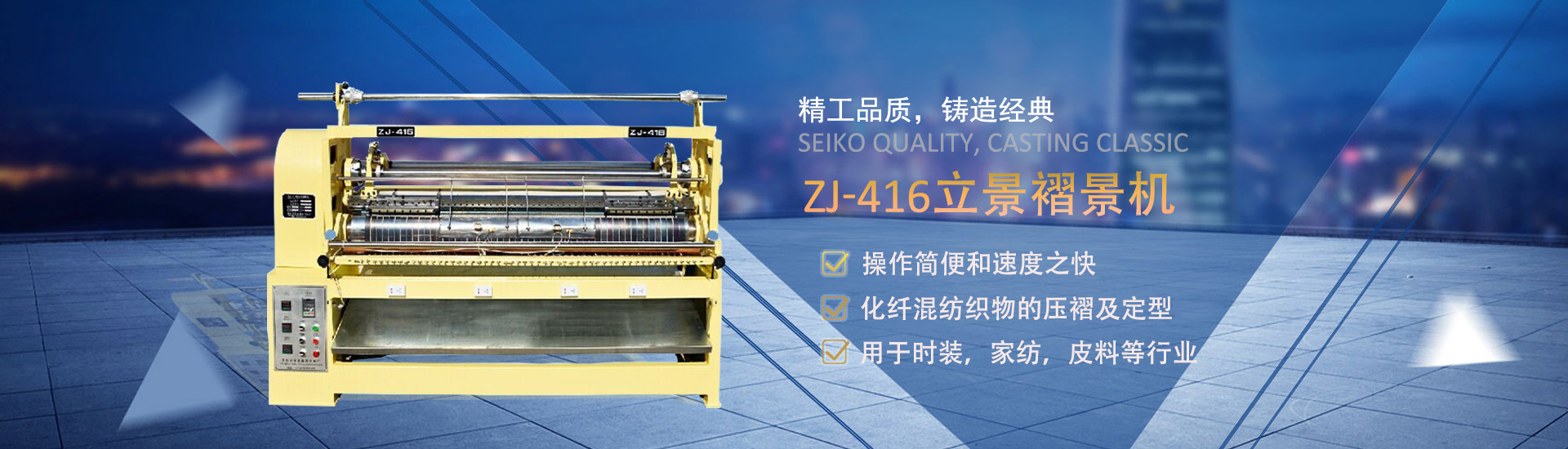




The warp knitting machine is a commonly used piece of machinery in the textile industry, playing a significant role. The warp knitting machine is mainly composed of the weaving mechanism, combing and shifting mechanism, warp feeding mechanism, drawing and winding mechanism, and transmission mechanism. Below, we will provide a detailed introduction to this machine.
The weaving mechanism includes the needle bed, reed, sinker bed, and pressing board, which are typically driven by cams or eccentric rods. Cams are commonly used in low-speed applications where the movement of the weaving components is more complex. Eccentric rods are favored for their smooth operation, ease of manufacturing, and reduced wear and noise at high speeds, making them widely used in such applications.
The combing shifting mechanism allows the comb to shift horizontally during the looping process according to the requirements of the knitted fabric structure, placing the weft yarn on the needle for weaving a structured knitted fabric. There are typically two types: the board type and the cam type. The board type mechanism connects the boards, shaped and sized according to the knitted fabric structure, into a chain to enable the comb to shift horizontally, suitable for weaving complex patterns with easy pattern changes. In the cam type mechanism, the cam is designed according to the required pattern of the comb's horizontal shift in the knitted fabric, providing smoother transmission and accommodating higher weaving speeds.
③ The warping mechanism, which unwinds the warp yarn from the warp beam and delivers it to the weaving area, comes in two types: negative and positive. In the negative type, the warp beam is pulled by the warp yarn tension and the yarn is delivered without a dedicated warp beam drive mechanism, making it suitable for slower machine speeds and more complex warping patterns on warp knitting machines. The positive type uses a special drive mechanism to rotate the warp beam and deliver the yarn, and it further differentiates into tension-sensing and line speed-sensing models. The tension-sensing mechanism controls the warp beam's speed by sensing the yarn tension through a tension rod. The line speed-sensing mechanism controls the warp beam's speed by sensing the yarn movement speed through a speed-measuring device. These mechanisms deliver the yarn at a predetermined line speed, allowing stable operation under high-speed conditions, and are thus widely used on high-speed warp knitting machines.
④ The function of the tension winding mechanism is to pull the fabric out of the weaving zone at a predetermined speed and wind it into a roll.
Each component of the warp knitting machine plays a unique role; without one, the machine cannot function properly. If a fault occurs during operation, we need to analyze the cause and then find the corresponding solution. We hope everyone will continue to follow our news updates.