
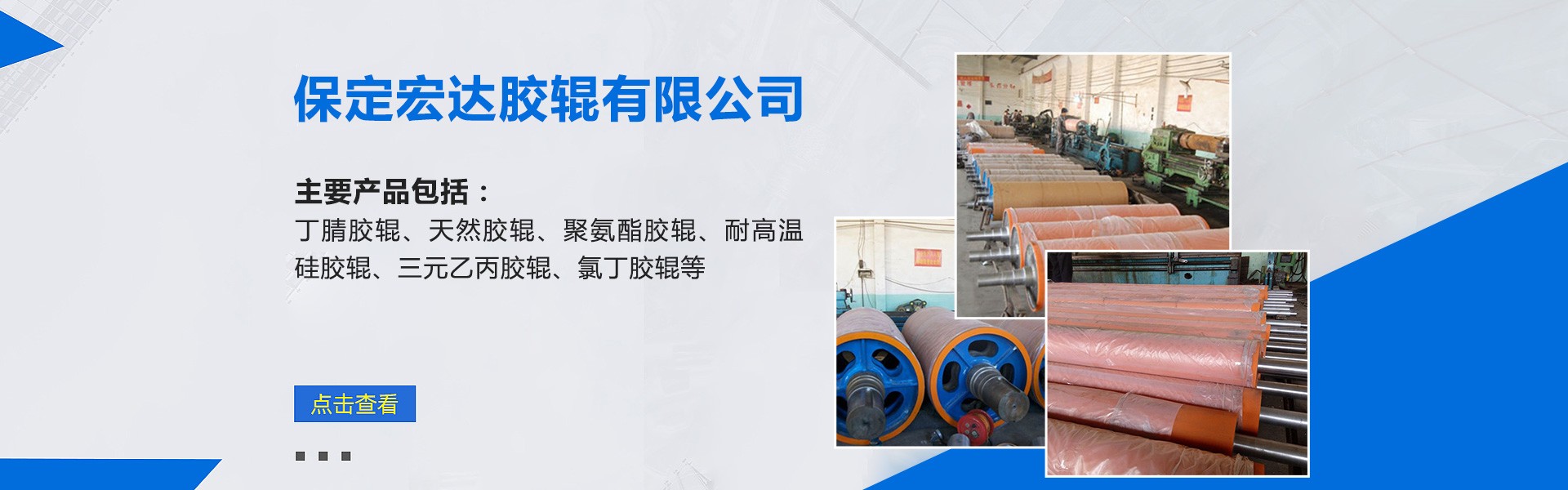


Rollers are an essential element in modern industry, which can be categorized according to different applications.
Rollers are typically composed of an outer rubber layer, a hard rubber layer, a metal core, roller neck, and ventilation holes. Their manufacturing process includes sandblasting the roller core, bonding treatment, rubber lamination, wrapping, wire winding, vulcanization in a curing tank, and surface finishing. The applications of rollers are extensive, covering papermaking, dyeing and printing, printing, grain processing, metallurgy, and plastic processing, making them an indispensable element in modern industry. According to their use, rollers can be categorized into papermaking rollers, dyeing and printing rollers, printing rollers, grain roller, metallurgical rollers, and oil printing rollers. In terms of surface texture, they can be flat rollers or patterned rollers. And based on material, they can be butyl rubber rollers, nitrile rubber rollers, polyurethane rollers, and silicone rubber rollers. Different types of rollers have distinct characteristics and application fields, which allows them to play a crucial role in their respective domains.
