
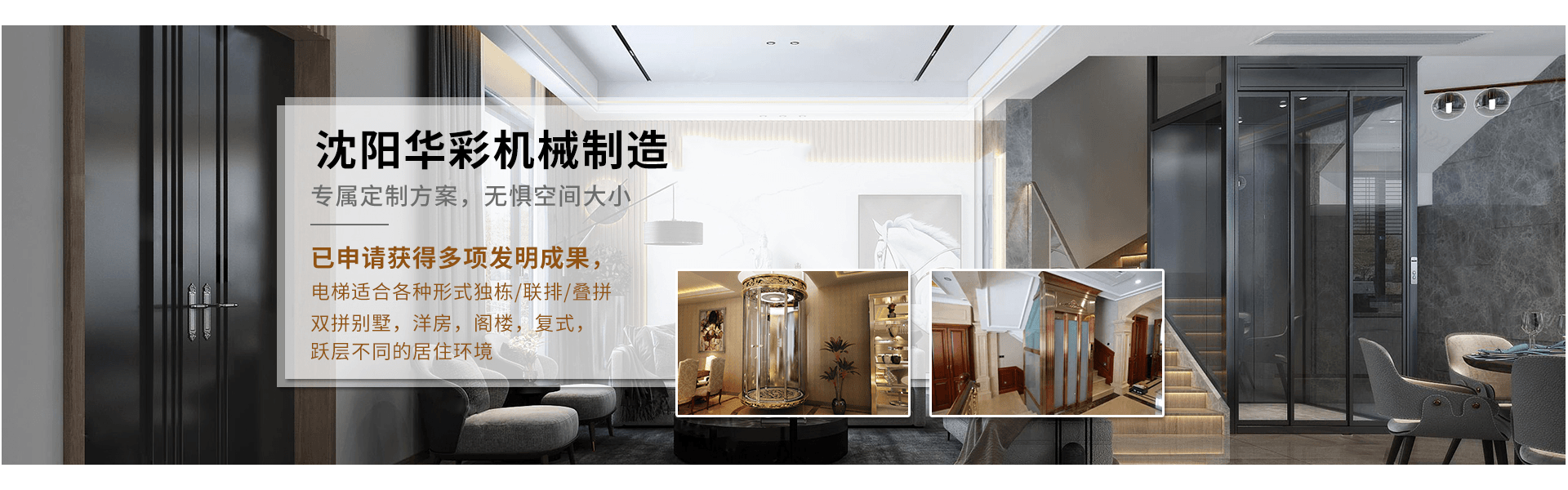

There is a common misconception that residential elevators are synonymous with mansion elevators. Over the past decade and a half, as villa clusters have emerged in various places, installing residential elevators in homes has shifted from a trend to a standard feature. Residential elevators have been labeled as "mansion + simple consumption." Elevator companies, when targeting this market, primarily focus on high-income individuals. Theoretically, the market space for residential elevators in China is far greater than this.
Recently, with the rapid growth of per capita GDP and the intensifying trend of aging population in China, more residential elevators will be installed in private homes. Elevators, like air conditioners and refrigerators, are "electrified." Ensuring the safety of residential elevators will be an important issue in the future. Elevator decor mainly includes stone, metal, wood, glass, and artificial materials. Decorative materials may contain radioactive elements that can be harmful to humans. Theoretically, the dilution of sulfite and its related decorative coatings have been in use for years. Elevator materials have evolved from black and white to color, styles from straight to slanted, with control systems ranging from button, signal, and selector controls to human-machine dialogue. Observation elevators are vertical lifts powered by electric motors, equipped with a box-shaped cabin for transporting people or goods in multi-story buildings. One or more sides of the shaft and cabin walls are made of transparent materials, allowing passengers to view the scenery outside the cabin while riding. They serve fixed elevators for regular floor levels and are mainly installed in hotels, shopping malls, and high-rise office buildings.
Elevator Decoration understands that the newly issued national residential elevator standards in 2008 have redefined the concept of residential elevators, specifying that they are intended for use by a single family member within a private residence. As a specialized type of elevator, residential elevators stand out from public elevator products due to their unique installation locations and service targets. For instance, residential elevators are considered dedicated equipment within private homes, viewed as private wealth. Many users prefer to maintain their privacy and decline regular maintenance inspections by service personnel.
In recent years, in the suburban areas of coastal and eastern cities experiencing economic prosperity, wealthy farmers have built rows of 3-5-story residential buildings on their own plots of land. After the buildings were completed, it was discovered that elderly family members or others with mobility issues found it difficult to climb the stairs, prompting the installation of elevators in these residential buildings, which has gradually become a trend. This trend is expected to continue spreading from the coastal and eastern regions to the central and western areas as the economy expands.
The safety concerns of residential elevators have become a focal point of public attention and discussion (figuratively, the crux of the matter). The elevator decor features parallel control and intelligent group control in multiple elevators, offering various functions and physical values. Based on established design criteria, the fundamental design direction is derived. Various stainless steel decorations and large non-standard metal structural components are the main focus. At the same time, users have very personalized demands for the decorative elements of residential elevators. These characteristics make residential elevators stand out with completely different characteristics in design, manufacturing, installation, and service.
