
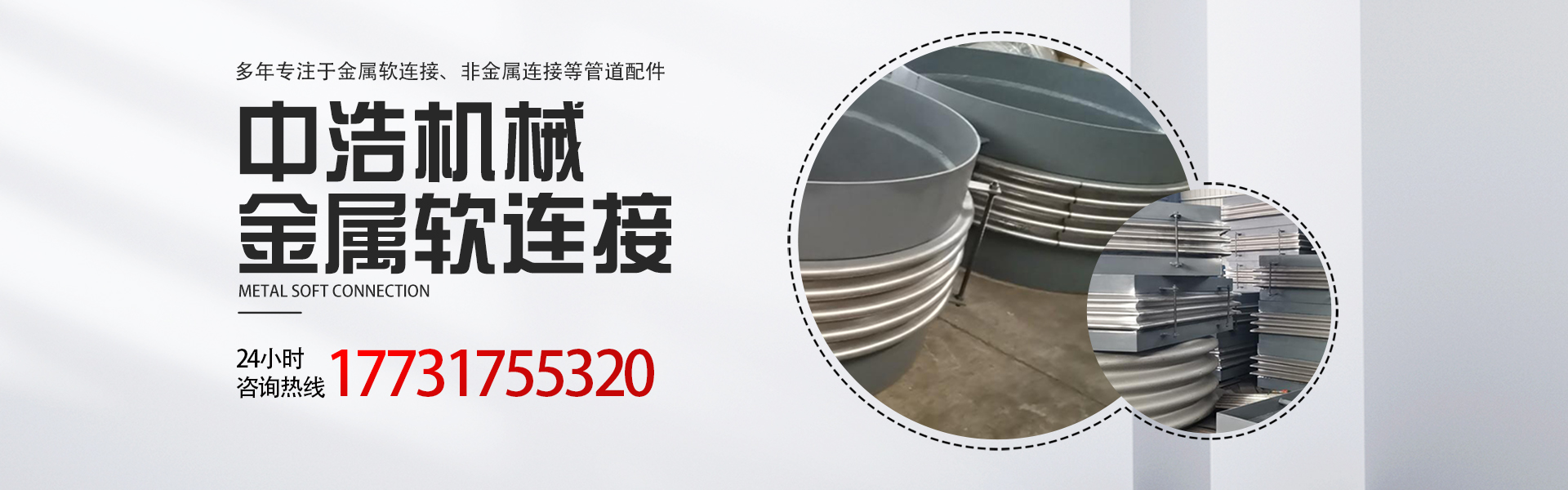


Non-metallic Expansion JointsOur compensators offer significant advantages over others, particularly in terms of large displacement compensation at high temperatures, and are cost-effective. They are generally composed of various non-metallic materials, including synthetic rubber, fiber fabrics, insulating materials, and fluoro plastics.
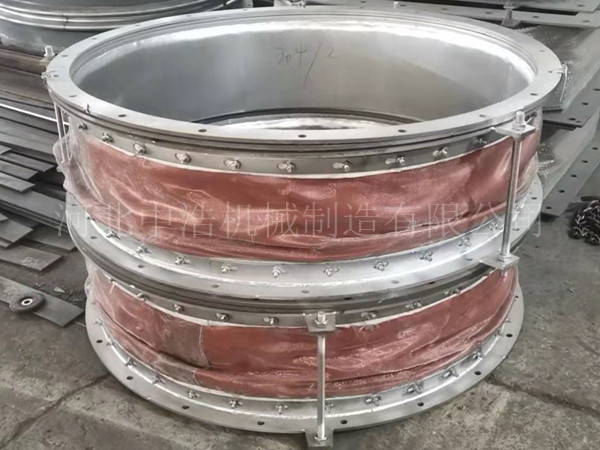
Non-metallic expansion joints are flexible connecting elements in pipeline or equipment systems that absorb thermal displacement to relieve stress, serving as shock and vibration absorption as well as compensating for pipeline installation errors. Generally composed of various materials such as annular belts and metallic structural components. According to the definition in the standard, non-metallic expansion joints generally refer to annular compensators; non-metallic compensators of the flexible rubber joint type are not included in this standard scope.
During the maintenance of a desulfurization flue gas non-metallic expansion joint, only the skin needs to be replaced if the metal frame is not damaged. Next, I will introduce the construction plan for the maintenance of the desulfurization flue gas non-metallic expansion joint.
1. Post-maintenance, cleaned the accumulated dust around the non-metallic expansion joints and the damaged skin at the bottom, as well as the transition between the new and old skins on both sides.
Remove the deflector plate from the non-metallic expansion joint.
3. After removing the loose dust from the metal frame of the non-metallic expansion joint, repairs were made to the corroded areas.
4. The fabric skin is installed with fluororubber, and the joints on both sides are securely bonded using high-temperature rubber adhesive.
5. Repeatedly tighten the securing screws.
Each layer of filling material requires sealing the adhesive layer until the gaps of the non-metallic expansion joint are filled even. The top layer is carefully leveled with acid-resistant adhesive, with a thickness controlled around 3mm.
7. All joints around the non-metallic expansion joints are sealed with acid-resistant adhesive for stable performance, with a thickness requirement of over 3mm.
8. Clear construction waste.
6 hours of maintenance required before use.
Regular maintenance of non-metallic expansion joints extends their service life. Upon shutdown, immediate inspection and prompt repair are conducted upon detection of any damage, ensuring convenience and avoiding frequent replacements of non-metallic expansion joints.
The above is a compilation by Zhonghao Editor.Non-metallic expansion jointInspection and maintenance construction plan, hoping it can be of help to everyone.
