




Difference Between Hot-Dip Galvanized Bridge Channels and Galvanized Bridge Channels
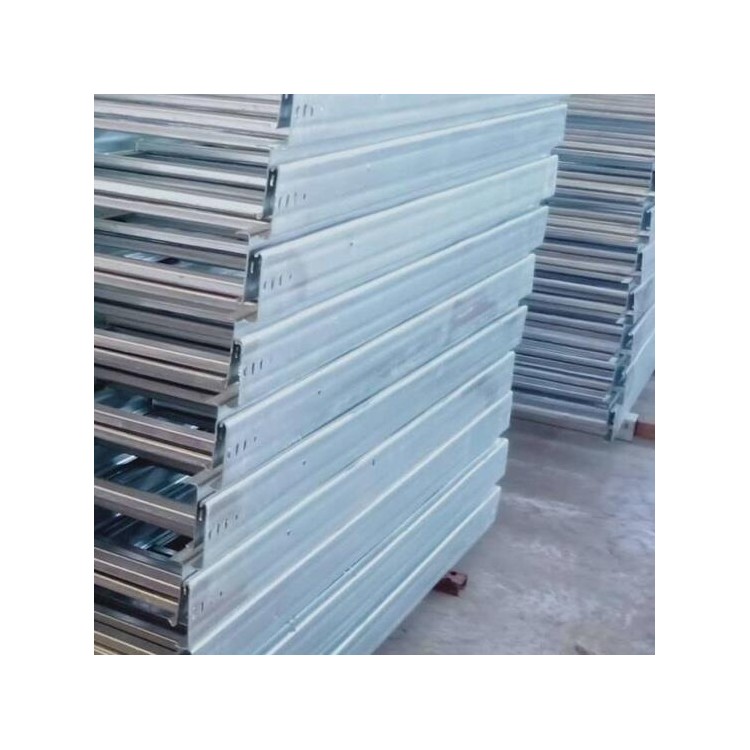
Hot-dip galvanized cable trays, also known as electro-galvanized cable trays, are made from cold-rolled steel, then passivated and dipped into a 600℃ molten zinc bath to coat the surface with zinc. The zinc layer on a 2.5mm thin plate must be at least 65μm thick, equivalent to a protective film covering the entire tray. Therefore, hot-dip galvanized cable trays, or electro-galvanized cable trays, are particularly resistant to corrosion, reducing maintenance and costs in corrosive environments such as chemical factories and coastal areas.
Galvanized steel cable trays, also known as hot-dip galvanized cable trays by some manufacturers, have a subtle difference in name from the hot-dip galvanized cable trays, which are essentially different.
Galvanized steel cable trays are made from hot-dip galvanized sheets (with a zinc coating of only 25μm) and no subsequent anti-corrosion treatment is applied. Step-type cable trays have a visually appealing appearance compared to hot-dip galvanized cable trays, but they have not been treated for corrosion resistance. Therefore, they are not suitable for outdoor use, chemical plants, seaside areas, or other corrosive environments. Not all hot-dip galvanizing is made from hot-dip galvanized sheets; the cable tray's manufacturing process should be considered.

Galvanized cable trays are protected by the zinc layer and do not rust due to the zinc's resistance to change in dry air. In humid air, a dense basic zinc carbonate film forms on the surface, effectively preventing internal corrosion. Moreover, when the coating on槽式 cable trays is damaged due to some cause, exposing a small steel base, zinc forms a microbattery with the steel base, making the steel base the cathode and protecting it. Therefore, for hot-dip galvanized cable trays with a zinc layer thickness of up to 65um that is not easily damaged, this significantly extends the lifespan of the trays.
