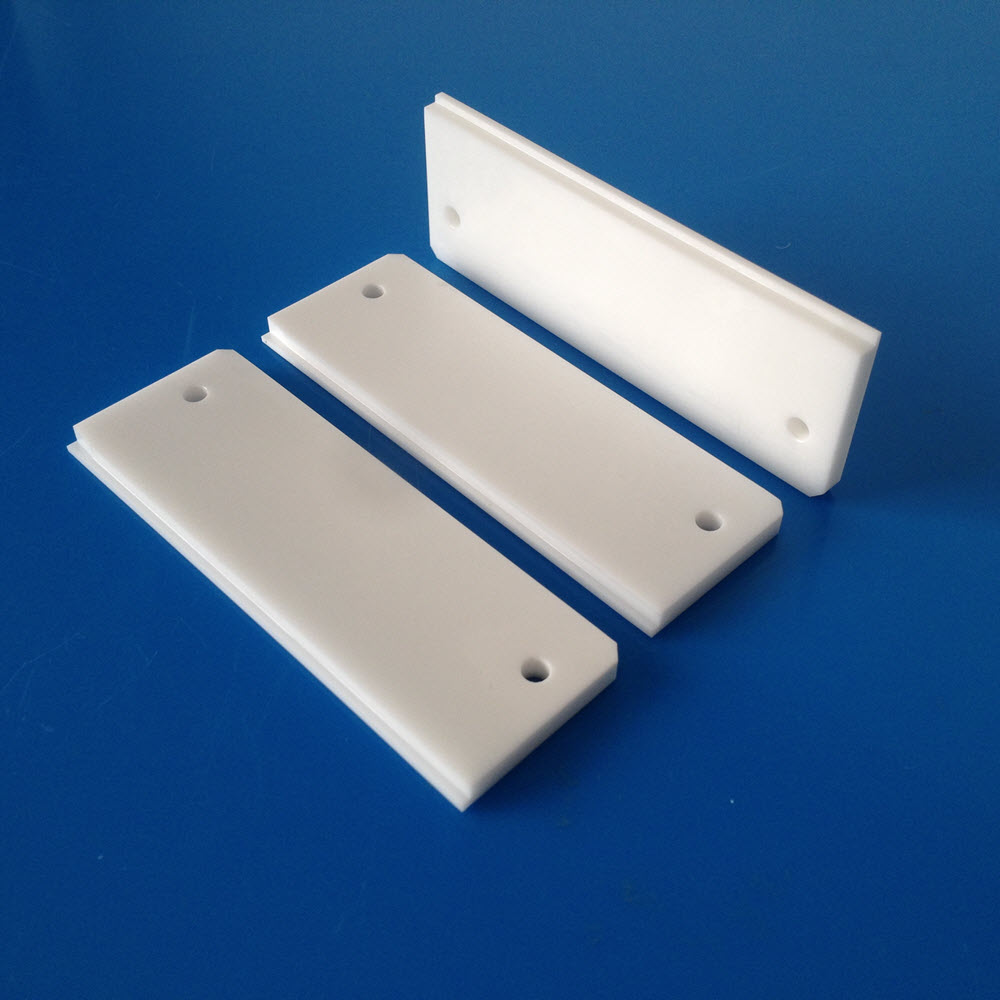


Ceramic Heat Sink Advantages:
1. Ceramic has a low heat capacity, does not retain heat, and dissipates heat directly. It does not form a "heat ladder" like metal fins, which affects heat dissipation.
2. A major feature is the microporous structure of the ceramic itself, which increases the surface area for heat dissipation with air, significantly enhancing the heat dissipation effect. Under the same conditions, in natural convection, the heat dissipation effect is superior to copper and aluminum, and in a sealed environment, the active radiation heat dissipation capability is 8.8 times that of metal materials, making the heat dissipation advantage even more pronounced.
3. Ceramics are inherently insulating, heat-resistant, anti-oxidizing, acid and alkali-resistant, and have low thermal expansion coefficients, ensuring the stability of ceramic heat sinks in both high and low temperature environments or other harsh conditions.
4. Ceramics are capable of withstanding high currents, can withstand high voltages, and prevent electric leakage breakdown; they are noise-free and do not produce coupled parasitic capacitance with MOS power devices, thereby simplifying the filtering process. The required creepage distance is shorter than that required for metal bodies, further saving board space and benefiting engineers' design and the passage of electrical certifications.