

I. Product Nature
01. Composition and Structure
Silicon nitride, with the chemical formula Si3N4, is a covalently bonded compound. Silicon nitride ceramics are polycrystalline materials, with a crystal structure belonging to the hexagonal crystal system. They are generally categorized into two crystal orientations, α and β, both composed of [SiN4]4- tetrahedra. β-Si3N4 has higher symmetry and a smaller molar volume, making it thermodynamically stable at high temperatures. α-Si3N4 is kinetically easier to form, and at high temperatures (1400°C to 1800°C), the α phase undergoes a phase transition to become β-type, which is irreversible. Therefore, the α phase is beneficial for sintering.
02. Appearance
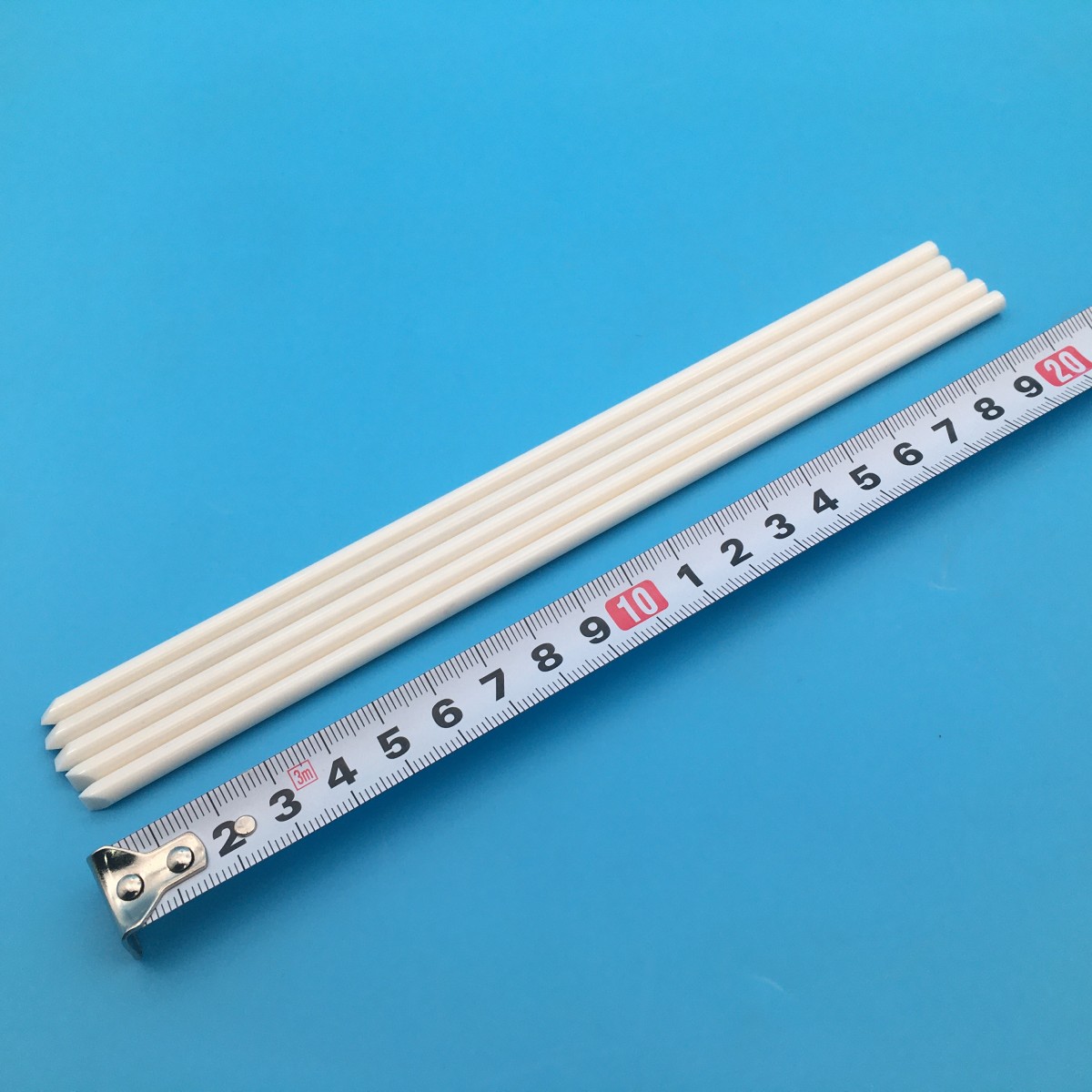
The appearance of silicon nitride varies with its crystal phase. α-Si3N4 is white or grayish white, fluffy wool-like or needle-like, while β-Si3N4 is darker, appearing as dense, granular polyhedra or short prisms. Silicon nitride whiskers are transparent or translucent. The appearance of silicon nitride ceramics ranges from gray to blue-gray to gray-black, differing due to density and phase proportions, and can also be other colors due to additives. After polishing, the surface of silicon nitride ceramics exhibits a metallic luster.
03. Density and Specific Gravity
Silicon nitride has a theoretical density of 3100 ± 10 kg/m³. The actual true density of α-Si3N4 is 3184 kg/m³, and that of β-Si3N4 is 3187 kg/m³. The volume density of silicon nitride ceramics varies significantly due to processing, generally exceeding 80% of the theoretical density, ranging from approximately 2200 to 3200 kg/m³. The porosity level is a major reason for the difference in density, with reaction-bonded silicon nitride typically having a porosity of around 20%, density ranging from 2200 to 2600 kg/m³. Sintered silicon nitride has a porosity below 5%, with a density reaching 3000 to 3200 kg/m³. Compared to materials with similar applications, it not only has a lower density than all high-temperature alloys but is also one of the lower density materials in high-temperature structural ceramics.
04. Electrical Insulation
Silicon nitride ceramics can be used as high-temperature insulating materials. The quality of their performance indicators largely depends on the synthesis method and purity. Un-nitrified free silicon within the material, as well as impurities such as alkali metals, alkaline earth metals, iron, titanium, nickel, etc., introduced during preparation, can degrade the electrical properties of silicon nitride ceramics. Generally, the specific resistance of silicon nitride ceramics at room temperature in a dry medium ranges from 10^15 to 10^16 ohms, with a dielectric constant of 9.4 to 9.5. At high temperatures, silicon nitride ceramics still maintain a high specific resistance value. With improved process conditions, silicon nitride can enter the ranks of commonly used dielectrics.
05. Thermal Properties
Sintered silicon nitride, with a low thermal expansion coefficient of 2.53×10⁻⁶/°C and a thermal conductivity of 18.42 W/m·K, boasts excellent thermal shock resistance, ranking second only to quartz and glass-ceramics. Experimental reports indicate that reaction-sintered silicon nitride samples with a density of 2500 kg/m3 can withstand over a thousand thermal cycles from 1200°C to 20°C without cracking. Silicon nitride ceramics have good thermal stability and can be used at high temperatures for extended periods. They can be used up to 1400°C in an oxidizing atmosphere and up to 1850°C in neutral or reducing atmospheres.
06. Mechanical Properties
Silicon nitride exhibits high mechanical strength, with the bending strength of general hot-pressed products ranging from 500 to 700 MPa, and some reaching 1000 to 1200 MPa. After reaction sintering, the bending strength is 200 MPa, with some as high as 300 to 400 MPa. Although the room temperature strength of reaction sintered products is not high, their strength remains unchanged at high temperatures of 1200 to 1350°C. The high-temperature creep of silicon nitride is minimal, for instance, the reaction sintered silicon nitride at 1200°C with a load of 24 MPa shows a deformation of only 0.5% after 1000 hours.
07. Coefficient of Friction & Self-Lubricating Properties
Silicon nitride ceramic has a lower coefficient of friction, and even when subjected to high temperatures and speeds, the increase in friction coefficient is minimal. This ensures the smooth operation of the mechanism, which is a notable advantage. Initially, during the start of the grinding process, the coefficient of sliding friction reaches between 1.0 and 1.5. After precise磨合, the coefficient significantly decreases, remaining below 0.5. Therefore, silicon nitride ceramic is considered to be self-lubricating material. The primary reason for its self-lubricating property, unlike graphite, boron nitride, and talc, lies in its lamellar sheet-like microstructure. Under pressure, the friction surface undergoes slight decomposition, forming a thin gas film that reduces the sliding resistance between the friction surfaces and increases their smoothness. This results in reduced friction resistance and minimal wear as the material is rubbed. In contrast, most materials tend to have an increasing coefficient of friction after continuous friction due to surface wear or temperature rise leading to softening.
08. Machinability
Silicon nitride ceramics can be machined to achieve the required shape, precision, and surface smoothness.
09. Chemical Stability
Silicon nitride boasts excellent chemical properties, resistant to corrosion from all chemicals except for those above 25% concentration solutions. Its oxidation resistance temperature can reach up to 1400°C, and it can be used in a reducing atmosphere up to 1870°C. It is particularly non-wetting to metals, especially aluminum alloys, and to non-metals.
The superior properties of silicon nitride ceramics, as indicated by their physical and chemical characteristics, confer a unique value in working environments that modern technology frequently encounters—high temperatures, high speeds, and strong corrosive media. Its outstanding advantages include:
Boasts the following advantages:
(1) High mechanical strength, hardness close to sapphire. The room temperature flexural strength of hot-pressed silicon nitride can reach up to 780-980 MPa, with some even higher, comparable to alloy steel, and its strength can maintain without decline up to 1200°C.
(2) Self-lubricating mechanical components with low surface friction coefficient, high wear resistance, large elastic modulus, and high-temperature resistance.
(3) Low coefficient of thermal expansion, high thermal conductivity, and excellent resistance to thermal shock.
(4) Low density, small specific gravity.
(5) Corrosion and oxidation resistant.
(6) Excellent electrical insulation properties.
I. Product Applications
(1) Components for thermal equipment such as crucibles in the metallurgical industry, muffle furnace chambers, combustion nozzles, heating element holders, casting molds, aluminum industry conduits, thermocouple protective tubes, and lining for aluminum electrolytic cells.
(2) Manufacturing high-speed cutting tools, bearings, supports for heat treatment of metal components, rotor engine scraper blades, gas turbine guide vanes, and turbine blades.
(3) Used in the chemical industry as ball valves, pump bodies, sealing rings, filters, heat exchanger components, fixed catalyst carriers, combustion boats, and evaporating dishes.
(4) Used in the semiconductor, aviation, and atomic energy industries for manufacturing switch circuit substrates, thin-film capacitors, electric insulators for high temperatures or extreme temperature changes, radar wire shields, exhaust nozzles, support and isolation components in atomic reactors, and carriers for nuclear fission materials.
Technical Overview
The process for manufacturing silicon nitride ceramic products typically consists of raw material processing, powder synthesis, powder treatment, forming, green body processing, sintering, and ceramic body treatment stages.
The types of preparation processes for silicon nitride ceramic are mainly distinguished by different methods and sequences of synthesis, shaping, and sintering.
01. Reaction Sintering (RS)
Reaction-sintered silicon nitride is formed by shaping a mixture of Si powder or a mixture of Si powder and Si3N4 powder, then pre-nitrifying by passing nitrogen gas at around 1200°C, followed by mechanical processing into the required parts, and finally sintering by nitrogen at around 1400°C. No flux or other additives are needed during this process, thus the material strength does not significantly decrease at high temperatures. Additionally, reaction-sintered silicon nitride has zero shrinkage characteristics, allowing for the preparation of complex-shaped parts. However, due to the low density of the products, which is 70% to 90% of the theoretical density, there are numerous pores, greatly affecting the mechanical properties.
02. Atmospheric Sintering (PLS)
Atmospheric sintered silicon nitride is prepared by mixing high-purity, ultra-fine silicon nitride powder with a high α-phase content and a small amount of flux, followed by forming and sintering processes. During sintering, the α-phase dissolves into the liquid phase, then precipitates on β-Si3N4 nuclei, transforming into β-Si3N4, which facilitates the sintering process. Nitrogen gas must be introduced during sintering to inhibit the high-temperature decomposition of Si3N4. Atmospheric sintering yields ceramics with complex shapes and excellent properties, but its drawback is a relatively high sintering shrinkage of 16% to 26%, which can easily cause cracking and deformation of the products.
03. Re-sintered (PS)
Sintered Si3N4 blanks are re-sintered in silicon nitride powder in the presence of a flux at high temperatures to obtain dense Si3N4 products. The flux can be introduced during the ball milling of silicon powder or infiltrated by immersion after the reaction sintering. Due to the pre-processing capability during the reaction sintering process, the shrinkage during re-sintering is only 6% to 10%, allowing for the preparation of complex-shaped, high-performance components.
04. Hot Press Sintering (HP)
Silicon nitride powder and flux are placed in a graphite mold and sintered under uniaxial pressure at high temperatures. The applied pressure enhances the sintering driving force, accelerating the α→β transformation and densification rate. Hot pressing can produce high-strength silicon nitride ceramics with a density greater than 95%, offering high material properties and a short manufacturing cycle. However, this method is suitable only for simple shapes, as it is expensive for complex parts and, due to uniaxial pressure, the microstructure exhibits preferred orientation, leading to performance variations in parallel and perpendicular directions to the hot pressing surface.
05. Pressure Sintering (GPS)
Sintering under pressure is performed by sintering Si3N4 green bodies in nitrogen at 5-12 MPa and at temperatures ranging from 1800-2100°C. The high nitrogen pressure increases the decomposition temperature of Si3N4, facilitating the use of flux additives that can form high-melting point intercrystalline phases, thereby enhancing the material's high-temperature properties.
06. Hot Isostatic Pressing (HIP)
The mixture of silicon nitride and fluxing agents is encapsulated into metal or glass capsules, then vacuumed and sintered under high-pressure gas at high temperatures. The commonly used pressure is 200 MPa, and the temperature is 2000°C. Hot isostatic pressing of silicon nitride can reach theoretical density, but the process is complex and costly. In recent years, other sintering and densification techniques have been developed, such as ultra-high-pressure sintering, chemical vapor deposition, and explosive forming.