

I. Background of the Plan
2015Year4No content provided for translation.16The State Council of Japan issues the "Water Pollution Prevention and Control Action Plan" (hereinafter referred to as the "Plan").“Water Ten Measures”Please clarify the Chinese content you would like translated into American English.“No Chinese content provided.2020In the year, the national water environment quality has achieved phased improvement, with severely polluted water bodies significantly reduced, the safety level of drinking water security continuously enhanced, and the construction of pipeline infrastructure strengthened.”The construction goal of achieving phased improvement in water environment quality is to create a comprehensive water civilization pattern that integrates water safety, water environment, water ecology, water resources, water culture, and water intelligence into a single, cohesive entity.“Rivers flowing, waters clear, banks green, scenery beautiful”Our overall goal encompasses the construction of various projects, including drainage and flood prevention, source control and pollution interception, water quality treatment, water ecosystem restoration, water景观 and water culture projects, as well as smart water management engineering.
Intelligent Water Management is a crucial component in the improvement of water environmental quality.2019The Ministry of Water Resources has successively issued the "Guiding Opinions on Accelerating the Development of Smart Water Conservancy," the "Overall Plan for Smart Water Conservancy," and the "Three-Year Action Plan for Enhancing the Information and Communication Technology Level of Smart Water Conservancy."2019-2021In "The Guidelines for the Construction of Smart Water Management (Year)," the overall requirements, main tasks, implementation plans, safeguard measures, near-term action objectives, and schedules for the construction of smart water management in the coming period have been further clarified, providing guidance for the national planning and construction of smart water management.
Section II: Overview of the Solution
In response to challenges such as untimely water quality monitoring, data inaccuracies, information delays, inadequate maintenance, slow response to emergencies, high management complexity, difficulties in handling multiple events, unclear fault diagnosis, inspection challenges during extreme weather, and low safety guarantees in pump rooms, as well as the actual needs for comprehensive water environment improvement, we have integrated the Internet of Things, big data, and GIS technologies to construct an intelligent management system. This system provides an informational control tool for the overall planning and implementation of river basin comprehensive management projects, enabling intelligent monitoring and management of water environments and the scientific, refined, and intelligent management of water information disclosure processes. It serves as a crucial foundation for improving regional river basin water quality, enhancing intelligent early warning and emergency response capabilities, and facilitating comprehensive process management, thereby offering guarantees and support for the overall comprehensive water environment improvement in the region.
III. Solution Composition
The main design contents of the Smart Water Conservancy Project include the construction of an information collection system, a network transmission system, a smart water conservancy management center, a management application platform, and comprehensive application construction.
IV. Introduction to Main Systems
■Integrated Dispatching and Command Center: By integrating big data from water utility companies, we achieve key aspects of corporate production, operation, marketing, service, and management.KPIExtract, display, analyze, mine, and make decisions based on water industry big data, establish a quantitative index system for corporate operations in the water sector, and achieve scientific scheduling of water production and operation, as well as performance assessment of daily office work.;Establish drills and emergency response plans for major pipeline bursts, source water pollution incidents, water quality accidents in the pipeline network, and disasters caused by freezing cold waves, to achieve efficient, scientific, and intelligent decision-making and emergency command under major accidents.
■The Secondary Water Supply Management System: With the rapid urbanization and construction, high-rise residential buildings rely on community booster pump stations for water supply. The secondary water supply remote monitoring system is a subsystem of the city's remote monitoring and dispatch management system for water supply. Dispatch center staff can remotely monitor the operation of the community booster pump station equipment, enabling timely detection of anomalies such as water outages, insufficient pressure, excessive water quality, and unauthorized personnel entry, significantly enhancing the quality of water supply services.
■Water Network Monitoring: The online monitoring system is a comprehensive automated monitoring system at its core, utilizing online automatic analytical instruments, modern sensor technology, automatic measurement technology, automatic control technology, and computer application technology. It includes online water quality monitoring, online pressure monitoring, and online flow monitoring.
■GISIntegrated Management System: Urban underground pipelines are essential infrastructure for a city, serving as the material foundation for its survival and development. By utilizing Geographic Information Systems (GIS), we can achieve functions such as input, inquiry, cross-sectional and longitudinal profiles, and the creation of various thematic maps for all types of professional pipelines, pipeline openings, fittings, and manholes. The system can provide accurate and reliable information on the distribution, direction, and burial depth of underground pipelines, as well as various professional attribute information, laying a foundation for the refined management and deep-level application of urban underground pipeline systems. The main functions include::Pipe Network Preview, Query Statistics, Pipe Network Operations and Maintenance, Pipe Network Emergency Repair, Task Dispatching, Burst Pipe Incidents, Alarm Monitoring, Emergency Command, Valve Closure Analysis, Burst Pipe Analysis, etc.
■Mobile Integrated Management Platform: The Smart Water Management platform integrates advanced mobile internet technology, supporting remote data interaction and intelligent control. It establishes real-time reporting, inquiry, and progress updates for events and hazard sources. PersonnelGPSThe implementation of functional architecture for real-time positioning and information management, achieving intelligent mobile patrol inspection in the production process. User mobile phone functionalities such as inquiry, payment, repair reporting, and leakage event reporting enhance overall production and service management levels.
Pipe NetworkDMALeakage Management System: The system monitors and manages variousDMA(Remote real-time monitoring of flow and pressure nodes within the independent measurement area can promptly detect anomalies in pipeline water supply, calculate the leakage situation of the area, and assist in locating leak points. This provides scientific guidance for reducing water leakage in the supply system and offers a convenient, practical analysis platform for water supply enterprises to lower leakage and analyze it. Pipeline networkDMALeakage management system includes:Water Balance Analysis SystemDMAMetering System for Zones, Large Meter Monitoring System, Meter Management System, Pressure Management System, Online Leak Detection System.
V. System Hardware Introduction
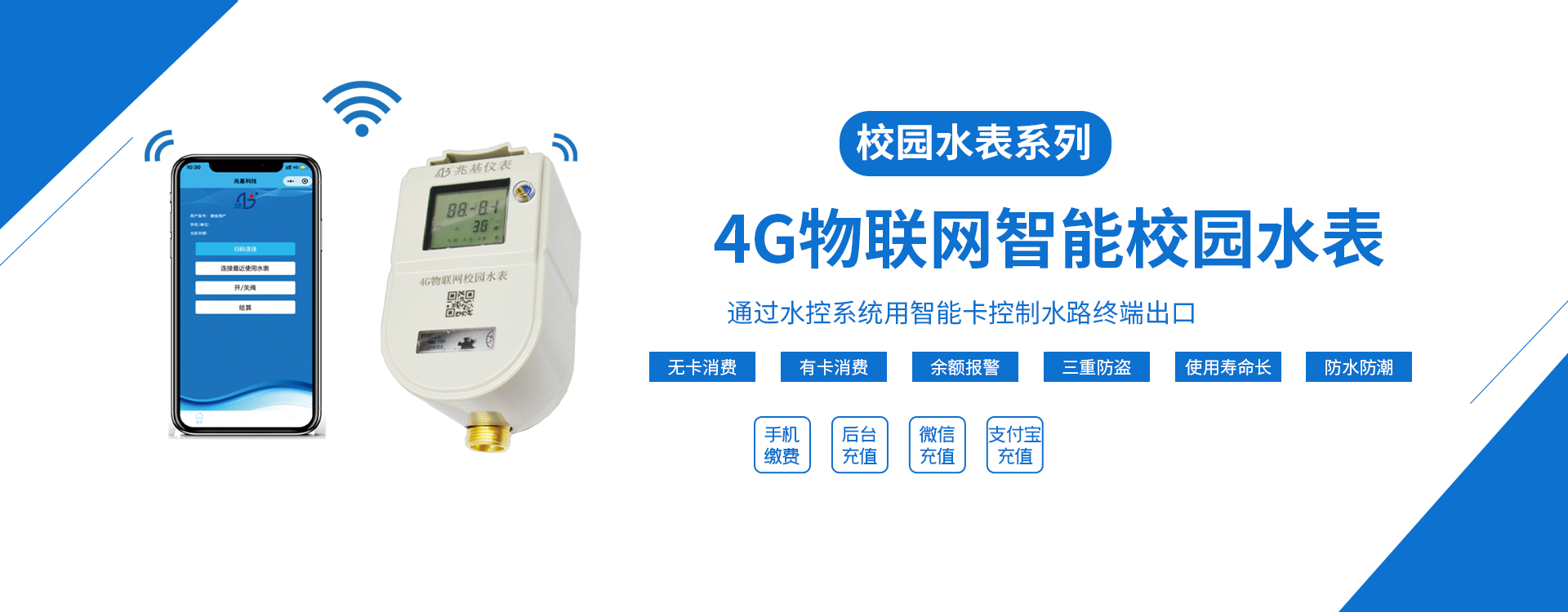
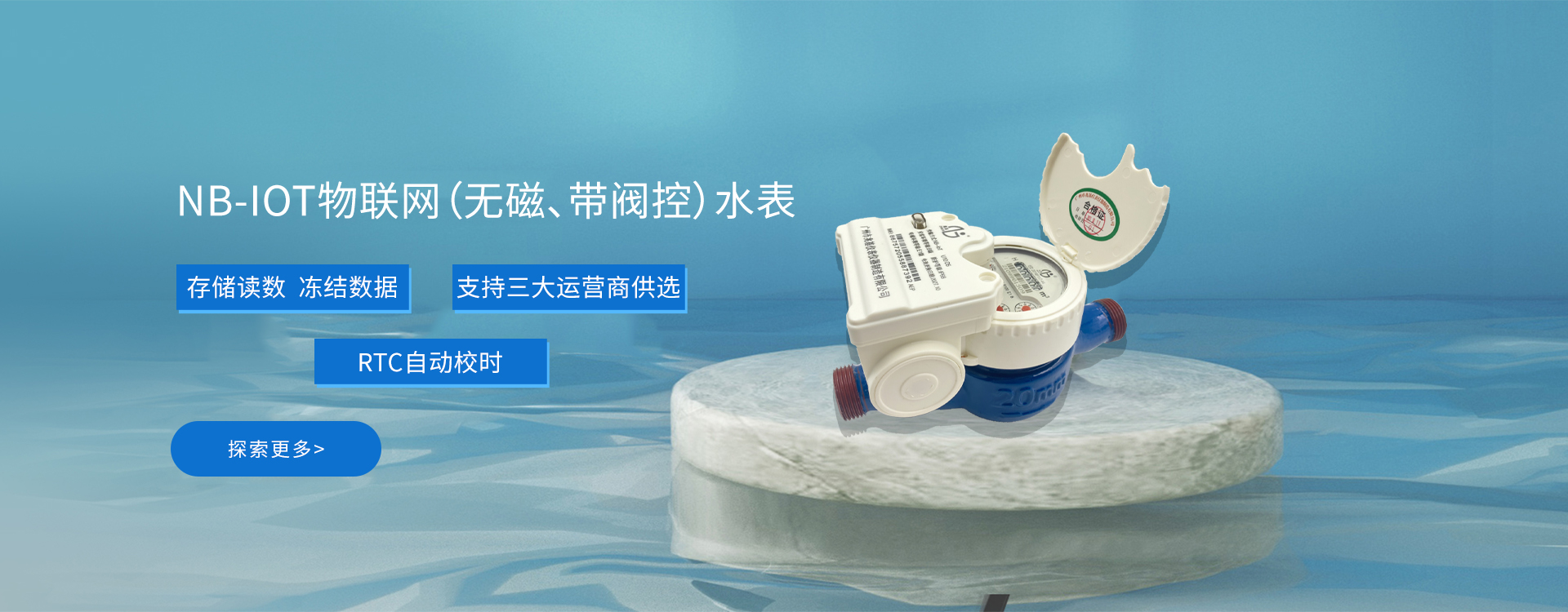
The system primarily includes remote wireless technology.(Cable)Water meters, concentrator collectors, low-power consumption data acquisition terminals, online water quality monitoring equipment, IoT transmission terminals, and remote monitoring cabinets have been implemented to monitor data such as water pressure, water level, flow rate, pump temperature, pump operation status, and equipment power consumption, as well as remote start/stop control functions.
VI. System Features
◆Monitoring Management: Pond water level, pipeline pressure, liquid level, flow rate, water quality, and equipment start/stop monitoring.
◆Data Statistics:Monitoring data statistics: Anomaly Statistics, Fault Statistics, Alarm Statistics.
◆Data Collection: Collecting data from the existing monitoring system of the water plant.DCSSystem data or monitoring equipment data is transmitted to the data management platform for monitoring.
◆Emergency Reporting Service: We offer WeChat and voice reporting, ensuring immediate reporting upon any changes.
◆Patrol Inspection Services: Electronic patrol inspection, automated scheduling management.
◆Pipe Network Pressure Monitoring: Achieves online monitoring of pipe network pressure.
◆Intelligent Design: The wireless pressure transmitter features an ultra-low power design, optionalNB-IOT、GPRSCommunication.
◆Video Surveillance: Achieve video surveillance information integration and unmanned operation.
◆Equipment Monitoring: Local and Remote Control.
Seven: System Significance
1Reduce Corporate Operational Costs: By constructing an intelligent water management system, we can remotely monitor real-time operation data of all stations and equipment. This enables centralized control based on equipment performance, achieving unattended operation and saving substantial labor, material, and financial resources, effectively reducing operation and maintenance costs. Additionally, through comprehensive pressure analysis, we can identify pressure points prone to failure in the pipeline network, lowering the frequency of pipe bursts and optimizing water supply scheduling. By reducing the water pressure at the outlet, we significantly decrease water supply energy consumption, thereby lowering the overall operational costs for the company.
2Reduce Accidents and Risks: Leveraging IoT technology, we can aggregate data from various types of equipment and operations, displaying and monitoring it on a single platform. This enables real-time alerts for anomalies, rapid responses, and intelligent adjustments to equipment operation. In the event of abnormal incidents, we can intervene and handle them, enhancing the emergency response capabilities of water utility companies, ensuring safe and continuous water supply.
3Establish a Collaborative Operational Management Model: Utilizing a unified business framework design, the system can integrate and consolidate the informatization systems of various departments within water utilities through standardized interfaces. This打通 the business processes across different stages, achieves data sharing and business synergy among systems, constructs an integrated collaborative operational management model, reduces overall coordination costs, and enhances the comprehensive management efficiency of water utility companies.
4Achieve Smart Decision-Making: The Water Utilities Big Data Center can integrate and aggregate information resources of water utility enterprises, break down data barriers between platforms, achieve interconnectivity of data across multiple platforms, and eliminate departmental barriers.“Information silos”Utilizing hydraulic models, burst pipe analysis models, pressure analysis models, water volume trend models, and big data analysis models, we delve into and analyze water utility data to achieve knowledge reconstruction. This empowers the data-driven decision-making capabilities, providing the company with rapid and effective decision support for business management.
(Reprinted for reference only)
