


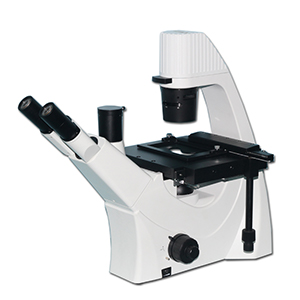


MHIL150 Inverted Optical Microscope, designed for culturing and observing cell tissues, features high contrast and resolution, highlighting cell contours and internal structures, meeting the needs of laboratory daily operations and fundamental research. Comes with a high-sensitivity, high-resolution microscope camera for digital imaging observation when connected to the microscope. Offers 5-20 megapixel options to accommodate various types of microscope cameras and imaging software. Compatible with computer for image acquisition, storage, processing, analysis, and sharing. Provides SDK for secondary development and lifetime free software upgrades.

Inverted Optical Microscope MHIL150
Inverted Microscope Function:
1. Observe Living Cells: Inverted biological microscopes are suitable for observing cultures of living cells. Since the inverted objective lens allows direct observation of cells at the bottom of the culture dish, the growth and division processes of the cells can be observed.
2. Observe Multilayer Tissue: An inverted biological microscope allows for the observation of multilayer tissue structures, as the inverted objective lens can directly view the tissue surface without the need for tissue sectioning.
3. Observation of Aquatic Organisms: Inverted biological microscopes are suitable for observing aquatic organisms, as the inverted objective lens can directly observe organisms in water without the need to remove them and place them on a microscope slide.
4. Observe large-size samples: Due to the lens of the inverted biological microscope being above the object, it is possible to view a larger area and thicker samples than with a conventional microscope.
5. Observe Sample Changes: Inverted biological microscopes are suitable for long-term observation, allowing for the observation of cell growth and changes, which aids in studying cellular physiological and biochemical processes.
| Inverted Biological Microscope MHIL150 Configuration Sheet
| |||||
|
Key Parameters
|
Total Magnification
|
100X to 400X (Standard Configuration)
| |||
|
Mechanical tube length
|
∝
| ||||
|
Objective conjugate distance
|
∝
| ||||
|
Objective Lens
|
Wide field of view eyepiece
|
WF 10X
|
Field of View: Φ22mm
|
Eyepiece Interface Ф30mm
|
Collimation Distance 10mm
|
|
Telescopes for China
| |||||
|
Eyepiece Tube
|
45-degree tilt, binocular interpupillary distance adjustment range: 48 ~ 75mm, eye point height from the surface is 400mm.
| ||||
|
Clear Field Objective
|
Magnification Ratio
|
Numerical Aperture
|
Working Distance (mm)
|
Cover Glass Thickness (mm)
|
Focal Length
|
|
4X
|
0.1
|
21
|
0.
|
50
| |
|
Complementary Objective Lens
|
10X
|
0.25
|
4.3
|
0.
|
20
|
|
20X
|
0.4
|
8
|
0.
|
10
| |
|
40X
|
0.6
|
3.5
|
0.
|
5
| |
|
Converter
|
Four-hole converter
| ||||
|
Focusing Mechanism
|
Coarse and fine coaxial, fine adjustment value: 2μ, coarse adjustment tension is adjustable, equipped with locking and limit devices, effective focusing travel 11mm
| ||||
|
Converging lens
|
Long working distance objective lens, working distance 70mm, with insertion plate contrast device
| ||||
|
Cargo platform
|
Travel Range (Horizontal X Vertical): 112mm x 79mm, Travel Scale Detachable
| ||||
|
Petri dish tray
|
86mm (Width) x 129.5mm (Length), compatible with round culture dishes ø87.5mm
| ||||
|
34mm (width) x 77.5mm (length), compatible with circular culture dishes Φ68.5mm
| |||||
|
57mm (width) x 82mm (length)
| |||||
|
Complementary System
|
Phase Contrast
|
Lever-type compensating condenser, center-adjustable contrast ring
| |||
|
Lighting System
|
9W LED, adjustable brightness
| ||||
|
Color Filter
|
Matte glass, blue filter sheet
| ||||
|
Adjustment Tools
|
Hex wrench (M4, M5)
| ||||
