




As the pace of informatization accelerates and people's environmental awareness grows, paperless conference systems are becoming increasingly popular. With a wide variety of paperless conference systems available on the market, how can they be categorized? And how can one choose a truly suitable paperless conference system for their company?

Paperless Conference System Classification
The paperless meeting system achieves the elimination of paper through electronic file exchange. It boasts four main features: "networked file transfer," "electronic display of files," "intelligent file editing," and "controlled input/output of files." Its core functions primarily include the distribution and uploading of meeting documents, synchronized demonstration of files, handwritten annotations, voting, and decision-making.
The paperless conference systems in the market are generally divided into two categories.
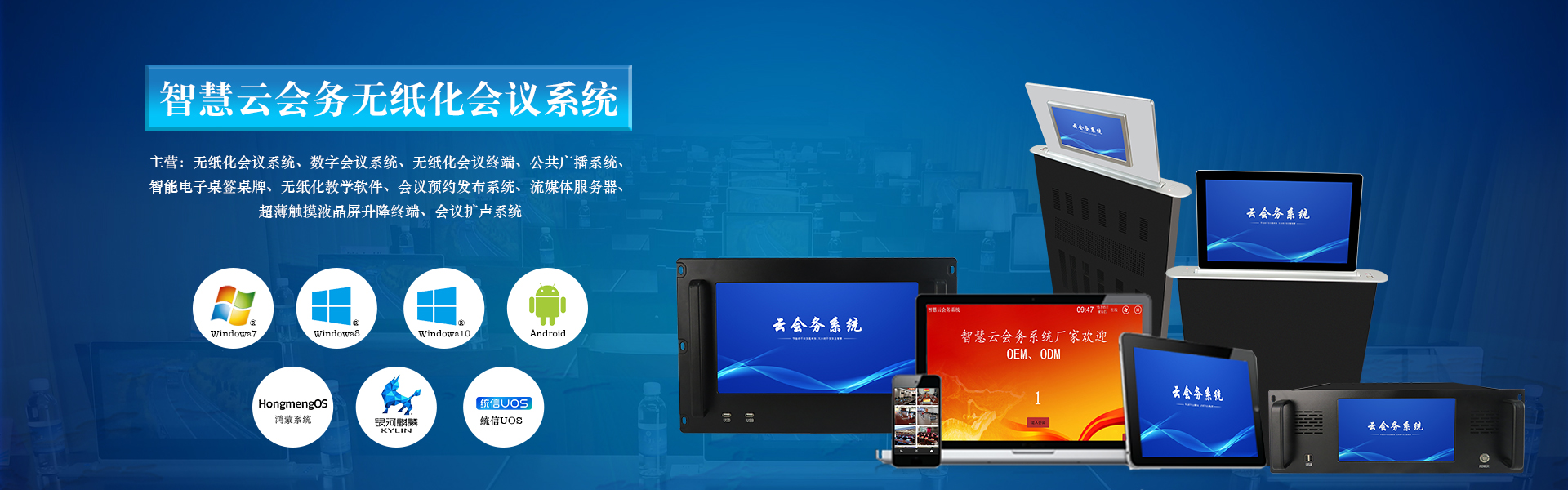
A type is the升降式paperless conference system, which relies on hardware devices such as lifting screens and microphones to achieve paperless document handling in meetings. These hardware must be permanently installed in the conference room, thus imposing spatial limitations on the meetings.
Another type of paperless conference system is the mobile paperless conference system, which relies on the network and requires no hardware equipment or space constraints. Simply install the software on your personal smartphone, tablet, or PC, and you can hold paperless conferences anytime, anywhere, offering a wider range of application scenarios.
As the era of mobile office arrives, the up-and-down paperless conference system is limited to meeting rooms, making it quite inconvenient to use. The mobile paperless conference system, with its high convenience, is becoming the mainstream of corporate meeting management in the new era.
How to Choose a Paperless Conference System
Economic Efficiency
Any purchase of a system must consider economic and practical factors. The lift-and-lower paperless conference system requires support from multiple hardware devices such as lift screens, speakers, and microphones, making it expensive with costs often reaching millions. The mobile paperless conference system is more affordable and offers higher value for money.
2. Software Update
In the升降式paperless conference system, both hardware and software need to be passively upgraded with technological advancements. If a company fails to update, its conference hardware may eventually become obsolete or discarded. The mobile paperless conference system can promptly update users with any new technology or features, giving it a clear advantage in terms of upgrades and updates.
3. Feature-Rich and Secure
Selecting a paperless meeting system, the completeness and maturity of its features, and its security are crucial. A trustworthy paperless meeting system for businesses must offer paperless functions and services covering the entire pre-meeting, during-meeting, and post-meeting process, while also implementing measures to ensure the safety of electronic documents.
4. Product Brand
A reliable paperless meeting system must have an excellent reputation, widespread acclaim, and be backed by a strong brand with comprehensive after-sales service to ensure the smooth operation and maintenance of the system post-purchase by the enterprise.
5. User-friendly operation
The page is simple and intuitive, with easy-to-use operations, making it user-friendly for older corporate executives.
