


Many custom customers have turned to us for tailored clothing due to difficulties in finding well-fitting garments. However, many women are even unsure of their own sizes, let alone how to measure them. Therefore, we have compiled some clothing measurement methods for your reference. While they may not result in an exact fit, a general size can usually be determined after understanding them. So, next time you come to us for a custom dress, remember to measure your own size first—it's a must-have condition before starting your personal tailor-made dress!
A product is typically released from the factory with size data provided by the manufacturer, usually measured in a flat lay method. The most commonly used unit of measurement is centimeters (CM), followed by detailed dimensions for various parts of the top and bottom garments. However, due to variations in measurement methods and positions among different individuals, there may be a discrepancy of 2-3 CM between the measurements. Additionally, many brand products offer professional model real photos, including basic model information such as bust, waist, hip measurements, weight, height, and the size of the clothing worn by the model. Buyers can use this data as a reference.
When purchasing clothing, the general areas we measure include the following, and of course, some special styles may require measurements of additional detailed areas!
1. For tops, the measurements required are: shoulder width, bust circumference, sleeve length, cuff length, and the length of the top that fits you best.
2. For pants, the measurements required are: waist, hip, thigh circumference, inseam, and the pant length that fits you.
3. For dresses, measurements required include: shoulder width, bust, waist, hip, and the skirt length that suits you.
4. For the skirt, measurements required are: waist, hip, and the preferred skirt length that fits you.
Due to varying measurement points among individuals, if you follow the basic measurement method, the error range is approximately 2 to 3 cm. Therefore, you can add 2 cm to your net size, and when checking the product's dimensions, compare them with your actual size to see if the product fits you.
Body Measurement Guide (refer to illustrations for guidance):
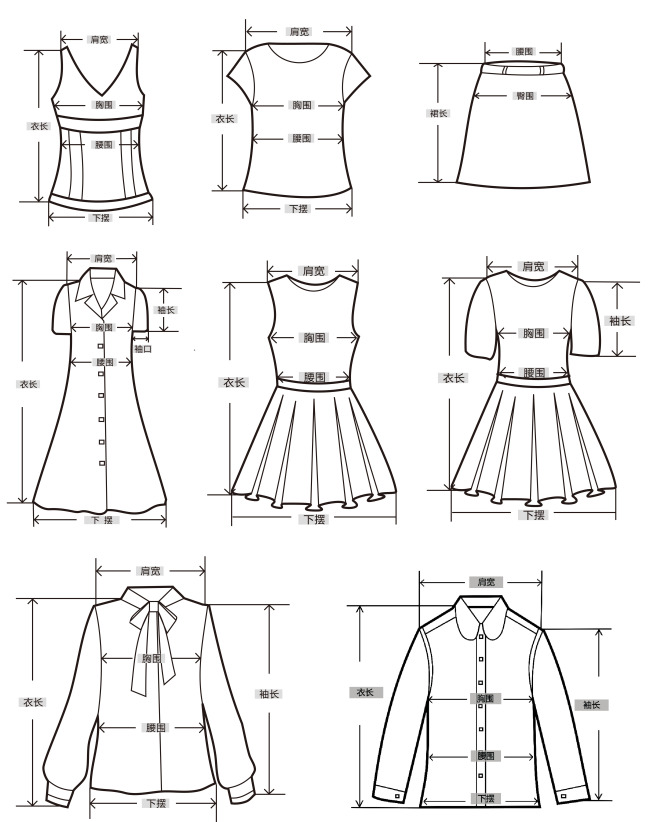
1) Bust: Measure around the chest one circumference higher than the bustline, keeping the measurement level.
2) Waist Circumference: The measurement around the narrowest part of the waist, slightly above the pant waist.
3) Hip Circumference: The measurement around the fullest part of the hips.
4) Arm Length: The vertical distance from the shoulder tip to the wrist, or to the elbow for a five-segment sleeve.
5) Shoulder Width: Measure the distance from the back of the neck, or from the neck-shoulder point outward to both sides, then add the measurements together.
6) Dress Length: The distance from the shoulder to the point below the chest to the ground, with shoes on, indicating height.
7) Neck Circumference: Measure around the middle to lower part of the neck; the size should be slightly loose.
8) Bust Circumference: Measure around the chest from under the armpits, starting at the point where the chest begins to expand.
9) Bust: Measure from the neck-shoulder point to the higher point of the chest, keeping the measuring tape perpendicular.
10) Bust Circumference: The measurement around the bottom edge of the bust.
11) Arm Circumference: The measurement around the widest and fullest part of the arm.
12) Sleeve Cap: Measure around the circumference from the armpit to the shoulder, but not too tightly to ensure ease of wearing.
13) Wrist Circumference: The measurement around the wrist bones, with a slight relaxation in fit.
14) Shoulder-to-waist height.
15) Waist-to-hem length.
16) Bust measurement: The distance between the 2 highest points of the chest, ensuring the measuring tape is parallel during the measurement.
17) Crotch Depth: From waist to the bottom of the crotch.
18) Leg circumference: Measure flat from the crotch bottom to the side seam.
19) Pant Length: The side seam length of the pants starting from the waist.
(Note: Some dimensions were not labeled in the image due to the rush in preparation! Please forgive us!)
China's Clothing Size Standard Explanation:

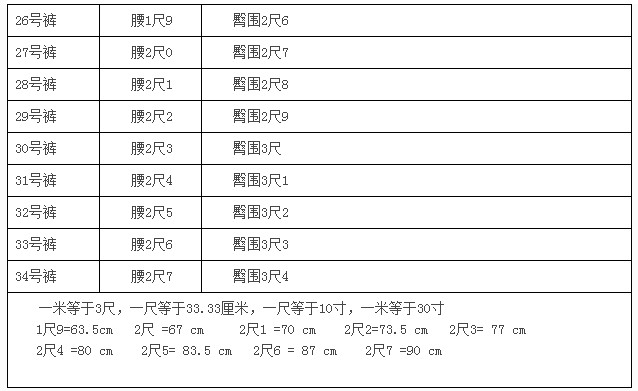
Size Conversion Chart for Brand No. Women's Apparel
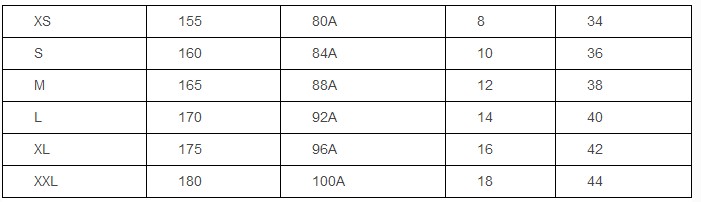
Women's Pants Size Chart: Waist and Hip Measurements