





- AllProduct Category
-
Construction Projects
High Filling Grouting
Grouting Construction
Curtain Grouting
Anti-Floating Anchor Bolt
Drilling Grouting
Compaction Grouting
Subgrade Grouting
Road浆压


详情描述
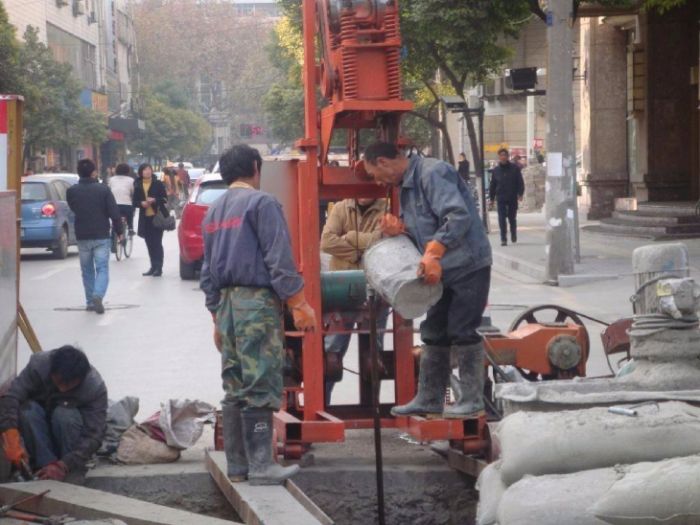
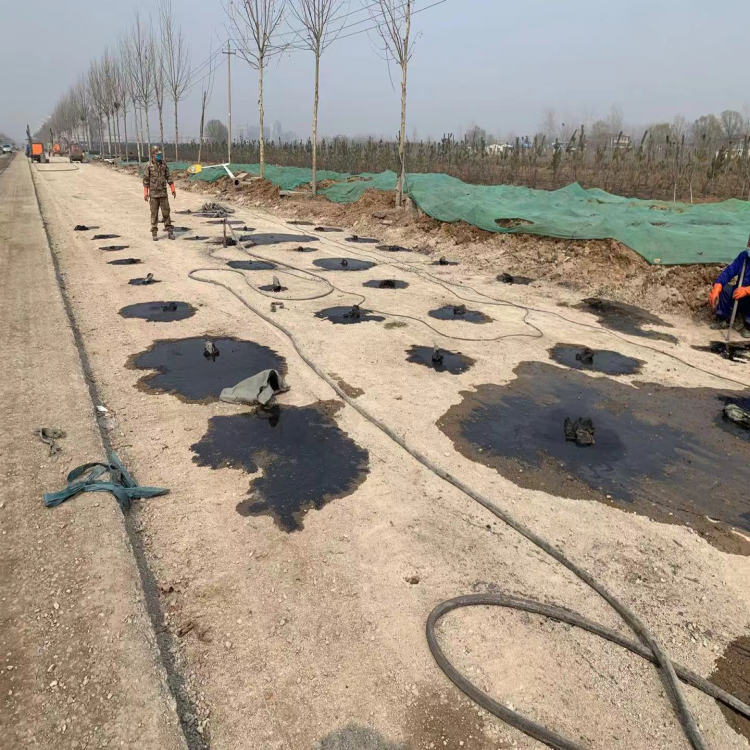
Subgrade grouting technology represents a new breakthrough in foundation reinforcement for soft soil bases. It overcomes the disturbance and softening effects of grouting reinforcement on soil. This method has achieved good results in controlling settlement caused by overburdened underground excavation, significantly shortening the soil settlement stabilization time. It has demonstrated excellent effects in the ground treatment project for controlling settlement during the tunnel boring machine's crossing of the coal stack bridge at the Stone Cave Power Plant. It is now widely used in municipal construction and various types of construction projects.
This technology was explored and developed through engineering examples in June 1988. Adopting a reasonable and diverse range of construction techniques, after two years of continuous improvement, a new two-fluid grouting process for controlling overloading was summarized. The new technology for protecting underground structures achieved remarkable effects, yielding significant economic and social benefits. In 1991, it passed the technical appraisal and won the First Prize for Technological Progress in Shanghai.
Subgrade Grouting
Construction Method Features
1.1 The grouting method for subgrade can be widely applied in foundation reinforcement projects. It is suitable for reinforcing soft soil foundations and fractured zones in rock foundations.
1.2 The mud浆 formulated is characterized by good fluidity, thixotropy, and diffusion properties. It boasts a rapid initial setting and adjustable performance. It can promptly enhance strength, shorten the consolidation stabilization time of soil, and overcome the disturbance and softening effects caused by grouting.
1.3 This method offers a simple and flexible control over uneven ground settlement during underground construction, with significant compaction effects.
1.4 Under ground overloading conditions, it is generally difficult to control the downward trend of building settlement in a short period of time during underground construction. Double-fluid grouting has the advantages of quick setting, adjustable time, short settlement cycle, and can instantly provide reinforcement, which is better than single-fluid grouting in controlling the settlement of ground buildings.
1.5 Construction safety, ease, speed, short timeline, high quality, and quick results.
1.6 This method's construction equipment and instruments are compact, versatile for entry, suitable for narrow urban construction sites and reinforcement at various depth levels, with minimal environmental impact on the surroundings.
2. Application Scope
This method is not only suitable for reinforcing soft soil foundations but also for crack zones in rock foundations and leakage prevention projects. It is particularly effective for major municipal construction projects, especially underground engineering for urban buildings, particularly in excavation of underground pits (such as gas, cables, large-diameter water pipes), and control of uneven settlement for important building pipelines or key pipelines, preventing uneven settlement and cracking.
3. Principles
Double-fluid grouting effectively overcomes disturbances and softening caused by grouting reinforcement, shortens consolidation settlement, and controls settlement. Therefore, when the double-fluid grouting promptly fills the voids in soil, especially in construction machinery, its rapid solidification and instant initial setting characteristics allow for reinforcement and stabilization. This process results in minimal mud loss, increased effective filling volume, and can promptly compensate for soil loss caused by various factors. It limits displacement near the foundation, reduces ground settlement, and affects the structure of buildings. Additionally, when the voids in the backfilled soil reach a certain saturation level, under pressure, they gradually spread and fill the voids, squeezing the surrounding soil, separating weak soil sections, and forming a crosslinked solidification network. This enhances soil compaction and compressibility modulus. It expands the stress field, improves bearing capacity, and significantly reduces final settlement.


