


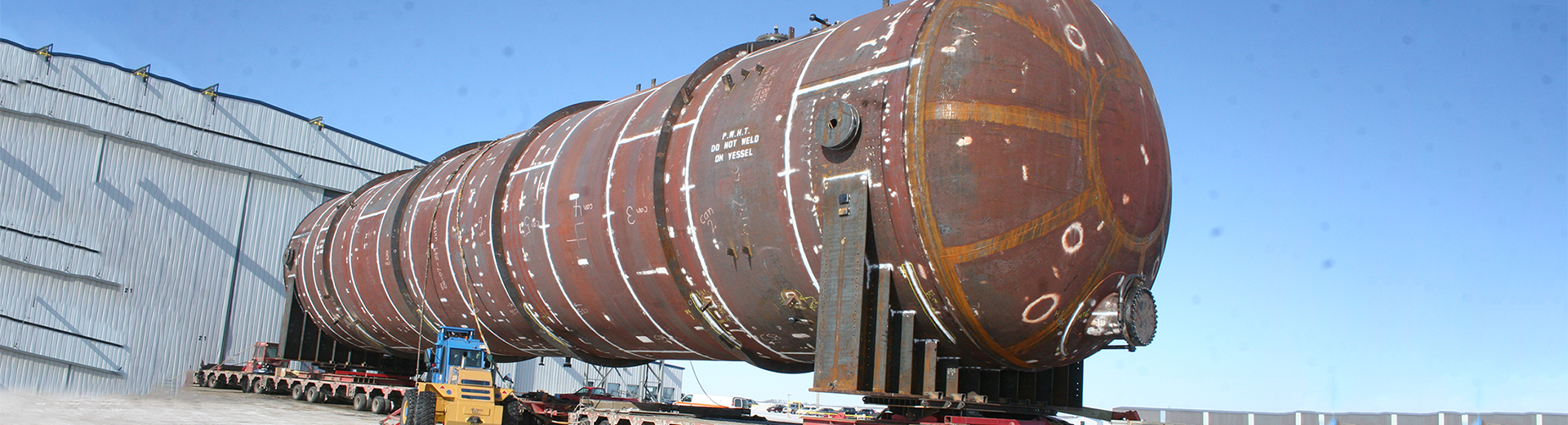
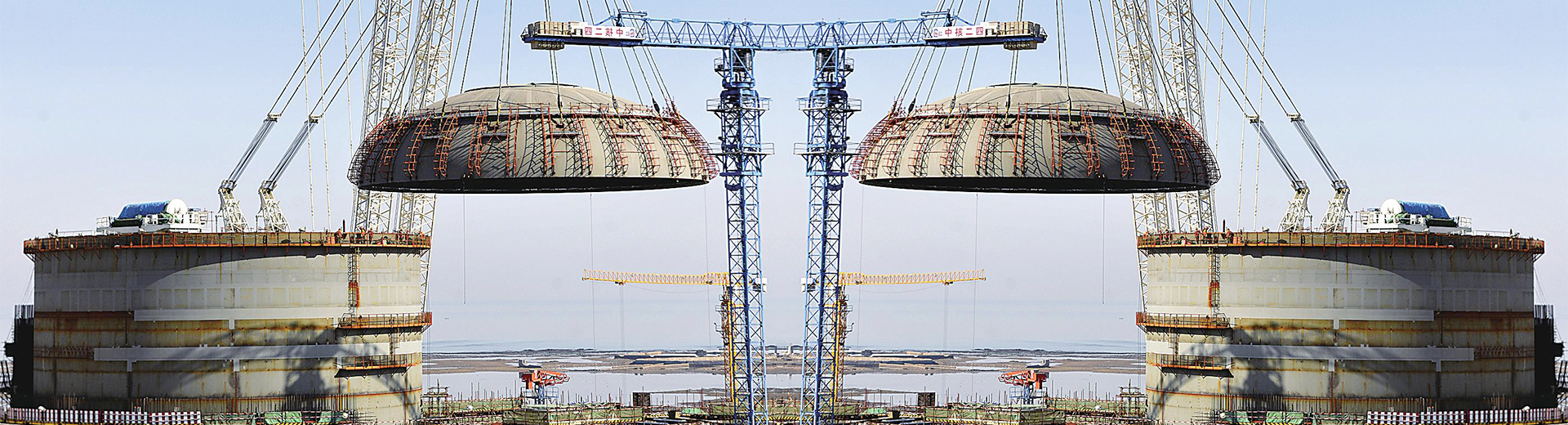
The selection of a head requires considering various factors. Firstly, it is the user's requirements, followed by the chemical process requirements. Vertical vessels for solid working substances often use conical heads for the convenience of fluid flow and discharge. For liquid working substances, elliptical or spherical heads are commonly chosen. The shape of the head for agitated pressure vessels depends on the shape of the impeller and the flow characteristics of the working substance.
Based on pressure levels, elliptical end caps are commonly used for medium and low-pressure pressure vessels, while spherical end caps are preferred for high and ultra-high pressure vessels. Of course, this also depends on the analysis of the stress conditions. For instance, if a large opening is made in the stress transition zone of an elliptical end cap and the local stress is excessive, spherical end caps may be considered. There is also a rare situation where the installation location restricts the use of a certain end cap type.
Different types of end caps have distinct manufacturing processes. For butterfly-shaped end caps, the process begins with cutting the blank sheets to obtain top circular plates, curved segment plates, and annular segment plates; forming the segment plates; preparing welding bevels for the curved segment plates and annular segment plates; assembling and welding; creating a smooth curve between the curved segment plate centerline and the end cap vertex; and manufacturing a mold for processing the top circular plate. The top circular plate is then formed by pressing and bulging under the mold, processing the welding bevels, and welding the top circular plate to the curved segment plates.
The furnace temperature was raised to 400°C, the butterfly head was inserted, and then heated to 625±25°C, maintained at this temperature, cooled to 400°C, and then removed from the furnace for natural cooling. The outer surface of the butterfly head was uniformly coated with an acid wash solution, followed by a thorough rinse with clean water. The manufacturing process for the butterfly head has been simplified, effectively eliminating residual stresses caused by shape mutations of the petals during welding, resulting in a product with high strength and performance.
