


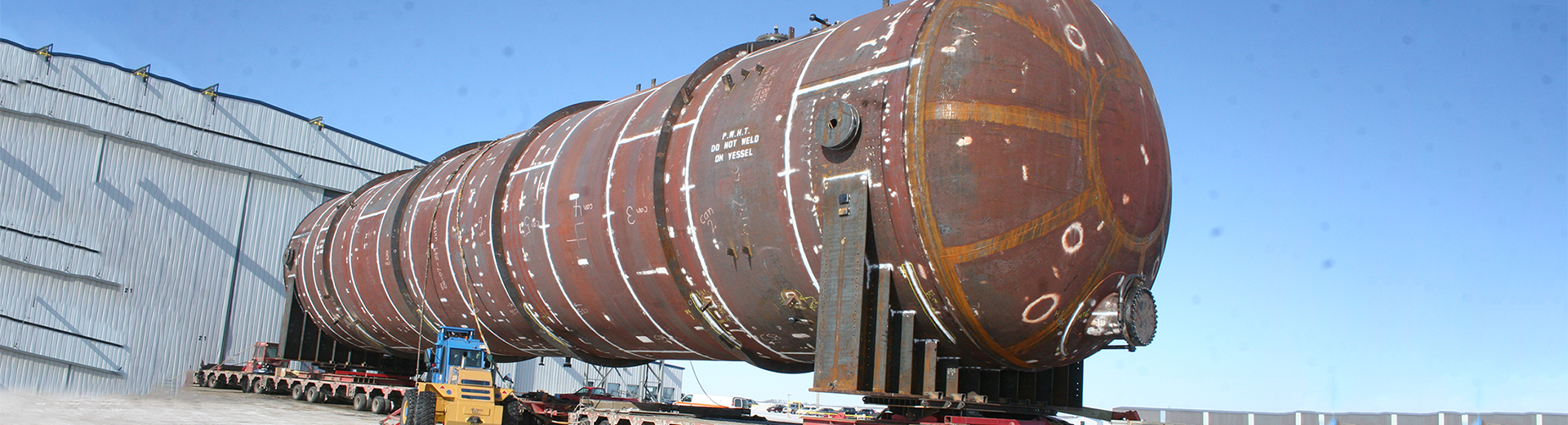
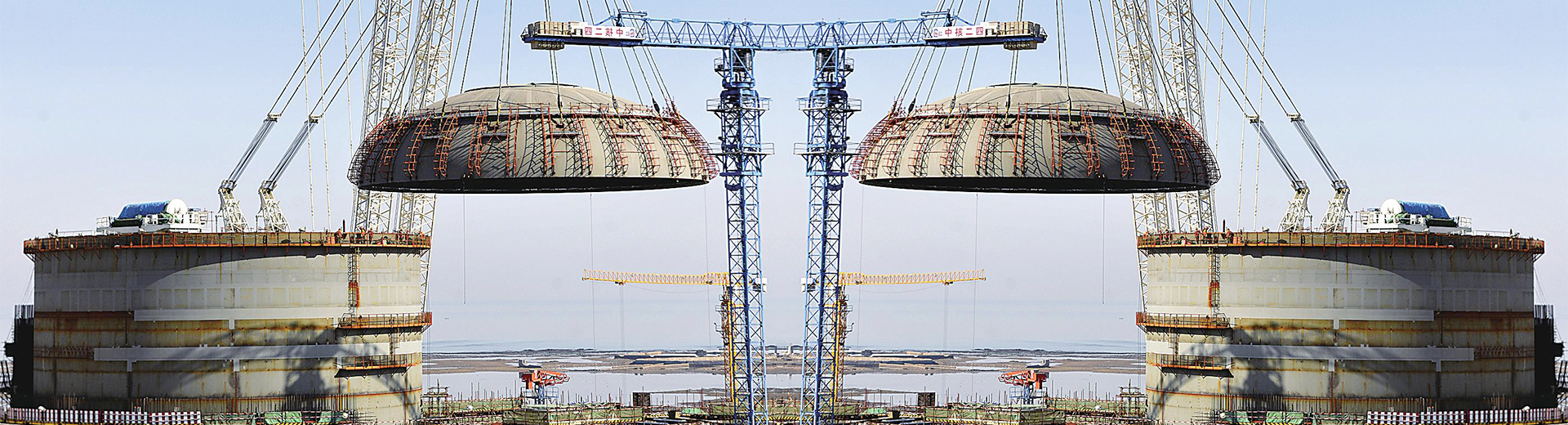
The elliptical head is a type of closure consisting of two parts: a rotating ellipsoid surface and a cylindrical straight section. Its purpose is to seal the end of a pipe when no further extension is planned, by welding the head onto the pipe for use as an endpoint. Alternatively, it is used on pressure vessels, where there are two heads at the top and bottom, with a straight pipe section in between, serving as the vessel of the pressure container.
Due to the depth of the elliptical head being between that of the hemispherical and the dish head, the requirements for stamping equipment and molds, as well as the manufacturing difficulty, are also between the two, meaning it is easier than the hemispherical head but more challenging than the dish head. The elliptical head, with its superior comprehensive performance, is widely used in medium and low-pressure vessels. In recent years, the adoption of the spinning pressing process has made it easier to manufacture large-diameter elliptical heads.
Elliptical heads must strictly adhere to process requirements during welding. In the welding operation, the welding conditions and quantities for pressure vessels and large components should be pre-analyzed to determine the dimensions and shapes of the deformation caused by welding, and corresponding control measures should be formulated. For multi-beam large pressure vessels, the assembly must be completed before welding the stainless steel heads, followed by symmetrical welding and adherence to the required welding sequence.
During the use of the ellipsoidal head, accurately measure the head's circumference. If tube fabrication is required, please inquire with the production factory for the pre-determined circumference size of the head. Divide the head's circumference into four equal parts and make markings on both the tube and the head.
When dealing with hoop stress, the transition area of the head will begin to experience compressive stress. If the ratio of the major to minor axes continues to increase, the compressive stress value at the edge of the head transition area will rapidly increase, meaning the shallower the head, the higher the compressive stress value at the head edge. Therefore, it is more reasonable to limit the ratio of the major to minor axes of the head to 2.6. In addition to meeting strength requirements, for large-diameter thin-walled elliptical heads, the thickness of the head should also account for the potential elastic instability under internal pressure due to the compressive stress in the transition area. Therefore, the head thickness should also meet the stiffness requirements.
