


Methods for废旧电缆 utilization
1. Hand-peeling method: This method involves manual skinning, which is inefficient, costly, and also offers poor working conditions for the workers.
2. Incineration Method: This is a traditional method that involves burning the plastic sheath of waste cables to recover the copper inside. However, it produces extremely severe smoke pollution and, during the incineration process, the copper wire surface is severely oxidized, reducing the metal recovery rate. This method has been strictly prohibited by countries worldwide.
3. Mechanical Peel Method: Processed with a cable stripping machine, this method still requires manual operation, is semi-mechanized, labor-intensive, with low efficiency, and is only suitable for handling thick-wire cables.
4. Chemical Method: The chemical method for treating waste cables was proposed in the 1990s. Some countries have conducted research on it, and China also conducted research during the "8th Five-Year Plan" period. A significant drawback of this method is that the waste liquid generated cannot be processed, which has a significant impact on the environment, so it is rarely used.
5. Cryogenic Method: This method was also proposed in the 1990s, using liquid nitrogen as the refrigerant to make the waste cables脆 at extremely low temperatures. After being crushed and vibrated, the plastic sheath is separated from the copper segments. China also initiated research on this method during the "Eight-Five" period, but the drawback is that it is costly and difficult to industrialize production.

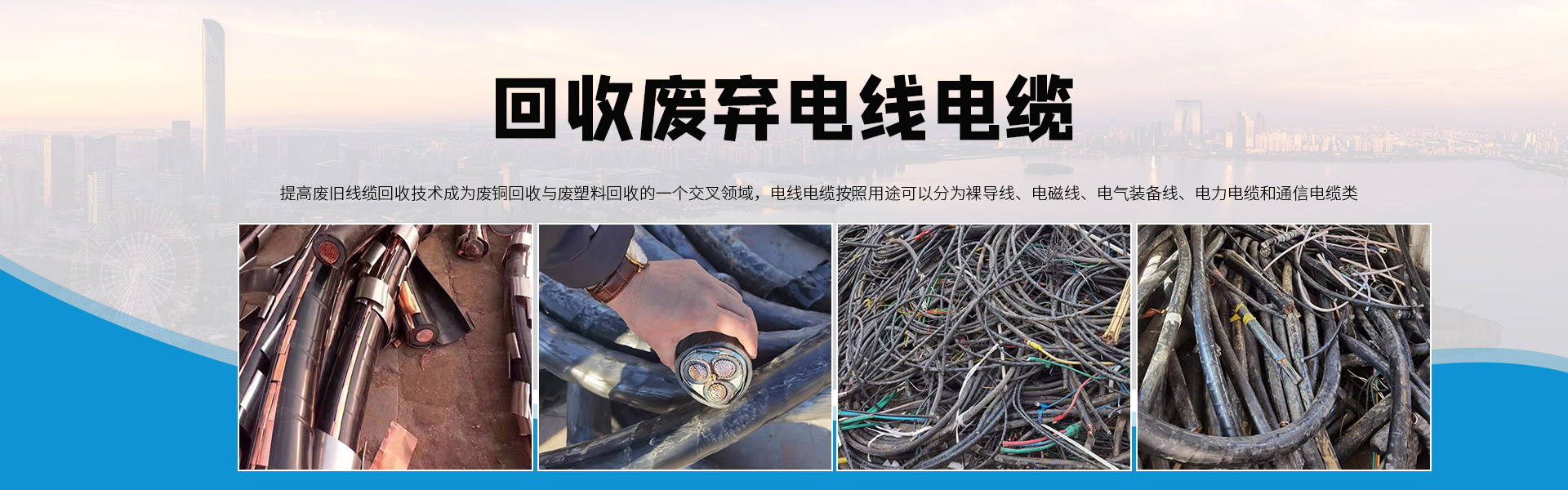
As the usage of wires and cables continues to rise, so does the frequency of upgrades and replacements, leading to an increasing amount of waste. The recycling and reprocessing of scrap wires and cables has become of significant importance.

Waste Cable Recycling
Cables that cannot be used normally are all classified as scrap. Some cables are handled by manufacturers for repair and replacement, while others that cannot be replaced are typically disposed of as scrap copper. The disposal process is entrusted to local scrap material recyclers for acquisition and processing. The recyclers are responsible for stripping the cables and recovering the copper, which is then sent to copper factories for cable or other copper product manufacturing, or directly smelted into copper ingots.

Common Fault Analysis of Wires and Cables Recycling Products:
Cable Surface Markings - According to national standards, cables should have the manufacturer's name and a continuous voltage marking on the surface. This facilitates prompt identification of the manufacturer in case of issues during cable use. Consumers must pay attention to this when purchasing cables. Additionally, consumers should verify that the manufacturer's name and voltage marking on the certificate match the printed markings on the cable surface to prevent counterfeit products.
Wire Appearance - When selecting wire, consumers should pay attention to the following: the wire should appear smooth and flat, with no damage to the insulation or sheath layers, clear markings, and no greasy feeling when touched. When examining the cross-section of the wire, the insulation or sheath should be uniformly thick all around the circumference of the wire, without being off-center, and should have a certain thickness.
Conductor Diameter – When selecting wires, consumers should ensure that the conductor diameter matches the specified cross-sectional area on the certificate. If the conductor cross-sectional area is too small, it can cause the wire to heat up and lead to short circuits. It is recommended to use wires with a cross-sectional area of 1.5 square millimeters or more for household lighting circuits; for home appliances with higher power, such as air conditioners and microwaves, use wires with a cross-sectional area of 2.5 square millimeters or more.
Regulation Usage - Use standard wiring methods. It's recommended to use BV core wires in conduits, and be cautious not to damage the wires during installation or room decoration. Avoid making connections in the middle of a single wire run; do not touch the wires when connecting to electrical boxes (cabinets); for appliances with high power consumption like air conditioners, use a separate wire run. Keep electrical and low-voltage wires at a certain distance from each other.
Common issues with cable lines include mechanical damage, insulation damage, insulation moisture, insulation aging and deterioration, overvoltage, and overheating faults. When such issues occur, the power supply to the faulty cable should be disconnected, locate the fault point, inspect and analyze it, then proceed with repairs and testing. Cut out what needs to be removed, and only after the fault is resolved can power be restored.
