

Central air conditioning is far from just a device for temperature regulation in medium-sized industrial workshops. It is a critical production support system that directly impacts production stability, equipment lifespan, employee efficiency, and operational costs.
I. Preparations and Plan Design
Site Inspection and Requirement Analysis
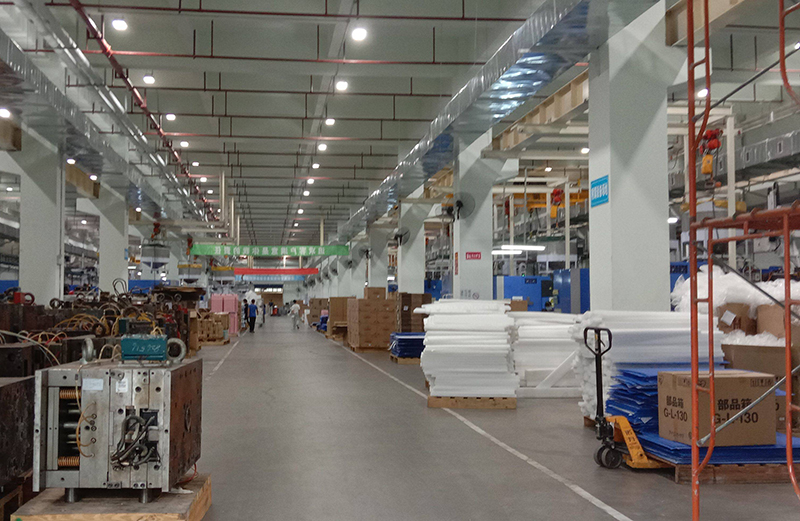
Structural Assessment: Precise Measurement of Workshop Area and Floor Height (Recommended not less than)4 meters in length), the load-bearing structure, and the determined indoor unit installation location and outdoor unit foundation platform.
Load Calculation: A comprehensive consideration of factors such as equipment heat generation, personnel density, process requirements, and solar radiation to accurately calculate cooling and heating loads.
Special Environment Considerations: Select equipment with corresponding protection levels for workshop environments with dust, humidity, corrosive gases, etc.
2Design proposal development
System Selection: Choose water system or refrigerant system based on the workshop layout; multi-split systems are suitable for scenarios requiring zonal control.
Pipe Planning: Design the routing of refrigerant pipes, condensate drain pipes, ducts, and electrical lines, ensuring no conflicts with production equipment, forklifts, or fire hoses.
Coordinated Review: Organize technical reviews of drawings for air conditioning, electrical, water supply, fire protection, and process equipment, ensuring that there is no conflict among different professional pipelines.
Section II: Equipment Selection and Material Preparation
Key Equipment Selection Points
Chassis Configuration: External power rating vs. total internal power rating"Over-configuration rate" should be kept at ≤130% to avoid overloading operations.
Terminal Equipment: Select the appropriate air outlet type based on the workshop height; high-ceiling spaces may use jet outlets or swirl outlets.
Control Systems: Equipped with an intelligent control system for zonal and time-based control, reducing energy consumption.
2Material Preparation Standards
Tubing: Choose phosphorus-free, seamless copper tubes with even wall thickness and no sand holes, and ensure proper sealing protection.
Insulation Materials: Utilizing Thickness≥20mm of luxurious thermal insulation, ensuring seamless wrapping
Bracket Hangers: Zinc-plated brackets used, spacing complies with standards (horizontal copper tube bracket spacing)≤1.5m)
Phase Three: Construction and Installation
1. Indoor unit installation
Installation Location: Keep away from heat sources and dust sources; maintain at least10cm Distance to Avoid Resonance
Level Calibration: Utilizing threaded suspension rods for hoisting, ensuring horizontal accuracyWithin ±1° to prevent condensate overflow
Dust Protection: Wrap with the original packaging plastic bag after installation to prevent dust from construction entering.
2Chiller tube routing construction
Welding Technique: Filling nitrogen to protect during welding, preventing carbon buildup on the inner wall; High-pressure nitrogen blowing after welding
Pipe fitting installation: Maintain horizontal or vertical alignment, no tilting, and use double nuts to securely tighten the joints.
Airtightness Test: Pressure retention test conducted after pipeline connectionsSystem pressure test at 4.0 MPa, pressure held for 24 hours.
3Wastewater system installation
Grade Requirement: Supervisor Drainage Slope≥1%, ensure condensate is smoothly discharged
Water-saving trap installation: High static pressure models must be equipped with a water-saving trap to prevent drainage from being blocked due to negative pressure.
Trial Testing: Conduct full water test after drainage pipe completion (fill with water and maintain)24-hour test and water test
4Electrical wiring installation
Dedicated Power Lines: Independent power lines are configured according to the main engine power to prevent sharing with other equipment.
Pipe Protection: Wire ThroughPVC or metal conduit, maintain a distance of more than 30 cm from copper piping.
Grounding Reliability: All metal enclosures must be reliably grounded, grounding resistance≤4Ω
5Duct installation (such as using a water system)
Duct Fabrication: Galvanized steel plate or composite ducts, thickness in compliance with standards
Insulation Treatment: The ductwork is insulated with rubber-foam insulation material, and the seams are bonded with special adhesive.
Airflow Balance: Set the regulating valve to ensure airflow discrepancies at various air outlets are minimized.≤10%
IV. Key Points to Consider and Pitfalls to Avoid
1. Avoiding Pitfalls Before Installation
Insufficient Ceiling Height: Workshop ceiling height is belowAt 4 meters, it is recommended to use a local suspended ceiling or wall-mounted indoor unit.
Load Confirmation: Verify the load-bearing capacity of the roof or exterior walls, and the foundation for the outdoor unit≥ 1.5 times the weight of the equipment
Bolt Holes in Beams: Must Avoid Main Reinforcement, Leave Clearance Below Beam≥50mm space
2. Avoiding pitfalls during construction
Material Authenticity: Inspect brand markings on copper tubes, thermal insulation, and other products; refuse the recycling material
Welding Quality: Requires construction workers to hold a welder's certificate, welding points100% Non-Destructive Inspection
Insulation Integrity: Focus on inspecting valves, flanges, and other areas to prevent cold bridges from forming
3. Avoiding Pitfalls During Inspection
Written Record: All test data must be signed off by both parties to avoid verbal commitments.
Hidden Work: Photography and Documentation Required for Insulation and Welding Projects
Warranty Terms: Clearly define the warranty period (recommended for the entire unit)≥2 years, Compressors ≥3 years
