

Please provide the Chinese content that needs to be translated.Installing central air conditioning in a 2,000-square-meter factory is far more complex than simply "purchasing a few outdoor units and connecting some copper pipes." Factors like the height of the factory, equipment heat dissipation, production lines, load-bearing structures, post-maintenance, and energy-efficient operation are all critical to the system's success or failure.
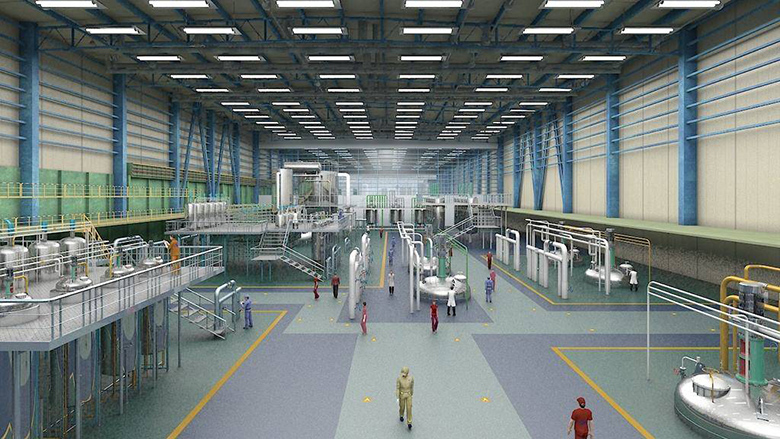
ForThe installation of central air conditioning in the 2,000-square-meter factory, key considerations can be summarized into the following 8 categories:
1. Initial Planning and Load Calculations
Cool Load Calculation: As perEstimated at 150-250W/㎡, the total cooling demand for a 2,000㎡ factory is approximately 300-500kW, requiring adjustments based on ceiling height, equipment heat dissipation, and personnel density.
System Selection: Recommend air-cooled modular units (no cooling tower required, quick installation) or water-cooled screw chillers (high energy efficiency, requires machine room), multi-split units can be chosen for zonal use.
2. Equipment Layout and Space Reservations
Chassis Location: Preferably on the roof or outdoor open space, ensuring ventilation and heat dissipation (avoiding hot air short-circuit), with reserved≥1-meter maintenance space, load-bearing capacity ≥ 1.5 times the weight of the unit.
Indoor unit/ductwork: Utilizing jet air units or high-space dedicated air conditioning systems (side-air delivery range up to 15 meters) to avoid occupying production areas; ductwork mounted to beams with support bracket spacing ≤ 3 meters.
Vibration and noise reduction measures
Vibration Damping: Installation of Rubber Vibration Dampers (Thickness)≥20mm) or spring shock absorbers, and use 10mm rubber plates between the unit and foundation, achieving noise reduction of 5-10 dB.
Pipe Damping: Install stainless steel flexible joints at the inlets and outlets of water pumps and fans, and use elastic damping hangers for the suspension brackets.
4. Condensate Water and Antifreeze Treatment
Drain Slope: Condensate Pipe Slope≥1% of the branches have a diameter ≥DN20, and the main branches have a diameter ≥DN32. Connect to ground traps or outdoor open ditches, and install U-shaped water seals to prevent odors.
Anti-Freeze Measures: In winter usage areas, electric heating tapes must be installed on cooling towers and pipelines, and a drain valve should be set at the lowest point of roof pipelines.
5. Power and Control Systems
Cable Specifications: By Cooling Capacity1.2 times power rating cables (e.g., for a 500kW main unit, YJV-4×185+1×95 cable is required), equipped with a dedicated power distribution cabinet to prevent sharing with production equipment.
Smart Control: AdoptedBAS system zoning control, set scheduled on/off times (e.g., retain on-duty temperature only during non-production hours).
6. Construction and Coordination of Intersecting Operations
Civil Construction Coordination: Pre-allocated main machine foundation (above ground)10cm water-resistant, pipe wall sleeve (2 sizes larger than pipe diameter), equipment hoisting hole (≥2m x 1.5m).
Product Protection: After equipment arrival, cover with dust-proof materials to prevent welding slag and dust from entering the unit after pipeline installation.
7. Inspection and Debugging
Pressure Test: Water System Pressure Test1.5 times working pressure (pressure retention for 24 hours without leakage), air system leak detection method for air duct tightness.
Pilot Run: Continuous Operation8 hours, inspect the unit's current, exhaust air temperature (±2℃ deviation from the set value), and noise (≤65dB).
8. Safety & Compliance
Aerial Work: Establish a cautionary zone when hoisting the main crane≥16mm wire rope, lifting points calculated by structural engineer.
Fire Code Requirement: Add Fireproof Partition When Ducts Cross Fire Zones70°C fireproof valve, B1-rated rubber and plastic insulation material (thickness ≥ 30mm).
