



With the rapid advancement of technology, electronic products have become an indispensable and crucial part of modern society. From tiny chips to sophisticated displays, the production of every electronic product demands extremely stringent requirements of the workshop environment.
This is due to the fact that core components of electronic products often possess extremely fine microstructures, with even tiny dust particles and static electricity potentially causing fatal damage, leading to issues such as short circuits, open circuits, pixel defects, and significantly reducing product quality and pass rates, even resulting in product scrapping.
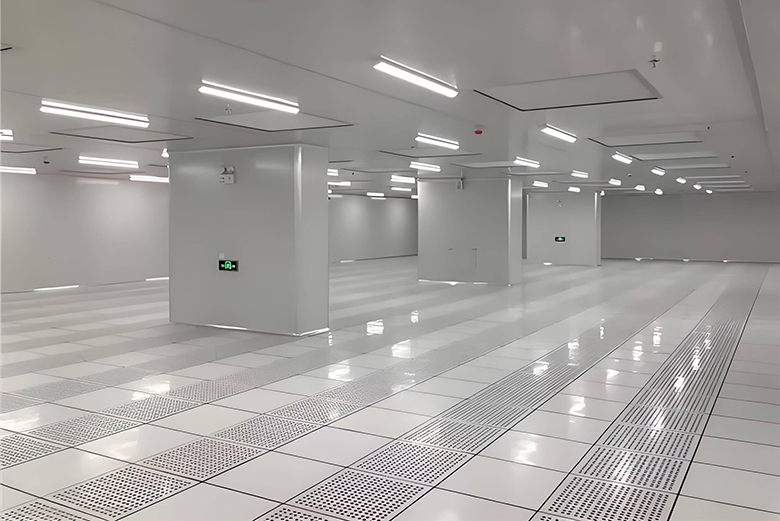
There are several key reasons for implementing dust-free purification in the electronics workshop:
Prevent Particle Pollution
Impact on Product Precision
Many electronic products, such as chip manufacturing and semiconductor device production, have reached nanoscale dimensions in their microstructures. For instance, the linewidth of advanced process chips may only be a few nanometers. If there are microscopic dust particles in the workshop, these particles may adhere to the chip surface, leading to circuit shorts, breaks, or affecting the accuracy of precision processes like photolithography.
In the production of LCD or OLED screens, particle contamination can lead to pixel defects, such as bright or dark spots, which degrade screen resolution and display quality.
2. Disruption of Microstructures
- Microelectromechanical systems (MEMS devices), such as accelerometers and gyroscopes, feature extremely small and intricate mechanical structures. Particle intrusion can damage these delicate mechanical components, rendering the devices inoperable.
Avoid Static Electricity Hazards
Static Adsorption Particles
During the manufacturing process of electronic products, friction from materials and movement of personnel can generate static electricity. This static can attract particles from the air, making them more difficult to remove. These adsorbed particles can accumulate on the surface of electronic components, increasing the risk of contamination.
2. Static discharge damages components
Electrostatic discharge can produce a sudden high voltage that may puncture the insulating layer within electronic components, causing permanent damage. For instance, with some high-precision integrated circuits (ICs), electrostatic discharge may damage their internal transistor structure, leading to the failure of the chip's functionality.
Ensuring Product Quality and Reliability
Enhance product pass rate
Cleanroom environments significantly reduce the defect rate caused by particle contamination and static issues. For instance, in hard disk production, manufacturing in a cleanroom ensures that the head and disk surfaces remain uncontaminated, thereby enhancing the read/write performance and reliability of the hard drives, and increasing the first-pass yield of the products.
2. Extend Product Lifespan
Electronics are produced in a dust-free environment, reducing the likelihood of internal components being contaminated or damaged. This ensures greater stability and extended lifespan of the product during its subsequent use.
Meeting industry standards and regulatory requirements
Industry regulation constraints
The electronics industry has numerous quality control standards, such as ISO 14644 (Cleanrooms and Associated Controlled Environments). These standards set clear requirements for the cleanliness of the production environment for electronic products. To comply with these standards and ensure product quality meets market entry criteria, companies must establish dust-free cleanrooms.
Regulatory Compliance
In certain countries and regions, there are corresponding regulations regarding the production environment for electronic products. Adhering to these regulations can help avoid legal risks and issues such as market entry bans for businesses.
