

Commercial central air conditioning systems are critical energy-consuming equipment in large public buildings such as hotels and shopping malls, with their cooling efficiency directly impacting operational costs and customer experience. Below, we analyze the key aspects of efficient cooling from four dimensions: system selection, design optimization, energy-saving technology, and maintenance management.
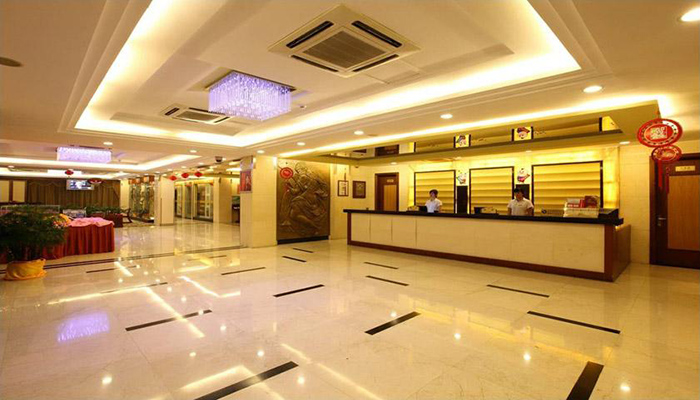
System Selection: Matched to Scene Load Characteristics
Hotel Setting
- Load characteristics: guest rooms (24-hour constant temperature requirement, low night-time load), banquet hall/meeting rooms (short-term high load, crowded), kitchen/gymnasium (localized high heat load).
- Recommended Solutions:
- Multi-split + Air Handling Unit (AHU): Guest rooms are equipped with variable-speed multi-split systems for independent temperature control; public areas are treated with centralized AHU processing, paired with a fresh air system to ensure air quality.
- Water-cooled chiller + fan coil units: Ideal for large hotels, with a chiller energy efficiency ratio (COP) up to 5.0+ and a high cooling tower heat dissipation efficiency, resulting in low long-term operation costs.
Special Requirements: The kitchen area requires high-temperature resistance and oil-proof exhaust fans; it is recommended to have a separate refrigeration system to prevent the spread of odors.
2. Shopping Mall Scenario
- Load Characteristics: Open space (height 5-10 meters, poor natural ventilation), diverse store types (high heat in food & beverage area, low load in apparel area), and significant fluctuations in customer flow (load spikes during weekends or promotional periods).
Recommended Solution:
- Centrifugal/Magnetic Suspension Chiller Units: High cooling capacity (over 1000 tons of refrigeration), high part-load efficiency (IPLV up to 10.0+), suitable for shopping mall's 24/7 operation needs.
- VAV System (Variable Air Volume): Dynamically adjusts air volume based on real-time load in each zone to prevent overcooling, achieving energy savings of over 30%.
-Roof-top Air Conditioning Units (RTU): Ideal for small shopping malls or zoned independent control scenarios, featuring integrated cooling, heating, and fresh air functions, with easy installation.
Design Optimization: Precisely Match Needs, Reduce Energy Consumption Waste
Load Calculation Refinement
By utilizing dynamic simulation software (such as EnergyPlus), factors like building orientation, shading coefficients of glass curtain walls, personnel density, and equipment heat dissipation are taken into account to avoid the redundancy or inadequacy caused by the "one-size-fits-all" approach to design cooling loads.
- Hotel guest room recommended cooling load: 80-120W/㎡ (inclusive of fresh air), shopping mall public areas: 150-200W/㎡ (inclusive of lighting and human heat dissipation).
2. Airflow Organization Optimization
- Hotel Rooms: Utilizing side-to-side air supply and return, or down-ducting, to avoid direct blowing on guests; corridor windscreen machines are installed to reduce cold and hot air mixing.
- Mall Atrium: High-rise space equipped with zoned air conditioning, cooling only the area of human activity (height 2-3 meters), with exhaust fans at the top to expel hot air, reducing vertical temperature differences.
- Selection of Airflow Nozzles: Use swirl nozzles in high-load areas of shopping malls for rapid cooling, and diffusers in low-load areas for even air distribution. Accompanied by variable-frequency fans to achieve variable flow control.
3. Heat Recovery Technology Application
- Hotel: Harnesses heat pump chillers to recover waste heat from the kitchen and laundry room, heating domestic hot water, and reducing boiler energy consumption (energy-saving rate up to 20%-30%).
- Malls: During transitional seasons (such as spring and autumn), heat recovery wheels transfer the heat from exhaust air indoors to fresh air, reducing the cooling and heating loads.
Core Energy-Saving Technology: The "Hard Power" for Enhanced Efficiency
Variable Frequency Drive Technology
Compressors, pumps, and fans fully variable-frequency: Adjust speed in real-time based on load, achieving over 50% energy efficiency improvement under partial load (e.g., magnetic levitation variable-frequency centrifugal units, with 30% higher efficiency than conventional frequency units at low load).
- Multi-connection "Variable Capacity Control": Precisely adjusts refrigerant flow through electronic expansion valves, reducing energy consumption of room air conditioning in standby mode to below 10W.
2. Natural Cooling & Free Refrigeration
- Water-cooled System: During winter/transition seasons, directly supply cold through the cooling tower (free cooling mode), shut down the compressor, and only operate the pump, achieving a 70% energy-saving rate.
Energy-saving for air side: Shopping malls activate the "pre-cooling" mode of the fresh air system at night, utilizing the low outdoor air temperature to lower the indoor temperature and reduce the starting load the next day.
3. Smart Control and Digital Management
- BA System (Building Automation): Real-time monitoring of temperature and equipment operating status across various areas, with automatic adjustment of the combined operation strategy for chilled water systems, pumps, and cooling towers (such as the "cooling demand-equipment efficiency" matching algorithm).
- AI Predictive Control: Based on historical data and weather forecasts, pre-adjust cooling output (such as pre-cooling building envelopes at night for predicted high temperatures the next day) to avoid energy consumption peaks during sudden load increases.
Mobile Operations and Maintenance: Monitor energy consumption data and fault warnings remotely via the APP, promptly address issues such as pipeline refrigerant leaks and filter clogs (delayed maintenance can lead to a 10%-20% decrease in efficiency).
Four: O&M Management: Long-term and Efficient "Guarding and Safeguarding"
Regular Maintenance Highlights
- Chiller Units: Clean condensers annually (scaling of 1mm reduces efficiency by 15%), inspect compressor lubrication and sealing performance.
- Terminal Equipment: Clean the fan coil filter grids quarterly (30% reduction in airflow when blocked), and recommend electronic differential pressure sensors in hotel rooms for automatic cleaning reminders.
- Water Treatment: The recirculating water system is supplemented with corrosion and scale inhibitors, maintaining a pH level between 7.5-8.5 to prevent pipeline corrosion and heat exchanger efficiency degradation.
2. Load Dynamic Adjustment Strategy
- Hotel: During the night (11:00 PM - 7:00 AM), the room temperature will automatically increase by 1-2°C (expanding the comfortable sleep zone for humans), while the pump frequency is reduced to 50%.
- Shopping mall: During off-hours (22:00-10:00), cooling is provided only to areas such as equipment rooms and cold storage. The main business area remains at a low temperature of 18-20℃ in standby mode, and rapid cooling is initiated one hour before opening.
3. Energy Efficiency Benchmarking and Upgrading Transformation
- The system calculates the energy efficiency ratio (SCOP = Total Cooling Capacity / Total Energy Consumption) on a regular basis. Target values: Hotels ≥ 3.5, Shopping Malls ≥ 3.0; evaluate equipment aging or control strategy issues if below 2.5.
- System Upgrade: Replace high-efficiency chilled water units (e.g., eliminate piston units, upgrade to magnetic levitation centrifugal units), install variable frequency pumps and smart meters; payback period typically 3-5 years.
Case Reference: High-Efficiency Refrigeration Implementation
- A five-star hotel (300 guest rooms): Implements the "Water-cooled screw chiller + Variable Frequency Multi-split System" solution, combined with heat recovery technology and Building Automation (BA) system, achieving an average annual energy consumption reduction of 25% compared to traditional systems, saving over 800,000 yuan in electricity costs during summer.
- A commercial complex (100,000 sqm): Utilizes magnetic levitation chiller units + VAV system + AI predictive control. During the transitional season, the free cooling duration accounts for 40% of the time, with an annual energy efficiency IPLV of 9.2, significantly exceeding the national standard for first-class energy efficiency (IPLV≥8.1).
