

In the design of air conditioning systems for large factory buildings, selecting the appropriate cooling capacity is crucial for ensuring comfortable indoor environments, stable equipment operation, and efficient energy use. Factors such as the building's size, height, use, equipment heat output, number of personnel, and local climate conditions directly impact the cooling requirements of the air conditioning system.
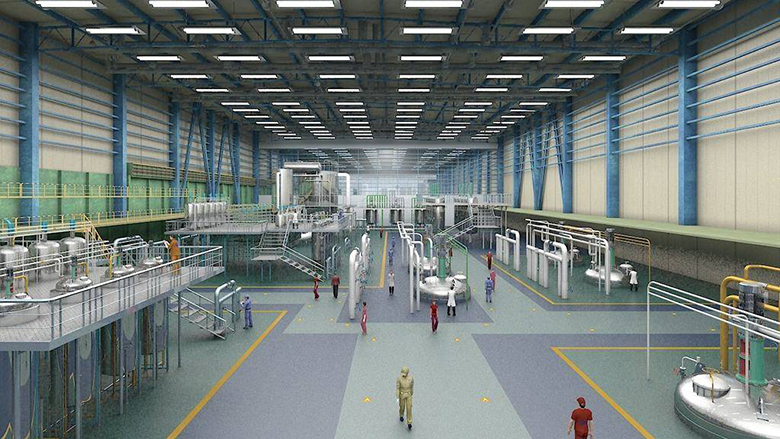
Selecting the appropriate cooling capacity for large factory air conditioning requires considering multiple factors. Here are detailed steps and recommendations:
Determine the basic parameters of the factory.
Factory Area: Measure the flat area of the factory in square meters (㎡).
Factory Height: Measured height of the factory, in metersm)。
Factory Usage: Learn about the specific uses of the factory, such as production, storage, and office spaces.
Total Equipment Heat Output: Calculate the total heat output of all heating equipment within the factory, measured in watts.W)。
Number of Personnel: The total count of employees working simultaneously within the factory.
Local Climate: Learn about the highest temperatures and humidity levels during the summer.
2. Calculate the basic refrigeration capacity
Based on the factory's floor area and height, the following formula can be used to calculate the basic cooling capacity:
Cooling CapacityW) = Factory Area (㎡) × Factory Height (m) × 250 × Temperature Difference (°C)
The temperature difference refers to the variation between the outdoor temperature and the desired indoor temperature.
3. Considering additional heat sources
Total Heat Output: Add the total heat output of all heating equipment to the basic cooling capacity.
Person Heat Output: Approximately 100 watts per person under normal activity conditions.100,000 BTUs, multiply the number of people by 100,000 and add it to the base cooling capacity.
Solar Radiation: If the factory has large areas of glass windows or is located on the top floor, consider the additional heat from solar radiation, which generally can increase...10%-20% cooling capacity.
4. Refer to industry standards
Standard Factory Building: Refrigeration capacity of 1 square meter130-180W。
Office Area: Cooling capacity per square meter250-300W。
Public Places: Refrigeration Capacity of 1 Square Meter300-400W。
Chill Room: Refrigeration capacity of 20 kW per square meter290-350W。
5. Selecting the Right Air Conditioning Equipment
Based on the calculated total cooling capacity, select the appropriate air conditioning equipment. Common choices include:
Central Air Conditioning System: Designed for large factories or commercial buildings, this system distributes chilled and heated air to various rooms or areas via piping.
Environmental Air Conditioning System: Particularly suitable for open-plan workshops or areas requiring fresh air intake.
Split-Type Air Conditioning Systems: Ideal for factory structures with independent sections, where varying temperature requirements exist in different areas.
Mobile Eco-Friendly Air Conditioners: Ideal for intense local cooling requirements in workstations.
6. Considering the energy efficiency ratio and operating costs of the equipment
Energy Efficiency Ratio (EER)Selecting high efficiency ratio equipment can reduce operational costs.
Operation Costs: Include electricity, maintenance fees, etc., long-term operation costs need to be considered comprehensively.
7. Equipment Selection and Layout
Equipment Selection: Select the appropriate air conditioning equipment model based on the calculated cooling capacity and the specific conditions of the factory.
Equipment Arrangement: Properly arrange air conditioning units to ensure even distribution of cool air throughout the factory.
8. Reserve for excess capacity
To accommodate potential factory expansion or equipment addition in the future, it is recommended to increase the calculated cooling capacity.10%-20% excess inventory.
