

Steel structure factory warehouses, under the high temperatures of summer, not only affect the health and work efficiency of staff, but may also have a negative impact on the quality of goods. Therefore, implementing effective cooling measures is crucial.
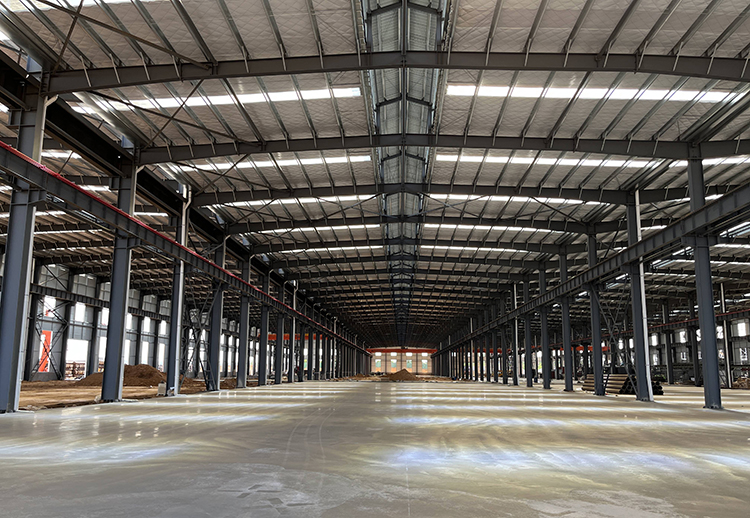
Cooling solutions for steel structure factory warehouses can be implemented using the following methods:
Insulation and thermal preservation measures
Insulation on Rooftops: Insulating materials, such as glass wool, are installed on the steel structure factory roof, typically with a thickness of...50-100mm thick, with a density of 10kg/m³, it can reduce indoor temperature by 5-8°C. High-efficiency thermal insulation reflective coatings can also be applied to the roof panels, offering excellent heat insulation and preservation properties. These coatings can reflect infrared rays and 92.5% of visible light, are easy to apply, and do not damage the existing roof.
Insulation for Wall Heat: Install an insulating layer on the interior side of the factory's exterior wall, using materials such as foam plastics to reduce the transmission of external heat into the factory.
Window Insulation: Installing sunshades, reflective films, or double-glazed windows on windows can block direct sunlight and reduce indoor temperatures.
Ventilation and Cooling Measures
Natural Ventilation: Properly design the placement and size of factory doors and windows to utilize the principles of natural wind pressure and thermal pressure, promoting air circulation and expelling hot air. For instance, by installing operable skylights and exhaust systems on the roof, take advantage of the characteristic of hot air rising naturally to facilitate the expulsion of hot air.
Mechanical Ventilation: Installing roof-powered exhaust ventilators, such as turbine ventilators, strip ventilators, etc., utilizes the principles of air convection for ventilation without requiring additional electricity, making it more environmentally friendly. Roof-powered exhaust fans, like power exhaust fans, can also be installed, offering excellent exhaust performance and adaptable to ventilation in any environment.
Positional Air Supply: In large workshop areas with fewer staff, implement localized cooling at designated positions, targeting only areas with personnel for temperature reduction, while avoiding cooling in storage or product areas. This approach addresses personnel cooling needs while controlling investment costs.
III. Mandatory Cooling Measures
Evaporative Water-Cooled Air Conditioners: Utilizing the principle of water evaporation for cooling, these systems are ideal for arid regions. For instance, the JiaFeng evaporative cooler can target hotspots for localized wind cooling. Placed near employees, it delivers a substantial flow of cool air to cover the work area, creating an independent cooling zone within the local area.
Cooling Fans or Mobile Air Conditioners: Units equipped with cooling fans or mobile air conditioners for specific high-temperature areas offer immediate temperature reduction, suitable for local hotspots.
Roof Automatic Sprinkler System: Utilizing the evaporation effect of water to reduce roof temperature, when the temperature is atAbove 30 degrees Celsius, activate the rooftop automatic sprinkler system to cool down the warehouse, maintaining the internal temperature below 28 degrees Celsius.
