
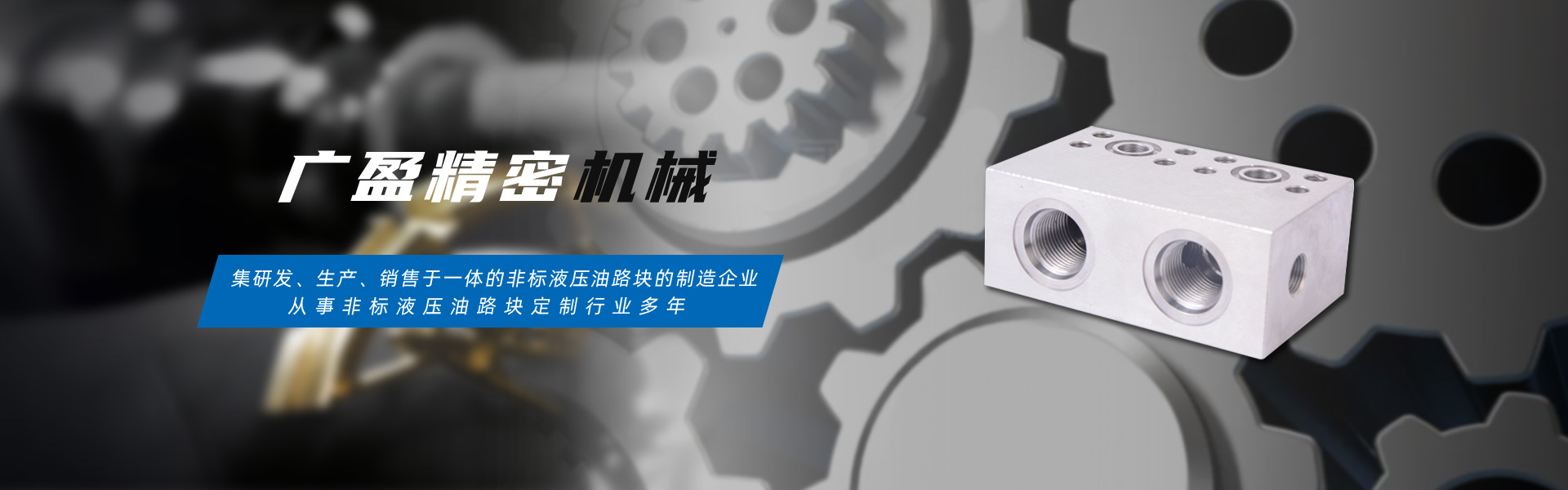



An oilway block is a collection that assembles scattered hydraulic oilways. In simple terms, an oilway block is a square that controls the operation of hydraulic oil. Typically, they are made of metal. Each hydraulic system requires a uniquely designed oilway block according to the hydraulic schematic. Its advantages include simplifying the installation, maintenance, replacement, and post-maintenance of the hydraulic system. The drawback is that it demands high design and manufacturing requirements, resulting in a high unit cost. It is not suitable for small batch production.
An oil way block is simply a module that controls the operation of hydraulic oil.
Hydraulic components in hydraulic systems are currently mostly configured in an integrated manner, with the block-type configuration being particularly popular. This involves mounting plate-type hydraulic valves on the surface of the oil passage blocks, offering the advantages of compact structure and easy maintenance. For hydraulic systems composed of multiple basic circuits, the circuits are typically grouped based on the composition of the equipment units, with each group corresponding to an oil passage block. Negligence in designing the oil passage blocks can lead to errors in both design and manufacturing. Therefore, selecting a professional design software for designing the oil passage blocks is particularly important.
