

日期:2023-12-15 浏览:65
Based on the specific surface area,Stainless Steel Wire Mesh Wavy FillerAvailable in 250 (ax), 500 (bx), and 700 (cy) models. Currently, the production and processing of neatly packaged goods involve a combination of mechanical and manual methods, with strict quality control at each stage. To ensure the excellent quality of the stainless steel wire mesh corrugated filler, follow the editor to briefly learn about some related production knowledge.
The cutting of stainless steel wire mesh corrugated filler is a preparatory step in processing the corrugated filler. The width of the cut stainless steel wire mesh corrugated filler must consider not only the required height but also the shrinkage coefficient of the hydraulic mesh belt after pressing. The shrinkage rate varies depending on the material of the stainless steel wire mesh corrugated filler. Its cutting direction is usually at an angle to the longitudinal lines. The main consideration is the strength of the metal wire mesh belt, and the cut needs to be straight. Then, the cut stainless steel wire mesh corrugated filler is spot-welded into strips, and it is required to be punched according to specifications.
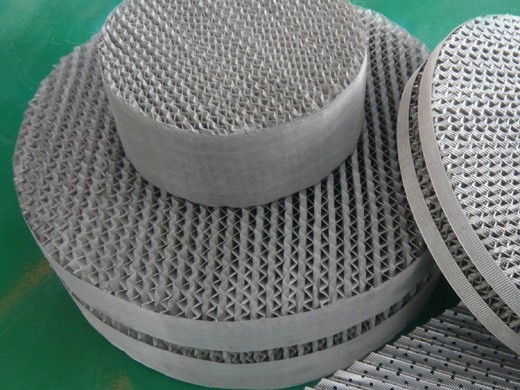
Stainless steel wire mesh corrugated packing is selected based on the design of wave peak, wave spacing, and wave angle. The mesh is shaped after rolling, and the wave peak and wave spacing after shaping must meet the requirements. The wave pattern should be even, and the angle between the corrugation and the mesh strip is generally 60o or 45o.
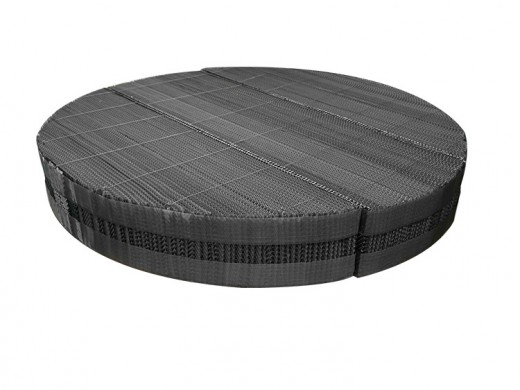
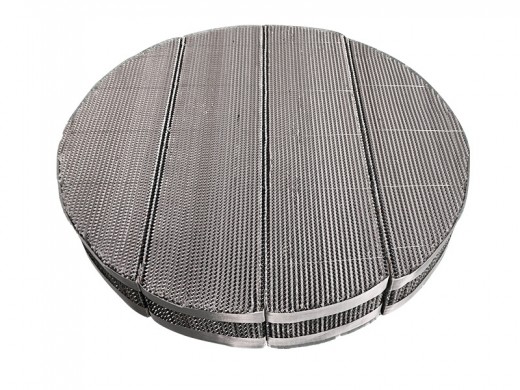
Prior to installing the stainless steel wire mesh corrugated packing, please calculate the number of corrugations in the diameter direction based on the tower diameter and the wave height of the mesh strips. Calculate the number of corrugations per sheet according to the arc requirement of the tower diameter.Stainless Steel Wire Mesh Wavy Filling MaterialThe lengths are cut, and the individual screens are assembled in an arc shape. The waves of adjacent stainless steel wire mesh wave fillers are oriented in opposite directions, forming a 90-degree cross, and the screens must be assembled flat. Once the stainless steel wire mesh wave fillers are fully assembled in a roll, they are tightly bound along the arc with screen tape and spot-welded into a single unit.