




Activated carbon removes humic substances from water.
Humic substances often constitute the main part of natural organic pollution in natural water bodies. The structure of humic substances is not yet clear. They are complex高分子 organic compounds of aromatic-fatty acid nature, containing carbon, oxygen, hydrogen, and nitrogen. The relative molecular weight of humic substances varies from several hundred to tens of thousands. In this experiment, four different types of activated carbon particles were compared. The quality of the water source supplied to the filter column, the quality of the water at the outlet, the filtration speed, and the efficiency of the adsorption medium were monitored.
The properties of humus are closely linked to its composition, which is influenced by the humification process. The composition relates to the size and distribution of molecules (molecular weight) and particles, as well as their polarity (determined by these), which is dictated by the nature of the framework (aromatic; aliphatic). This primarily involves the type, quantity, and dissociation ability of functional groups. The functionality of humus components lies in their solubility in water (the solubility of humic acid is lower than that of humic acid, hence natural water on average contains 87% of humic acid), their aggregation ability, dissociation ability (mainly carboxyl functional groups), and the related charge ratio (particle zeta potential). Some characteristics of humus are also affected by the composition of water and its pH value. Figure 1 shows the fundamental properties of humus.
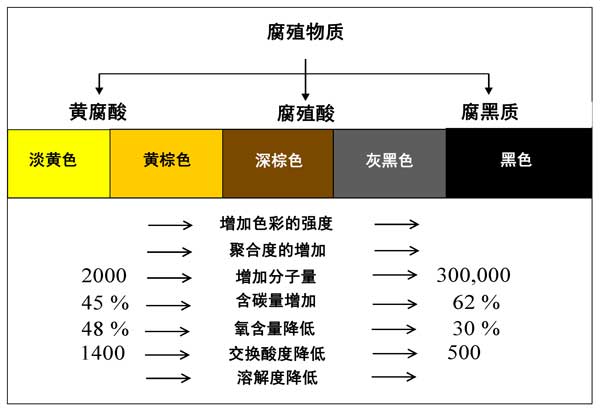
Figure 1: Basic characteristics of humus.
The impact of humus on water quality and the negative effects of its treatment can be summarized as follows:
The deepening color of water, the increase in its acidity, its impact on water's odor and taste, effects on the formation of metal complexes (such as iron, manganese, aluminum, and copper), influence on the adsorption of organic compounds (like pesticides, polychlorinated biphenyls, and phthalates), and impacts on the formation during the water chlorination process.
Remove Humus
Our company employs various methods to remove humic substances from water, including adsorption, which is highly effective and simpler in operation and equipment use compared to traditional methods (filters with adsorption beds). This technology is particularly suitable for small water treatment plants or locations where traditional water treatment methods involving coagulation cannot be utilized. The efficiency of the adsorption process is influenced by the adsorbent. The porous structure and surface area of the adsorbent affect the adsorption dynamics. A larger surface area of the adsorbent results in a more efficient adsorption process. Therefore, we continuously seek materials—adsorbents with a large surface area—to achieve faster kinetics for pollutant removal. The adsorption of pollutants is also affected by the physical and chemical properties of the treated water, such as pH, initial concentration of pollutants, type and size distribution of molecules, and water temperature. Activated carbon is a versatile adsorbent capable of removing various types of pollutants, including metal ions, dyes, phenols, and many other organic and inorganic compounds and biological organisms.
Based on the data obtained, we compared the effectiveness of four granular activated carbons in removing humic substances and CODMn from water (Figures 2, 3, and 4).
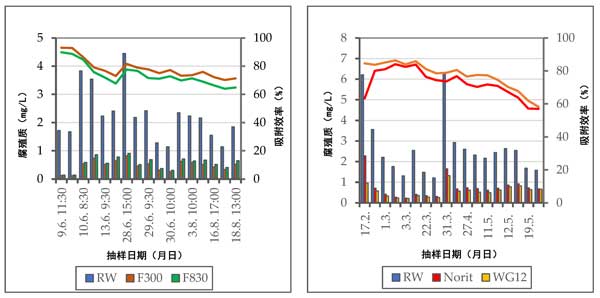
Figure 2: Concentration of humic substances in raw and treated water, as well as the efficiency of the adsorption material.
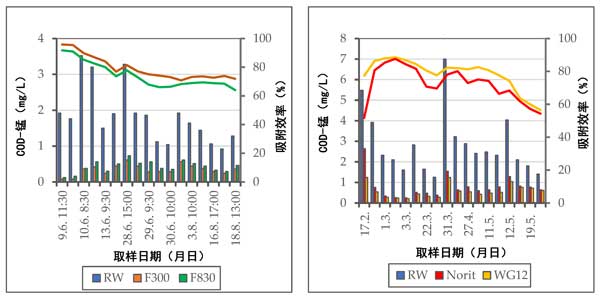
Figure 3: CODMn concentration in raw water and treated water, as well as the efficiency of the adsorbent material.

Figure 4: Color of raw and treated water, as well as the efficiency of the adsorbent material.
Activated carbon removes humic substances from water, and adsorption is a highly effective method for eliminating humic acids from water. Adsorbents used include activated carbon, zeolite, modified clay, iron-based adsorbents, materials obtained from various waste sources, and bio-adsorbents. Adsorption efficiency is influenced by various factors such as pH, initial H2S concentration, adsorbent type, and contact time. Different types of activated carbon were used as adsorbents, and their efficiencies were monitored and compared. The average efficiency for removing humic substances from water was 78.10%. The average water color reduction efficiency using granular activated carbon was 60.32%. The adsorption capacity of the activated carbon was not exhausted (Figure 2). Based on pilot testing, it is recommended to use granular activated carbon for the overall modernization of new wastewater treatment plants.
