

What is a dilapidated building? A dilapidated building is one that has structural defects that could potentially affect the safety of its occupants or passersby. According to our understanding, most dilapidated buildings are older homes with long service lives, as well as those damaged by natural disasters or human destruction. How can you determine if a building is dilapidated? There is certainly a standard for assessing dilapidated buildings. Below, I'll discuss the methods for identifying dilapidated buildings, allowing you to quickly determine if your property meets the dilapidated building criteria.
I. Basic Regulations
Independent column foundations are measured by the unit of a single column; strip foundations by the unit of the single face length of a natural room; full room foundations by the unit of the area of a natural room.
1. Walls are measured by one layer high and one side of a natural room.
2. Pre-fabricated panels are measured by blocks, cast panels by the area of a natural room.
3. Poles are sold by the piece, measured in one-story height per pole.
4. Beams, joists, rafters, etc., are priced per span or per piece.
5. Rafters are sold in units of one piece.
II. Foundation, Basic Regulations
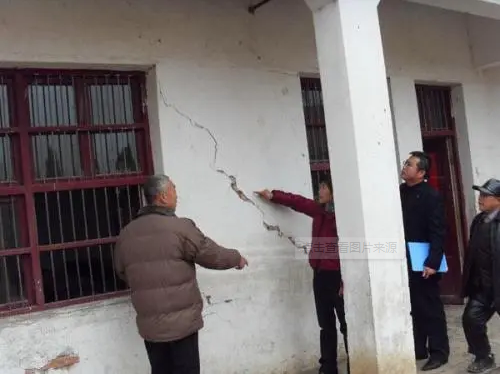
If the foundation should be sliding, or if the bearing level is insufficient due to other reasons, it can lead to uneven settlement, which in turn causes significant distortion, cracking, displacement, and tilting of the structure, and there is a tendency for it to worsen.
2. Basic aging, corrosion, and breakage, etc., have caused significant distortions, displacements, cracks, and tilts in the house structure, with a tendency for further deterioration.
3. Ground settlement due to increased load from adjacent buildings or from partial additional stories of the building itself, along with other human factors, leads to significant distortion, displacement, cracks, and tilting of the house structure, and there is an ongoing tendency for deterioration.