


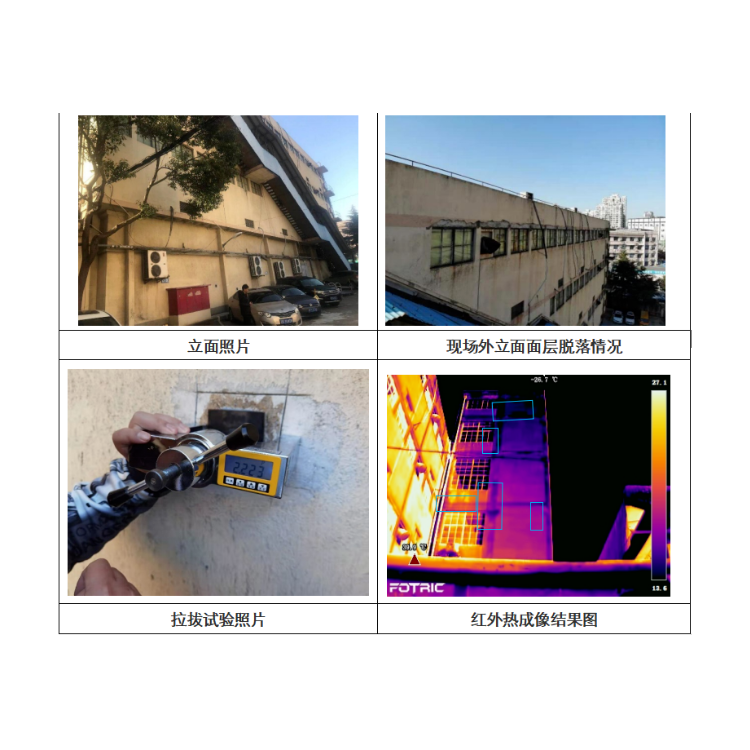
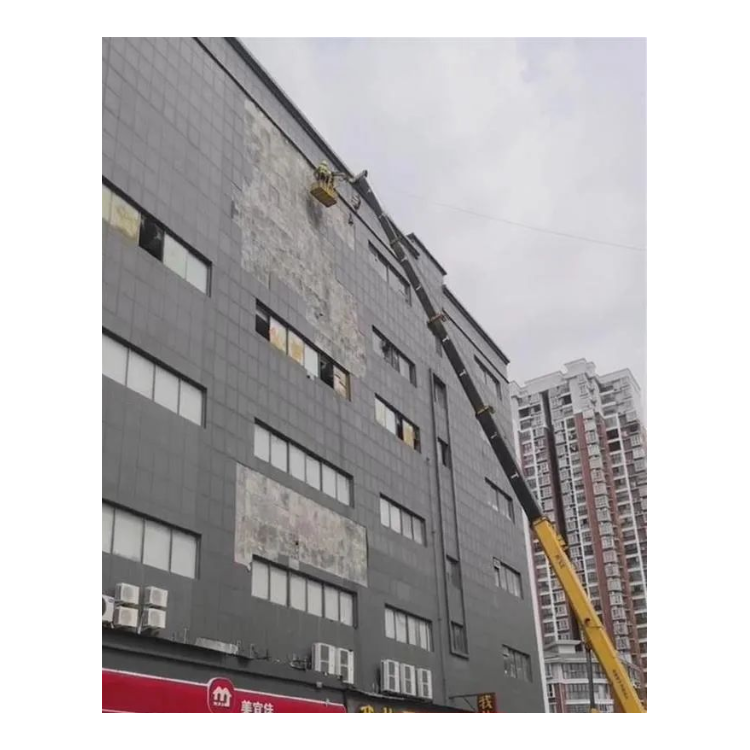
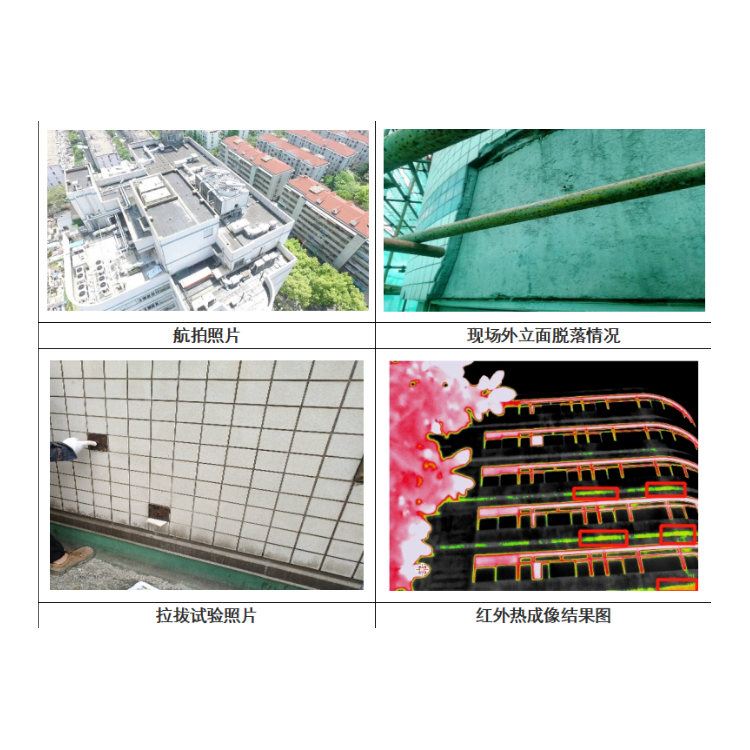
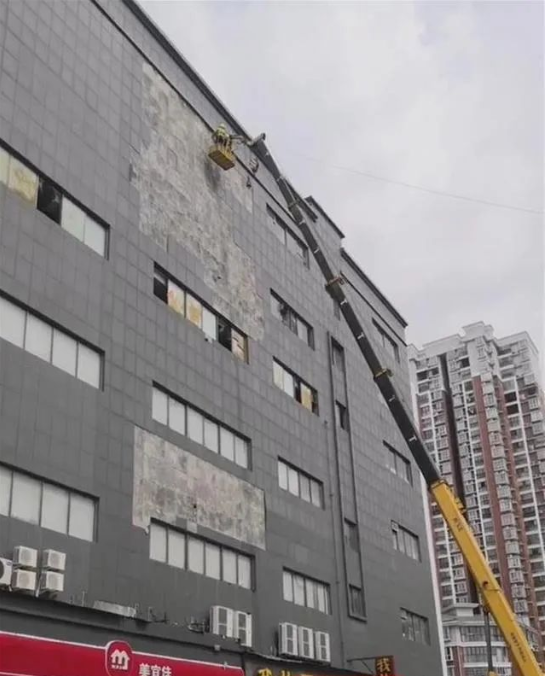
Reasons for hollowing and peeling of the exterior decorative layer
If the hollow sound issue can be detected early and addressed proactively, it can easily avoid potential safety hazards. The main causes of hollow sound and peeling in the exterior decorative layer of the building can be summarized into the following four categories:
Insufficient bonding strength between the base and facing layers.
② Defects in mortar thickness and structure.
③ Insufficient subgrade flatness and temperature effects;
④ Natural external factors causing hollow spots, water leakage, and peeling.
Main technical means for detecting hollowing in exterior wall facings
Based on the "Technical Code for Detecting Adhesion Defects in the External Wall Cladding of Buildings by Infrared Thermal Imaging Method": The detection of hollowing in the external wall cladding mainly uses infrared thermal imaging, supplemented by hammering, mortar pull-out tests, and drone aerial photography for auxiliary inspection.
Infrared thermal imaging
01 Principle of Infrared Thermal Imaging
The exterior walls of most buildings undergo cyclic temperature changes due to variations in temperature or solar radiation throughout the day or year. The surface temperature of a building varies due to the physical properties of the wall material's specific heat and thermal conductivity, as well as differences in surface morphology and condition, leading to variations in the temperature field distribution within the walls. Infrared thermography quickly scans and detects the temperature field distribution of a building's exterior walls using an infrared thermal imager, presenting the temperature field of the surface in the form of a two-dimensional thermal image. Through comprehensive processing and analysis, it can determine the presence of defects. The advantage is that it allows for non-contact scanning of the exterior walls, rapidly identifying infrared radiation anomalies in the wall finish, thereby quickly locating areas of quality issues in the exterior wall finish.
02 Method of Testing and Result Evaluation
Quickly scan and detect the temperature field distribution on the exterior walls of buildings using an infrared thermal imager, which presents the temperature field of the surface in a two-dimensional thermal image. Through comprehensive processing and analysis, determine if there are any defects. The characteristics reflected in the infrared image are: generally, the temperature colors of high-quality exterior walls are more uniform in the absence of interference, with no obvious areas of relative color difference. However, for exterior walls with quality defects (such as hollowing), the infrared image usually shows distinct areas of color difference anomalies.
Mortar Pull Test
On-site, random locations on the exterior walls of the building are selected for the wall mortar tensile test. The testing equipment includes tensile plates (100*100mm, thickness 8mm), tensile machines, and auxiliary tools (adhesives, cutting machines, etc.). The test specimens are cut according to the size of the tensile plates, with the cut extending into the base layer but not exceeding 2mm.
Drone aerial photography
On-site, drones are used to inspect the facades of buildings layer by layer from above, capturing the damage conditions of the walls and floor locations via aerial photography. The results of the aerial images are then analyzed.
Hammering method
Based on the infrared measurement results, the facade in the areas of concern was re-inspected using the hammering method to determine the specific hollowed-out areas of the house.
