


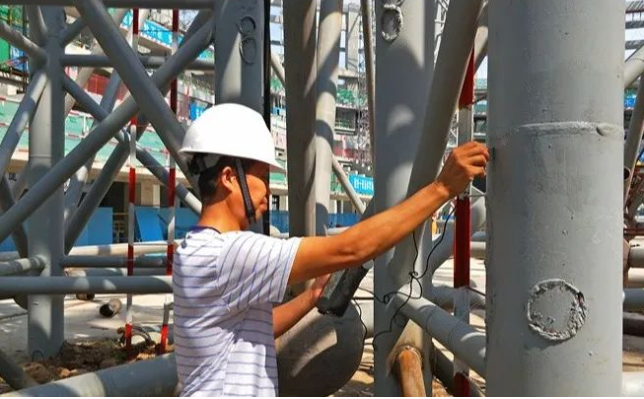
In recent years, the application of space steel structural engineering has become increasingly widespread in the construction industry. Steel structural factory buildings are among the primary choices for many companies to produce in. Due to historical reasons, there are numerous "three non-compliant" steel structural industrial buildings in use, lacking formal design, construction, and supervision. These pose significant structural safety risks. Ensuring the structural safety of factory buildings thus makes the structural safety assessment work particularly important.
It's widely known that the main issues with steel structures are centered around the stability of the upper structure, the strength of the components, and the stability of the foundation. We'll delve into these three points, understanding their crucial roles in the safety assessment of steel structures through the sequence of identification work from superficial to profound. 1. Structural Stability: Following the standard sequence of identification work, we first conduct a detailed survey of the overall layout and overview of the factory structure based on the drawings, checking if the structural forms used are in line with the design drawings and national codes and regulations, whether the force transmission paths are clear, if the structural layout is reasonable, and whether the support system is complete and meets the code requirements for slenderness ratio, as all these factors relate to the structural stability. Structural stability has always been a significant issue with steel structures, and once instability occurs, it not only leads to significant economic losses but also easily causes severe injuries or fatalities. Therefore, it is crucial to understand the basic concepts of structural stability, which allows us to better identify and address issues of structural instability in the safety assessment of steel structure factories.
1. Structural Stability: In accordance with the normal sequence of identification work, we first conduct a detailed survey of the overall layout and overview of the factory building based on the drawings. We inspect whether the structural forms used in the building comply with the design drawings and national specifications, whether the force transmission paths are clear, the structural layout is reasonable, and whether the support system is complete and meets the specification requirements for slenderness ratio, as all these relate to the structural stability. Structural stability has always been a major issue in steel structures; once an instability accident occurs in steel structures, it not only leads to significant economic losses but also easily causes severe personnel injuries. Therefore, we must understand the basic concepts of structural stability, only then can we better identify and address steel structure instability issues in the safety identification work of steel structure factories.
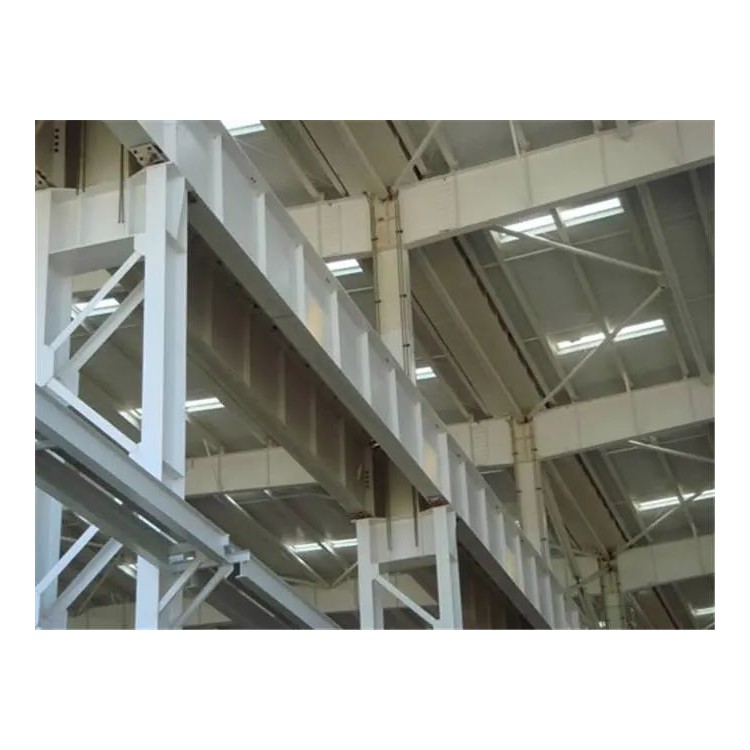
The stability of steel structures can be divided into two types: the overall stability of the structure and the inherent stability of the components. The overall stability in the longitudinal direction of the structure primarily relies on the supporting system to ensure it, such as the inter-column supports of steel columns, the horizontal and vertical supports of the steel truss chords, etc. The reliability of the supporting system in transmitting the longitudinal horizontal loads (wind loads, seismic loads, crane loads in factories, etc.) is crucial. In the transverse direction, it depends on the rigidity of the structure itself (frame or bays), with the main consideration being the ability of the structure to reliably transmit transverse horizontal loads. The inherent stability of the components is mainly guaranteed by the rigidity of the component parts, ensuring that the components and their components (beams or plates) do not buckle under load and lose stability (this situation mainly occurs in compressed or bending components). Therefore, the factors affecting the inherent stability of the components are primarily the calculated length of the components and their cross-sectional characteristics, including both in-plane and out-of-plane directions. Of course, the strength of the material and the magnitude of the stress should also be included. It mainly identifies the unstable equilibrium state between external loads and the internal resistance of the structure, which is when deformation begins to rapidly increase, and aims to avoid entering this state. Therefore, it is a deformation issue. For example, in an axially loaded column, due to instability, lateral deflection leads to a significant increase in bending moments within the column, resulting in the failure load of the column being much lower than its axial compressive strength. Clearly, the axial compressive strength is not the main cause of column failure.
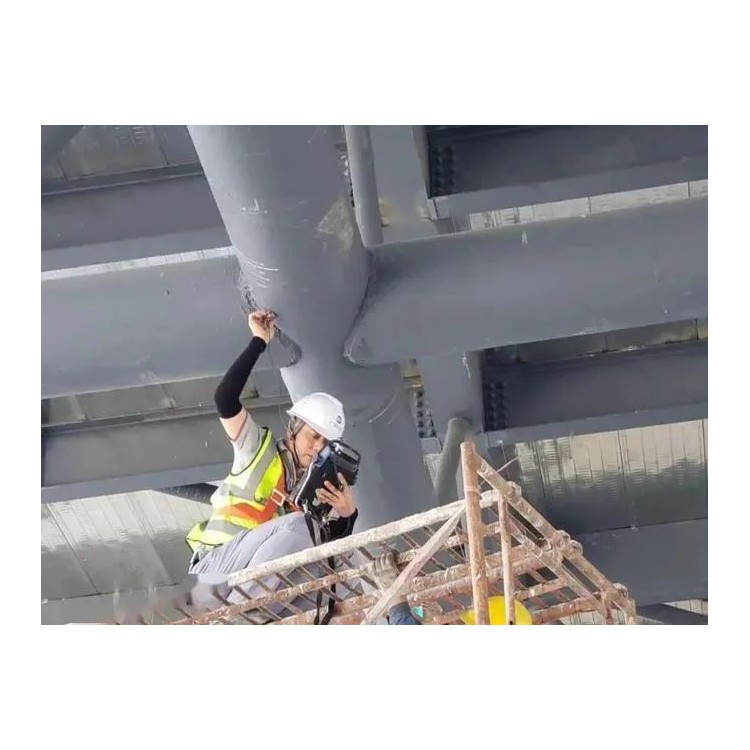
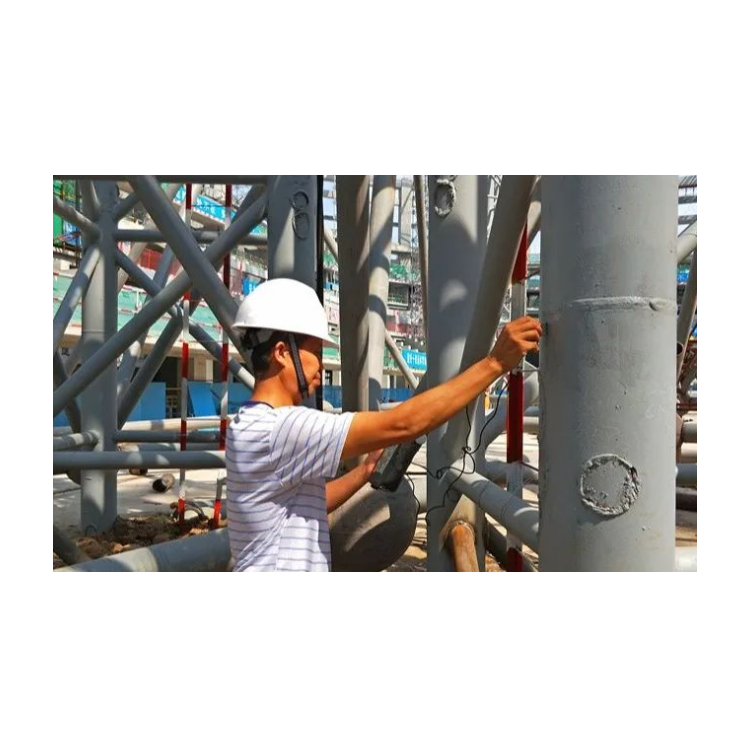
In structural stability inspections, the focus is primarily on the following key aspects: 1. The quality of high-strength bolt connections in factory components, ensuring compliance with standards through the use of total stations for external thread inspection of bolts. 2. The quality of welding connections in factory components, determining the weld quality grade using ultrasonic testing to ensure it meets standard requirements. 3. The deflection deformation of factory components, measuring deformation using leveling instruments or string lines.
2. Component Strength: After addressing the stability issues of the structure, the next is the strength of the components. We need to adopt different modern testing techniques based on the varying structural forms to obtain the necessary structural function parameter indicators, such as using core drilling, rebound method, and rebound method plus core strength correction for reinforced concrete columns; ultrasonic testing for detecting internal defects in welds; and the Leeb hardness test for identifying steel grades.
The issue of strength essentially refers to whether the large stresses induced by loads on a structure or individual components exceed the ultimate strength of the construction materials under a state of stable equilibrium. Therefore, it is a matter of stress. The value of ultimate strength depends on the properties of the material; for brittle materials like concrete, it can be taken as its high strength, while for steel, it is often the yield point. Low component strength can lead to insufficient structural bearing capacity, significantly affecting the normal use function and seismic resistance of the structure. In terms of component strength testing, the focus is mainly on the following aspects: 1. Factory concrete strength testing 2. Factory steel component raw material testing (mechanical and process properties) 3. Factory steel component connection high-strength bolt testing (torque coefficient, coefficient of sliding resistance) 4. Factory steel component dimensional deviation testing 5. Factory steel component appearance quality testing 6. Factory steel component material thickness testing 7. Factory steel component material coating thickness testing
3. Foundation Stability: After the structural assessment of the upper part is completed, the stability of the foundation becomes the key issue. Generally, a high-precision total station is used to measure and judge the tilt of the column racks and the corners of the building to assess structural deformation. If necessary, settlement observations of the building are conducted to determine the stability of the foundation. The national codes and regulations referred to during the inspection include: "Reliability Assessment Standard for Industrial Buildings" (GB50144-2008), "Technical Standard for Structural Detection of Buildings" (GB/T50344-2004), "Construction Quality Acceptance Specification for Steel Structure Engineering" (GB50205-2001), "Technical Standard for Field Detection of Steel Structures" (GB/T50621-2010), "Technical Specification for Concrete Strength Detection by Core Drilling Method" (CECS03:2007), "Technical Specification for Concrete Compressive Strength Detection by Rebound Method" (JGJ/T23-2011), "Technical Specification for High-Strength Bolt Connection of Steel Structures" (JGJ82-2011), "Code for Measurement of Building Deformation" (JGJ8-2007), and related design specifications, etc.
Basic stability issues essentially revolve around whether the foundation meets the requirements for strength and deformation. Failure to meet these requirements can lead to general settlement and uneven settlement, causing the upper structure to exhibit tipping and excessive plastic deformation, making it unsuitable for continued load-bearing, thereby affecting the normal use function and seismic resistance of the structure.
