


Main Categories
Editor Broadcast
Description
Hoists are categorized into the following seven types: mobile, fixed, wall-mounted, towed, self-propelled, vehicle-mounted, and telescopic.


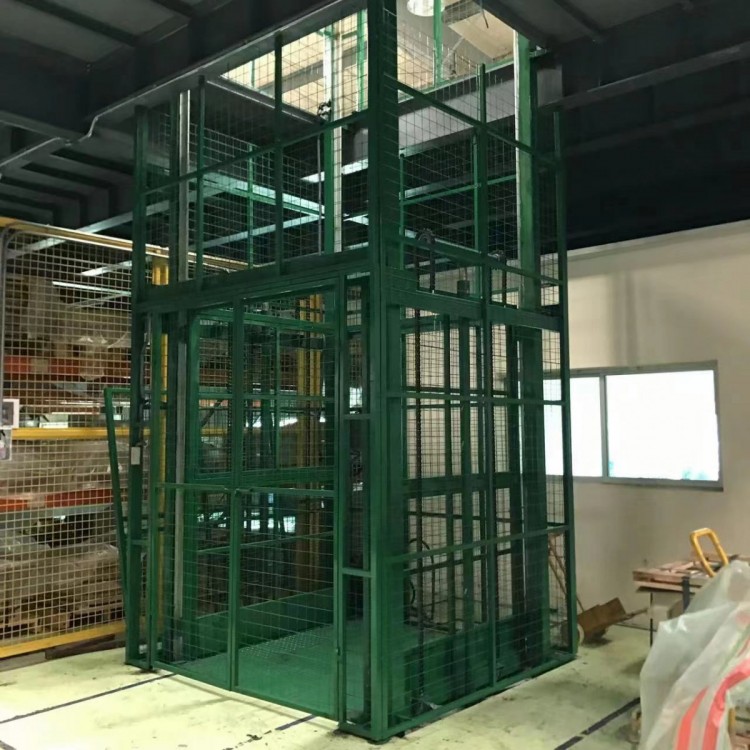
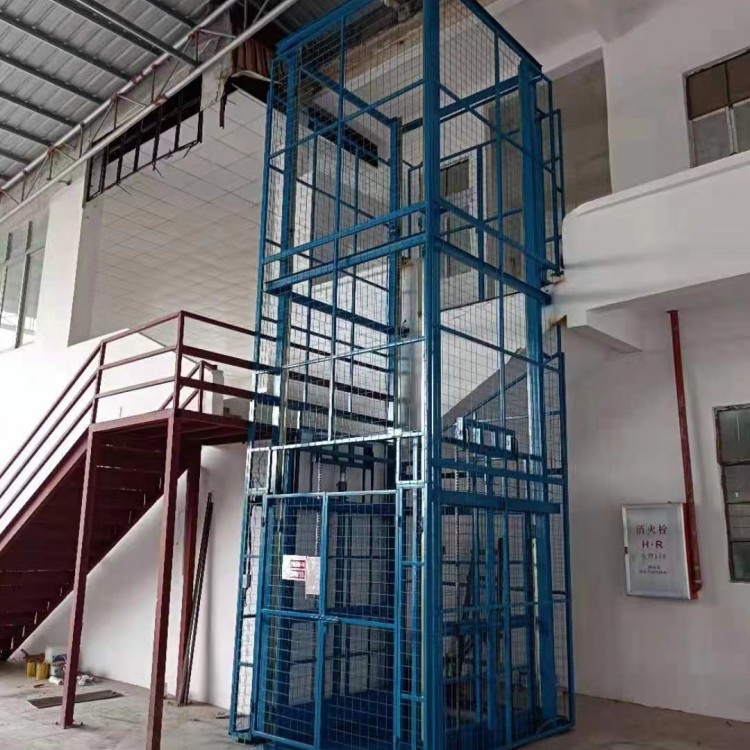
Track-typeHydraulic Elevating Goods LiftA non-cutting hydraulic lifting goods elevatorHoist LiftThe features include a guide rail hydraulic lift with heavy-duty chain drive and wire rope.InsuranceThe track-type hydraulic lift table utilizes explosion-proof hydraulic hoses, is equipped with overload protection devices, multiple limit switches for safety, door-opening power cutoff protection, and leakage protection. It features multi-story interlocking, making its safety factor significantly higher than that of standard lift tables; it is a widely-used vertical cargo transportation equipment. Driven by an electric motor and oil pump, it lifts and lowers heavy-duty chains through hydraulic cylinders, offering large load capacity and smooth operation, making it suitable for vertical cargo transport between high-rise buildings. The track-type hydraulic lift table employs cylinder and chain transmission with fewer moving parts, resulting in less maintenance work compared to scissor-type hydraulic lift tables. Its compact structure uses fewer bearings than scissor-type models, leading to a longer service life. The hydraulic lift table has a higher lifting height and better stability than scissor-type models, reaching up to dozens of meters. Due to its self-weight and cargo weight for lowering, it is more economical than standard lift tables.PLC Programmable Logic ControllerCan achieve intelligent control and display, with a simple circuit and low failure rate. Divided according to the different structures of the elevator:Scissor Lift(Scissor Lifts, Mobile Lifts), Cylinder Lifts, Aluminum Alloy (Pole) LiftsArticulated Boom LiftArticulated Arm-style Upgrade, Direct-acting Cylinder Hoisting Equipment, Guide Rail Chain Elevator (Passenger Elevator, Goods Elevator)Steel cable hydraulic lifting deviceHydraulic oil is pressurized by a vane pump, then passes through a filter, an explosion-proof solenoid directional valve, and a throttle valve.Fluid-controlled one-way valveThe balance valve enters the bottom of the hydraulic cylinder, causing the cylinder's piston to move upwards, lifting the heavy load. The oil from the top of the cylinder returns to the reservoir via an explosion-proof solenoid directional valve. The rated pressure is adjusted through an overflow valve, and the pressure gauge reading is observed to monitor the pressure.
