



 通过中商114认证
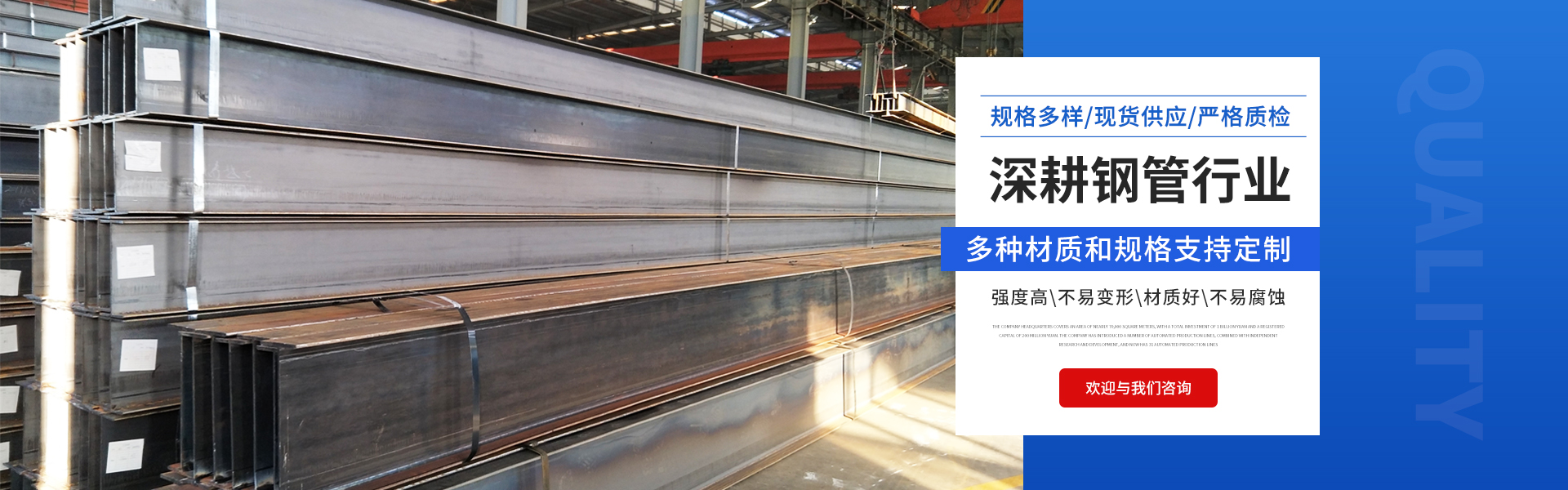
High-frequency Welded H-beam Product Features:
1. Wide range of specifications (cross-sectional dimensions). Heights, web thicknesses, flange thicknesses, and flange widths can be selected to match customer requirements for steel plate welding. Varieties beyond the standard hot-rolled H-beams are available.
2. Variety of steel grades available. Hot-rolled H-beams are primarily Q235B and Q345B; for small batch special steel grades, the manufacturing plant is unable to accommodate. Welding can be chosen based on the required steel plate.
3. High Product Precision and Surface Quality: Due to the high precision and good surface quality of the steel plate products, the post-welded H precision is also high and the surface quality remains excellent. The thickness deviation of the steel plate (used for welding H-section steel) is generally a few tenths of a millimeter to a few tenths of a millimeter, whereas the thickness deviation of hot-rolled H-section steel is a few tenths of a millimeter to 1 millimeter, a difference of nearly 10 times.
4. Performance Stability and Organized Internal Structure. As the production of steel plates requires higher standards, equipment capabilities, control levels, and testing methods compared to the hot-rolled H-beam process, from smelting to continuous casting to rolling, the internal structure, chemical composition, and various performance indicators (mechanical properties, process properties, etc.) of welded H-beams are reliable and stable.
5. Prone to Welding Defects. Despite the numerous advantages mentioned above, welding process results in residual thermal stress in the welding zone, with variations in the microstructure leading to structural stress, making welding defects more likely. As welding and heat treatment techniques improve, these drawbacks gradually diminish. Today, H-beam steel焊接 is widely used in various fields, including military and aerospace industries. (Pure Steel)
