
Overview:
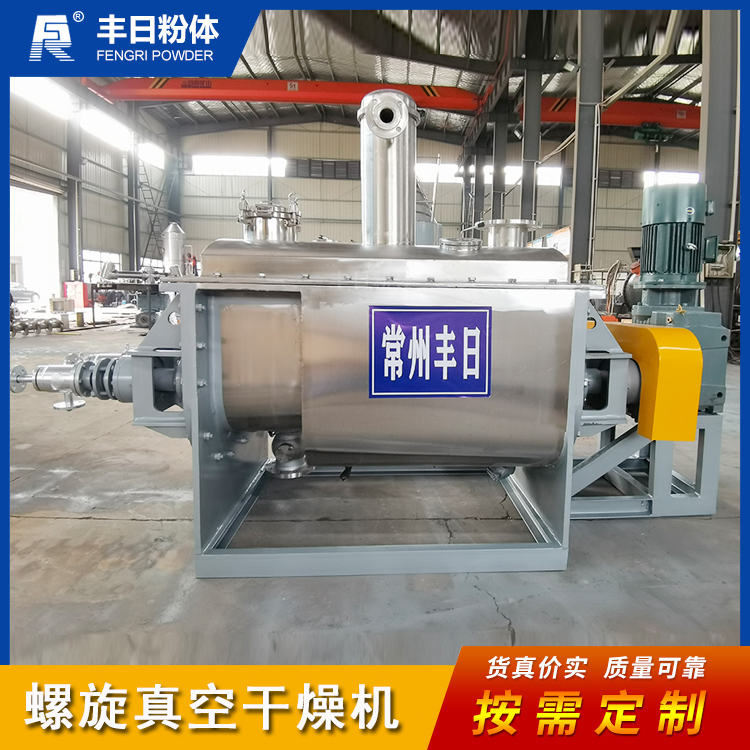
The Spiral Vacuum Dryer achieves batch drying by utilizing two sets of hollow spiral blades to circulate the material within the equipment. It releases heat energy to the material through thermal conduction, achieving dehydration under vacuum conditions. Its structure and working principle ensure high thermal efficiency, low energy consumption, and high efficiency with minimal footprint, easy operation, and significantly reduced production costs. Different material and manufacturing processes can be chosen based on the material's characteristics, and it can be equipped with various auxiliary devices to meet the customer's production needs.
Principle:
The spiral vacuum dryer, with its internal hollow blade structure, ensures thorough circulation of materials within the chamber, maximizing contact with thermal energy. This results in more even drying of materials, with no dead spots. Heat transfer is achieved through the hollow blades and the chamber wall, encapsulating the material in heat flow with minimal energy loss. The entire equipment operates in a sealed manner to prevent dust and odors from escaping. Post-drying, the condensed recovery unit is utilized to reclaim usable resources and pollutants, achieving pollution-free emissions. Depending on the material's temperature requirements, different heating mediums can be used: steam, hot water, or thermal oil. The feeding method can be a single addition or in multiple stages, and after drying, the vacuum is released, and the discharge valve is opened to discharge the material.
Features:
Energy Efficiency: The increased heating surface area of the equipment ensures that heat is fully absorbed by the material, reducing heat energy loss.
Environmental Protection: The equipment operates under vacuum and utilizes a condensation recovery unit to recycle resources and achieve pollution-free emissions.
High Efficiency: Due to the increased heating area of this equipment, it offers significantly higher efficiency compared to conventional drying equipment, thereby saving energy consumption.
Application:
1. Non-heat-resistant thermosensitive materials cannot be accepted.
2. Materials prone to oxidation and spoilage; highly flammable and explosive substances.
Material for solvent recovery and harmful gas emissions.
4. Dry Material Categories: Liquid Materials, Powder Materials.
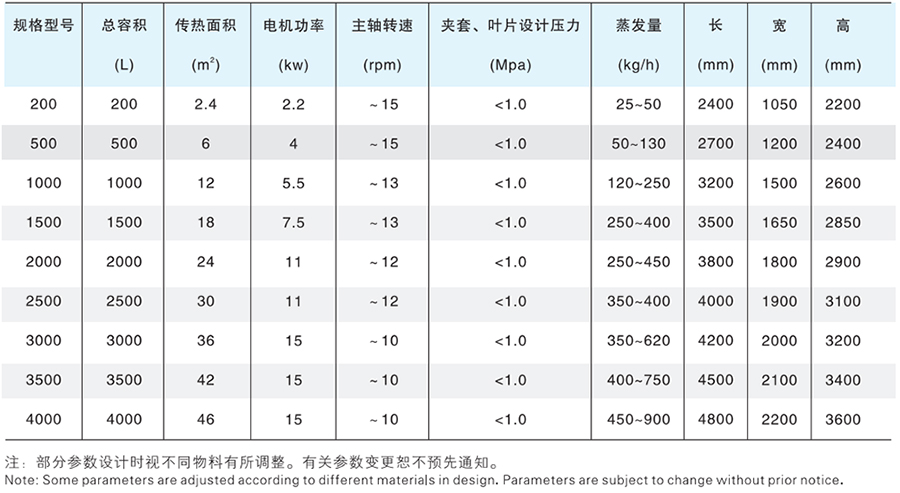
Technical specifications: