






Statistics indicate that the secondary iron resources accompanying the production process in China's metallurgical industry exceed ten million tons annually. These secondary iron resources are primarily generated during the smelting processes in blast furnaces, converters, and electric arc furnaces, including dry and wet dust removal from flue gas and solid waste from wastewater treatment, with iron content generally ranging from 30% to 70%. This includes materials such as sintering dust, pelletizing dust, blast furnace slag and mud, steelmaking dust, electric arc furnace dust removal, converter sludge, raw material yard dust collection, and slag field dust collection. These dusts have high iron content and fine particles, with wet dust collection resulting in a higher moisture content, reaching 20-50%. In steel production, a large amount of iron-containing dust is produced, with domestic metallurgical enterprises averaging around 100 kg/t of steel.
Efficiently recovering and utilizing the effective elements from metallurgical sludge, achieving the recycling of all iron-containing sludge resources, is undoubtedly a crucial aspect of developing a circular economy in the steel industry. According to statistics, iron-containing dust and sludge produced by large integrated steel enterprises in our country account for about 10% of steel production. Among them, the dust output from the sintering process constitutes 2-4% of the sintered ore volume, the dust output from the ironmaking process is approximately 3-4% of the iron water output, and the dust output from the steelmaking process is about 3-4% of steel production. The average iron content of iron-containing sludge in the sintering, ironmaking, steelmaking, and rolling areas is 55%, 43%, 48%, and 70% respectively. Additionally, there are also some useful substances such as calcium oxide and carbon, which possess considerable recyclable value.
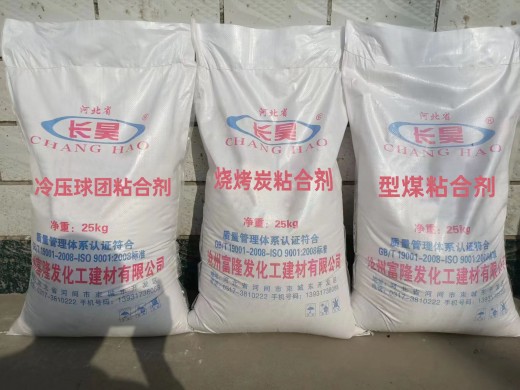
The Status of Cold-Bonded Pellet Technology and Binder Development: As early as the 1950s and 1960s, cold-bonded pellets were industrially applied in blast furnace smelting abroad. In recent years, the cold-bonded pellet method has been partially applied in China's metallurgical industry, mainly using bentonite, cement, tar, starch, and polyvinyl alcohol as pellet binders. These binders have serious quality degradation, poor resistance to high temperatures, and increased powdering rates, affecting the quality of the pellet ore. Using tar as a pellet binder results in good pellet properties, but the production process is complex and yields are low.
Cold-Bonded Pellet Production Technology: The powder materials such as ore fines and dedusted ash are mixed with binder in proportion, then uniformly blended. The mixture is formed into cold-bonded pellets through a pellet press, followed by drying in an oven or air-drying, resulting in pellets with uniform composition, particle size, and high strength. Process flow: raw material ratio - measurement - mixing - adding binder - mixing - shaping - drying - finished product.