


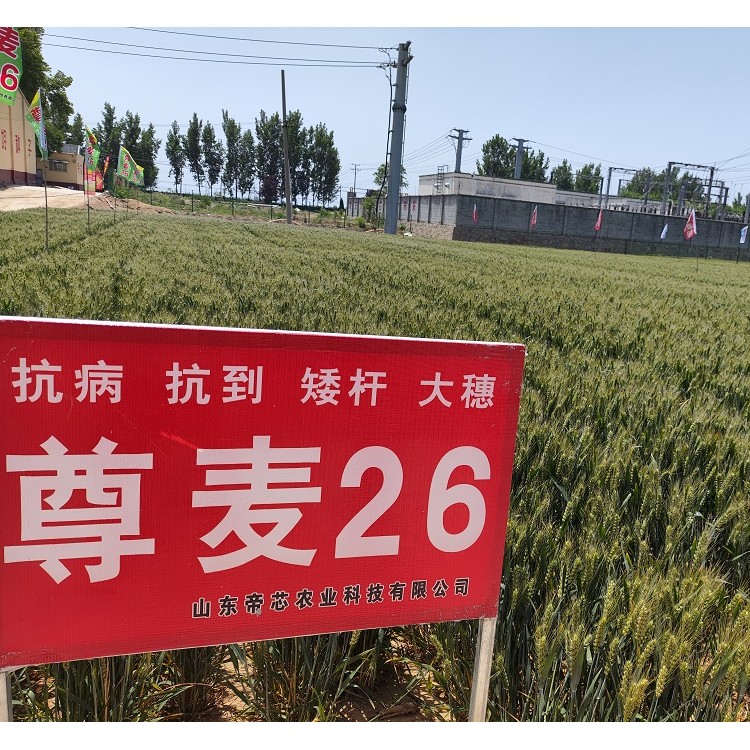

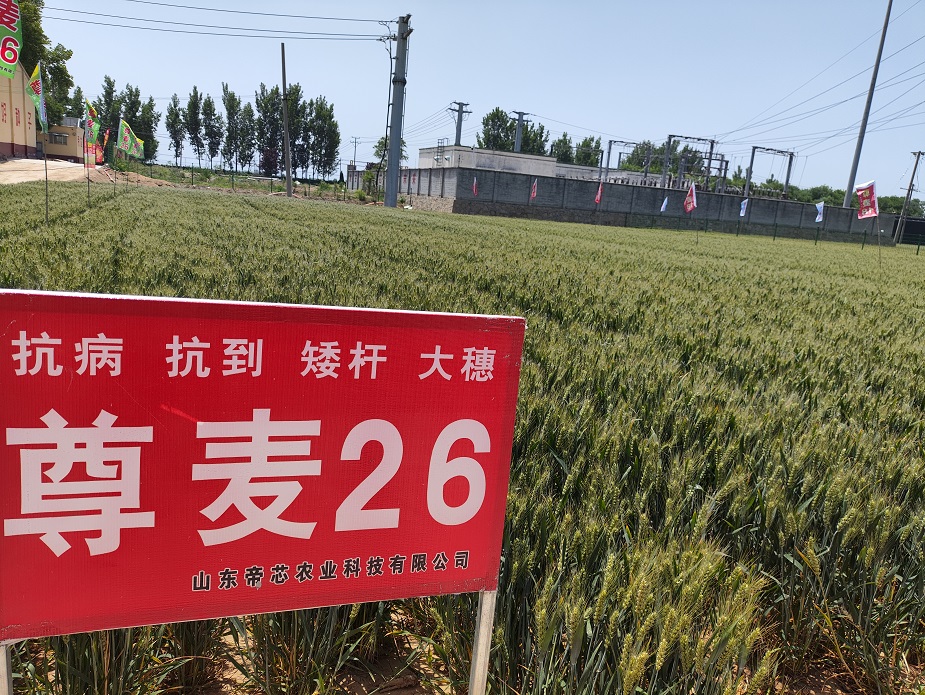
National approved wheat20230152
Variety OriginYG2413/Ji Mai 22
Feature characteristics:
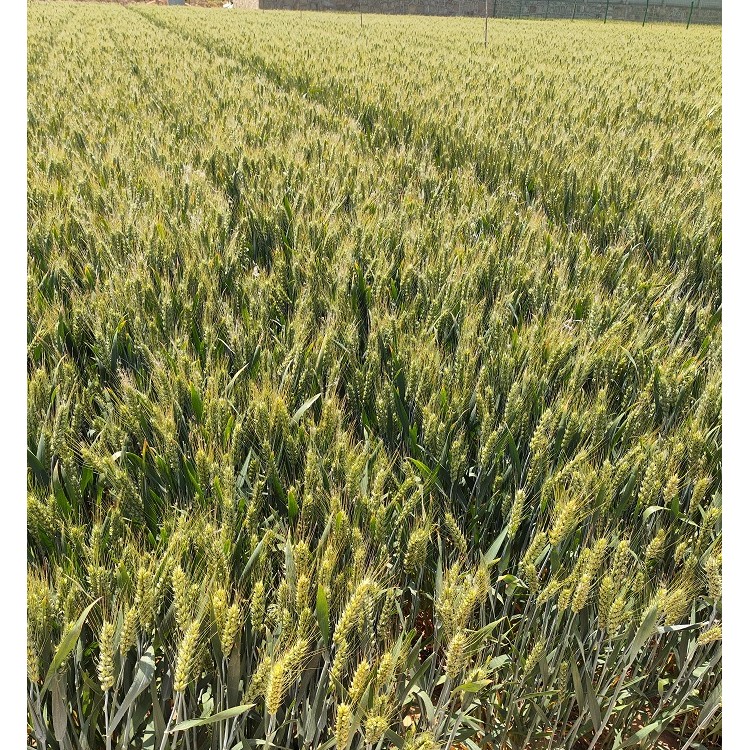
Semidormant, full growth period236.8 days, comparable to the对照品种Ji Mai 22's maturity period, seedlings semi-prostrate, leaves long and slender, deep green in color, strong tillering ability. Plant height 72.9 cm (national production test data).
Loose plant type, strong lodging resistance, good uniformity, tidy ear layer, and good maturity appearance. Rectangular ear, long awn, white.
Grain, hard kernels, moderate fullness. Plants per acreNumbers42.9 grains per ear, 34.4 kernels per ear, 42.9 grams per thousand kernels
Grams. Good frost resistance. Quality inspection: Kernels capacityPlease provide the Chinese content to be translated.804 g/L, 794 g/L, protein content 14.04%, 13.50%, wet gluten content 30.7%, 28.8%, stability time 8.5 min, 10.1 min, water absorption rate 59.0%, 60.0%, ultimate tensile strength 477 Rm.E.U., 578 Rm.E.U., tensile area 94 cm²、102 square centimeters. Participated in the regional trial of the North Water Group in the Huang-Huai Winter Wheat Area in the 2019-2020 season, quality indicators meet the standard for medium-strong gluten wheat; participated in the regional trial of the North Water Group in the Huang-Huai Winter Wheat Area in the 2020-2021 season, quality indicators meet the standard for medium-strong gluten wheat.
Production Performance:
In the 2019-2020 season, participated in the regional trial in the northern watered area of the Huanghuai winter wheat region, with an average yield of 558.0 kg per mu, an increase of 1.95% over Jiming 22. In the 2020-2021 season, the trial continued, achieving an average yield of 592.5 kg per mu, a 5.53% increase over Jiming 22. In the 2021-2022 production trial, the average yield was 647.2 kg per mu, a 5.56% increase over Jiming 22.
Cultivation Techniques Key Points:
Ideal Sowing PeriodMid-October to late October, an appropriate basic seedling count of 180,000 to 220,000 per mu, pay attention to the prevention and control of diseases and pests such as赤霉病 (red mold), rust, and aphids.
Suitable growing areas:
Shandong Province, the entire southern part of Hebei Province's Baoding and Cangzhou cities, suitable for the winter wheat water land group in the northern part of the Huanghuai region.
Grown in basins of regions south of the Ministry and in Yuncheng and Linfen cities, Shanxi Province.
