

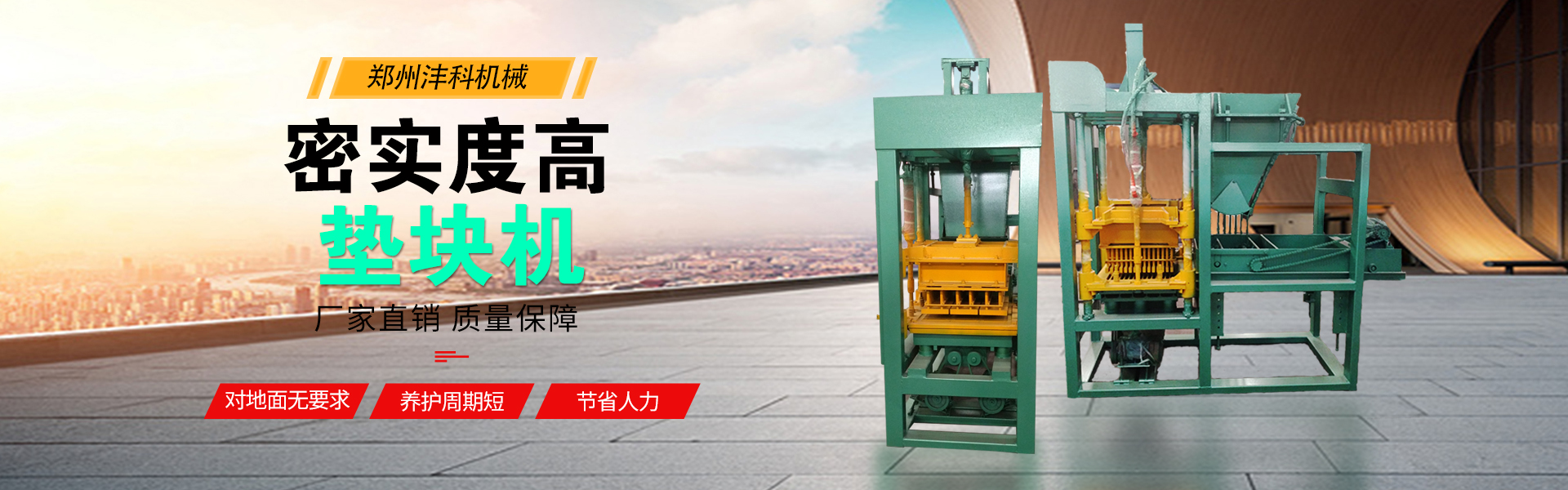

Cement Block Machine Installation Instructions:
1. Inspect for any damage or deformation to the cement block machine during transportation (especially pay attention to the hydraulic pipeline).
Inspect the fasteners on the main parts of the concrete block machine for any signs of loosening.
3. Inspect the decelerator. Ensure that the oil cylinders and lubrication points on the vibration table are properly filled and the oil quantity is appropriate.
4. Prior to trial operation, the cement block machine is properly lubricated for the sliding parts of all moving components. If the machine needs to be disassembled for transportation, it can be divided into the molding unit, feeding board unit, feeding unit, brick discharge unit, stacking unit, and electrical control unit, etc. During installation, the components should be assembled in accordance with the assembly relationship.
Cement Block Machine Operation Precautions:
One, pay attention to the working current of the cement block machine to ensure it is normal, the motor temperature rise should not exceed 60℃, the impact crusher's large bearing temperature should not exceed 75℃, and the sparking from the motor's slip ring should be minimal.
First, start the second rotor, and then initiate the first rotor once the current stabilizes.
After the counter-attack brake is activated, observe if the current remains stable under no-load conditions and if the machine vibrates. If vibration occurs, stop the machine immediately to investigate the cause, tighten the base screws appropriately to eliminate the vibration, and ensure that the base screws are not damaged by vibration during operation.
When the cement block machine experiences an overcurrent or for other reasons triggers the circuit breaker, the speed decreases and the sound changes tone. It is essential to immediately shut off the board feeding machine and stop the feeding to prevent damage to the machinery caused by the low speed stone material.
