
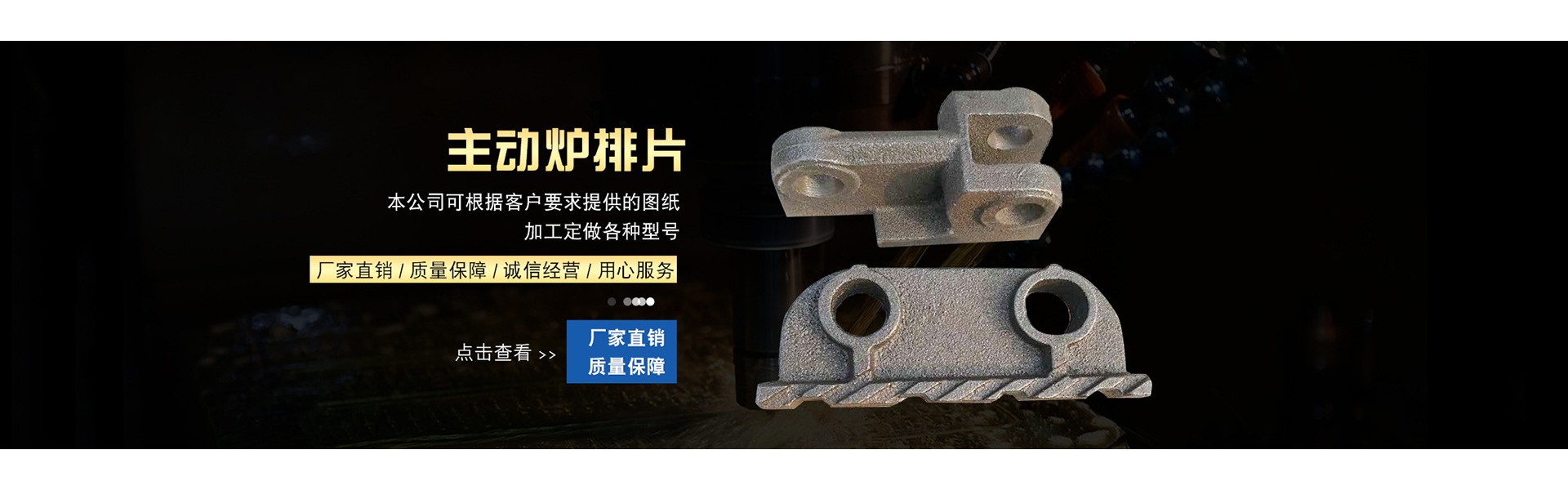
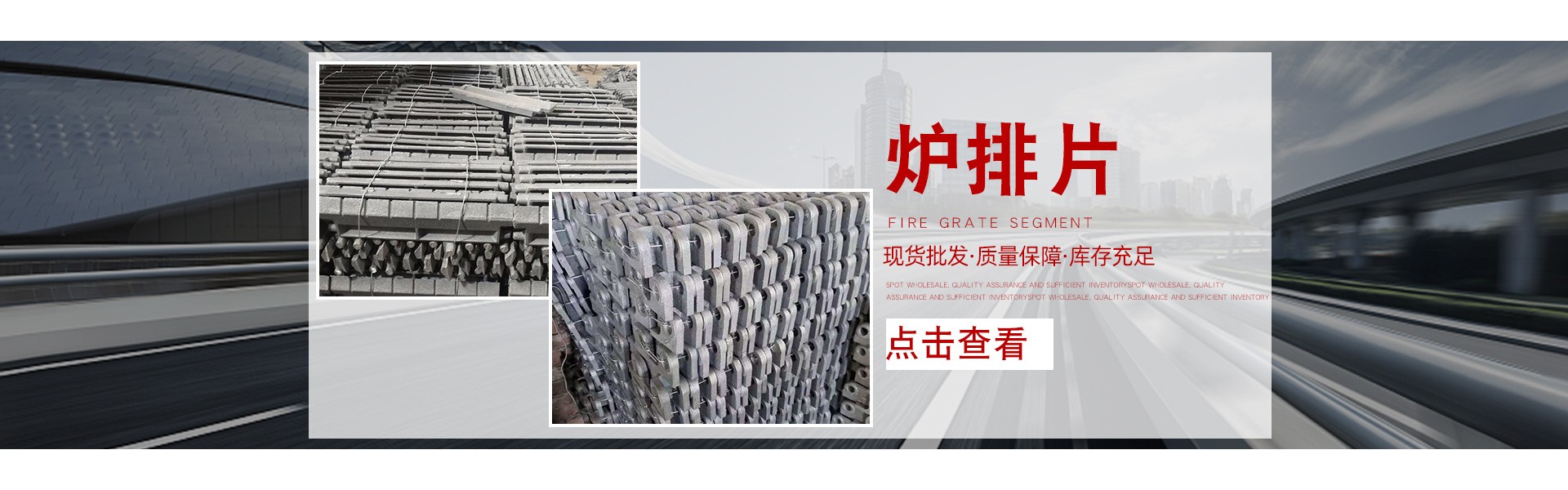


A component in boilers or industrial furnaces that stacks solid fuel and ensures its efficient combustion. The entire grate system primarily consists of two parts: the frame and the grate plates.
Grate bars are typically made of cast iron, assembled with necessary ventilation gaps between the bars to ensure proper air flow. Often, a regulated ventilation chamber with adjustable airflow is also set beneath the grate. Additionally, the residence time of flue gases within the furnace should be sufficient to ensure complete combustion of the gaseous combustible materials. When all other conditions remain constant, the longer the residence time, the better the combustion efficiency. This allows air to enter the fuel layer through the gaps, burn off the remaining ash and slag, which can then be manually or mechanically removed.
Boiler grate manufacturers produce fixed and movable grates, reciprocating, vibrating, and underfeeding types. The grate plates are typically linear or plate-like, fixed in place by a surrounding frame at the bottom of the furnace or combustion chamber. Coal addition and slag removal can only be done manually at regular intervals on such grates. There are two types: chain conveyor and chain grate. Therefore, the duration of the stay should be determined based on specific circumstances. The length of time waste remains in the furnace varies with the type of waste. The grate surface of a chain conveyor grate is the chain itself; for a chain grate, the grate plates are fixed to a bracket or support above the chain. The boiler operator must adjust the stay time according to the dryness, type, and incineration effect of the waste to ensure stable combustion and complete incineration.
Chain-link and chain-link grate systems are both driven by sprockets, causing the grate bars to slowly advance.
Composed of a fixed grate assembly and a reciprocating moving grate assembly, available in both stepped and horizontal configurations. The prolonged停留 time of the grate levels affects the waste processing capacity, while too short a time impacts the waste incineration efficiency. After a year and a half of production experience, the conclusion is: To ensure thorough drying of the waste within the furnace, the reciprocating motion of the moving grate gradually pushes the coal bed towards the rear for combustion, thus making this grate more adaptable to various types of coal.

