

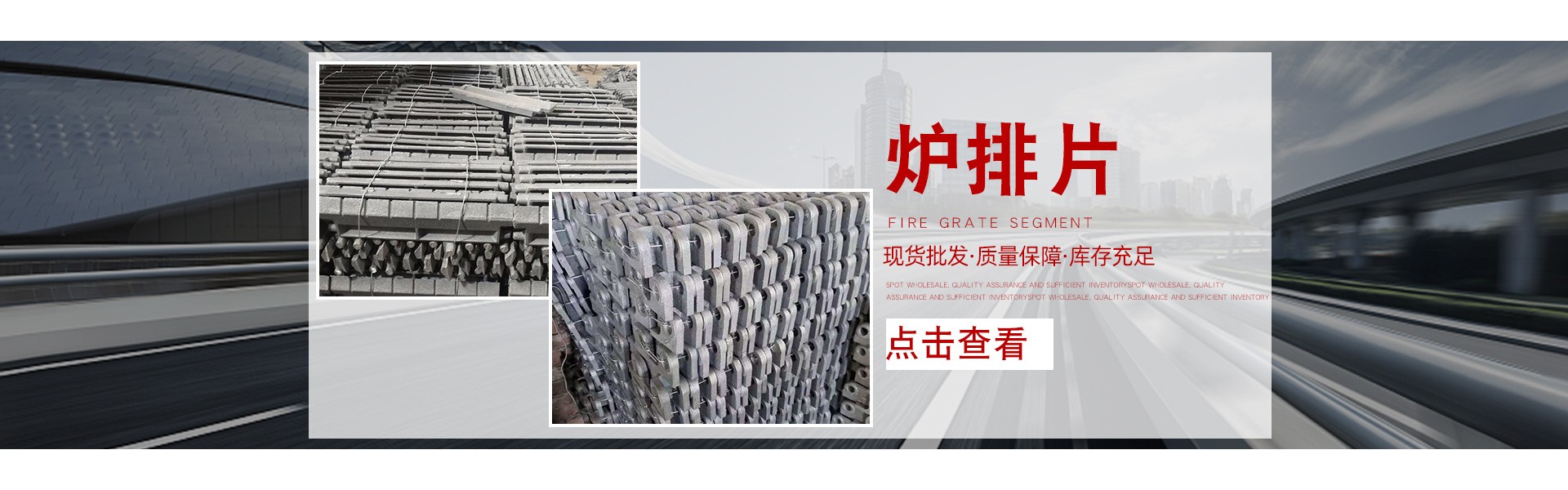


The advantages of the chain grate are: lower metal consumption compared to other chain grates, a simple structure, and relatively convenient manufacturing, installation, and operation. The disadvantages include: a large number of round steel connections are required to ensure the quality of processing and assembly; otherwise, it is prone to breakage, and inspection and replacement are not convenient; after long-term operation, due to severe wear of the Daxi柏, the gap between the Daxi地 increases, leading to increased coal leakage and loss.
The grate resembles a belt conveyor. Coal falls from the coal hopper onto the grate under its own weight, and as the grate slowly moves from front to back, the height of the coal gate is adjusted, controlling the thickness of the coal layer. The coal inside the furnace is heated by radiation, sequentially completing preheating, drying, ignition, combustion, and combustion until exhausted. The ash moves with the grate to the back and falls into the ash hopper for discharge. There are many types of grates, generally categorized into three structural types: chain belt, beam, and scale grates.
The above introduction details the structure and function of the boiler chain grate. Due to the poor ignition conditions of the chain grate, coal ignition primarily relies on the radiant heat from the furnace flame and arch. Therefore, coal is first ignited, followed by a gradual downward combustion. Generally, once coal enters the furnace, as the grate moves from front to back, it primarily undergoes residual heat and drying until it ignites and burns.
News Center Co., Ltd.
