




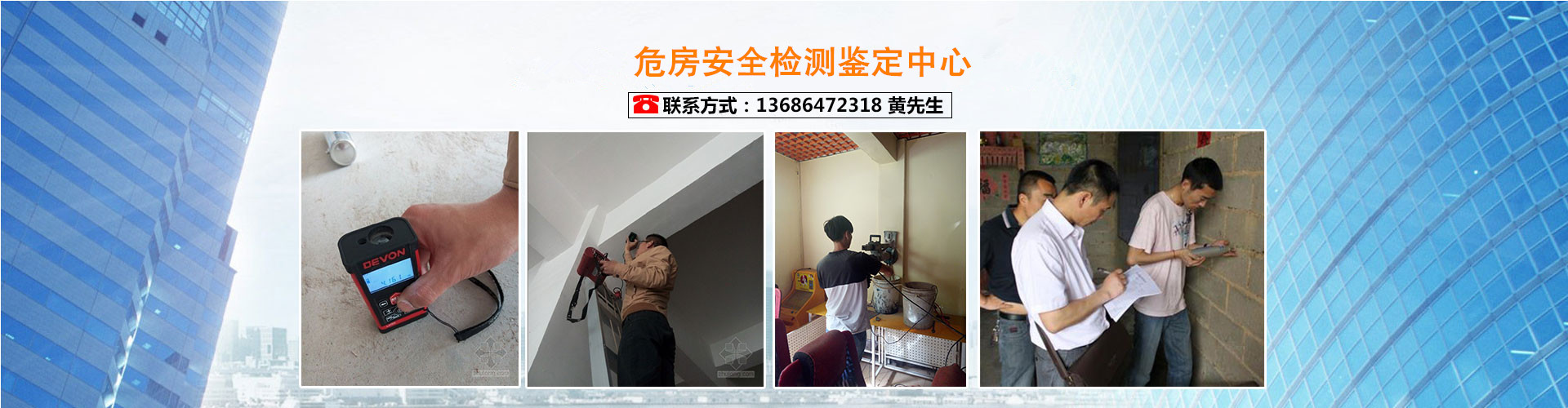


Longgang District Residential Safety Inspection Unit
Our company is an integrated unit specializing in building engineering inspection, certification, and consultation, encompassing design, construction, and testing. We maintain close technical cooperation and support with the industry. We offer a range of services including house safety inspections, crack inspections, post-disaster house inspections, safety assessments of dangerous buildings, factory load-bearing inspections, factory acceptance inspections, factory reinforcement design and construction, steel structure safety inspections and certifications, school and kindergarten building safety inspections, billboard safety inspections, and hotel and inn inspections.
Building Safety Assessment: For commercial establishments, hotels, and other public buildings, a safety assessment of the structures must be conducted prior to obtaining a permit. For buildings adjacent to construction sites, a safety assessment is necessary before and after the construction to determine their safety levels, assess damage extent, and analyze causes of damage. When temporary structures require an extension of their usage period, a safety assessment should be carried out to provide recommendations for the subsequent usage duration.

Many old houses are constructed of brick or wood. After more than 30 years of use, these houses may develop cracks, settlement, or tilting, but this does not necessarily mean they are unsafe. A house inspection is required to confirm. Due to age, initial irregularities in paperwork, and complex issues, the absence or incomplete ownership proof is a common problem. For houses with diverse and complex issues, such as illegal constructions, Shiwai advises homeowners to seek solutions from the relevant departments one by one. Only houses with registered ownership proof can apply for an inspection. For rural housing without property certificates due to the lack of early surveying, homeowners can first apply for surveying at the local housing authority, followed by property registration proof, which can also serve as ownership proof for applying for a house safety inspection. The house safety grades include A, B, C, and D. It is known that A and B grade houses meet residential conditions. Houses deemed D-grade unsafe should be discontinued for use. The owner should bring the property ownership certificate, (and any other specific documents), and the unsafe house inspection report to the housing authority or local branch, to apply for demolition and reconstruction approval, where staff will inform of the next steps. For C-grade unsafe houses, the inspection body recommends reinforcement. Homeowners can bring the property ownership certificate, (and any other specific documents), and the unsafe house inspection report, and follow the handling suggestions provided by the inspection body.
