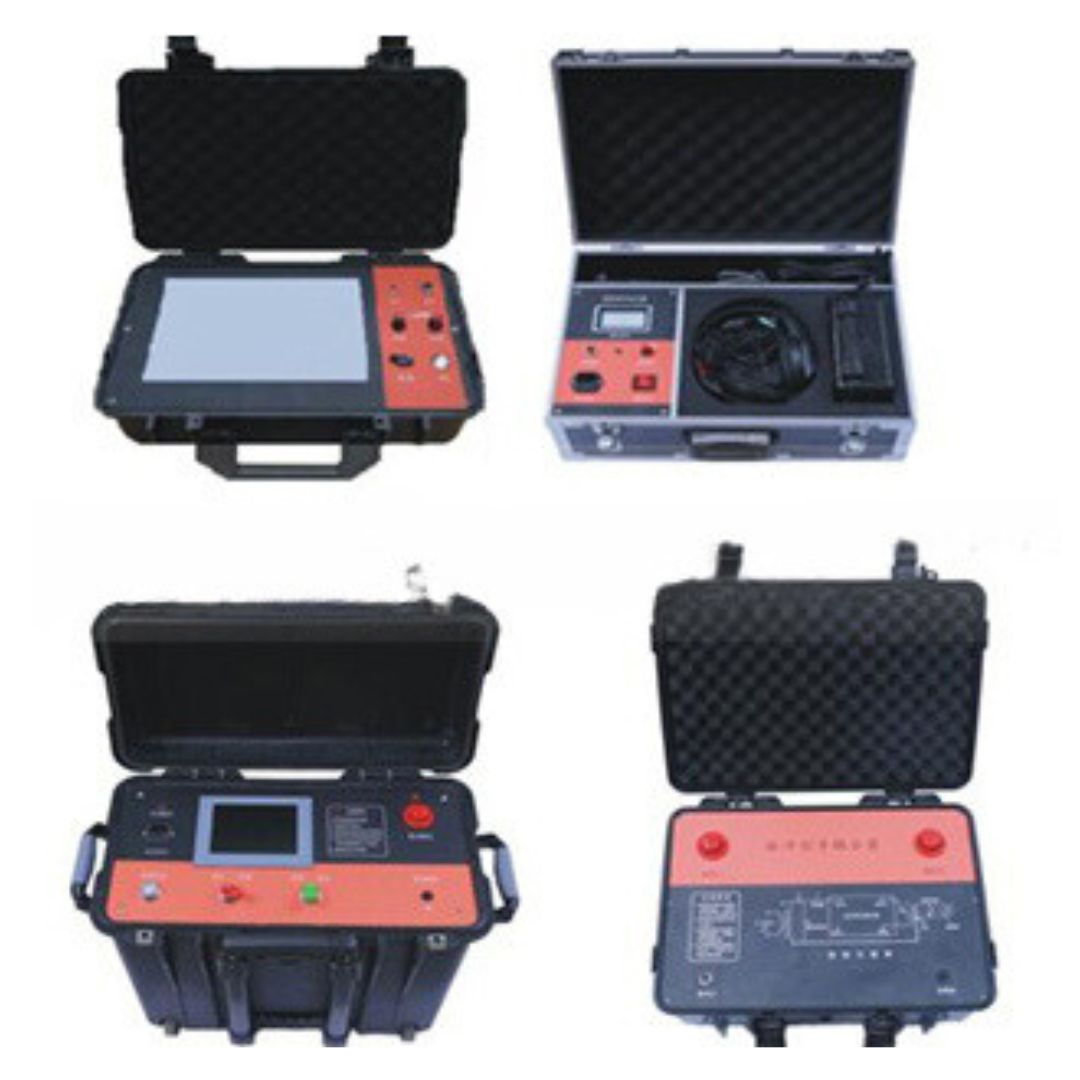


The working principle of the cable fault tester mainly includes time-domain reflection, frequency-domain analysis, cable impedance measurement, and digital signal processing. 1
Time Domain Reflectometry (TDR): This method leverages the varying propagation speed of electromagnetic waves within cables, where reflections occur at fault points. By measuring the time and amplitude of the reflected waves, the fault location can be determined. When under-voltage faults in the cable (such as broken wires, shorts, or poor contacts) occur, the reflected waves change, enabling the fault location to be pinpointed.
Frequency Domain Analysis: Based on the electromagnetic wave characteristics of fault points in the frequency domain, analyzing the spectral properties of the signal can identify fault types within the cable, such as conductor faults and dielectric breakdown, and further locate the fault position.
Cable Impedance Measurement: Determines fault location by measuring the cable's impedance. Near the fault point, the cable's impedance will change, and by measuring the resistance or reactance, the approximate location of the fault can be ascertained.
Digital Signal Processing: Involves processing and analyzing measurement signals, which enhances measurement accuracy and resolution by collecting, sampling, and processing the signals. Additionally, digital signal processing can employ algorithms and models to identify specific fault types and analyze their causes.
These principles and methods enable the cable fault tester to effectively detect, locate, and diagnose various faults in cable lines, ensuring the normal operation of the cable system.