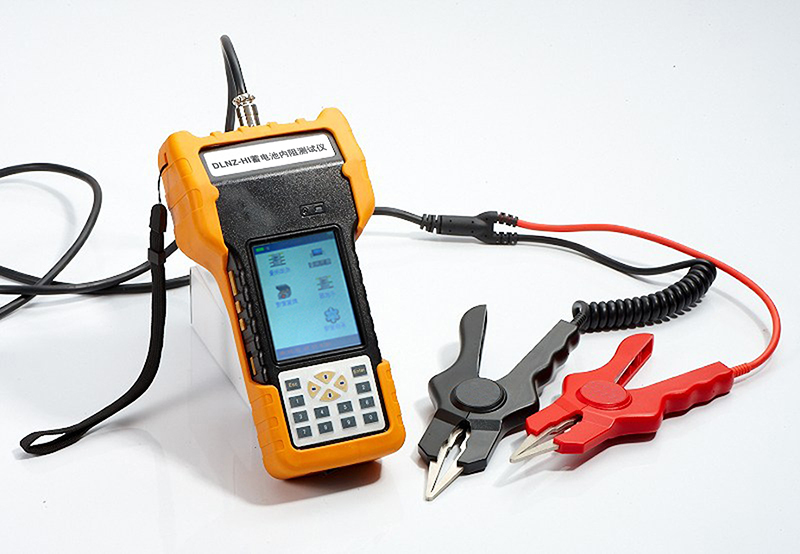

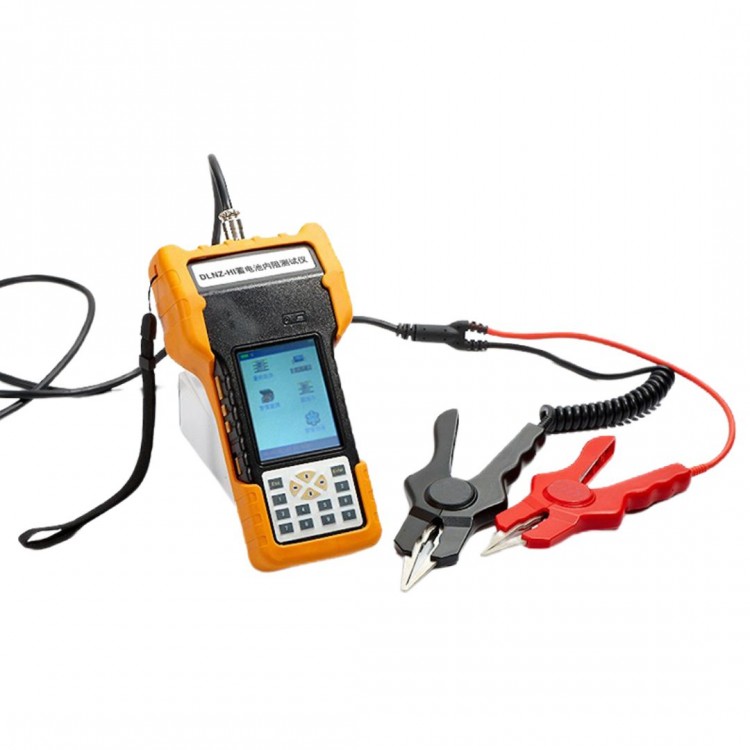

The working principle of the battery internal resistance tester is primarily to determine the battery's capacity and technical condition by measuring its terminal voltage and internal resistance value.
Battery Internal Resistance Tester measures the terminal voltage and internal resistance of batteries using the AC injection method, thereby determining the quality of battery capacity and technical condition. This tester can perform group measurements on batteries as well as individual cell measurements. Its working principle is based on the battery impedance model, obtaining the internal resistance value by applying a 1KHz AC signal and measuring its AC voltage drop. This testing method effectively identifies underperforming batteries and provides maintenance suggestions, aiding in tracking the degradation trend of batteries.
Additionally, the battery internal resistance tester is portable, enabling online measurement of critical parameters such as battery voltage and internal resistance. By integrating with computers and specialized battery data management software, it generates test reports for further analysis of the battery's health and state of charge. This tester is widely used in various fields including power, communication, transportation, and finance for battery quality inspection and maintenance.