



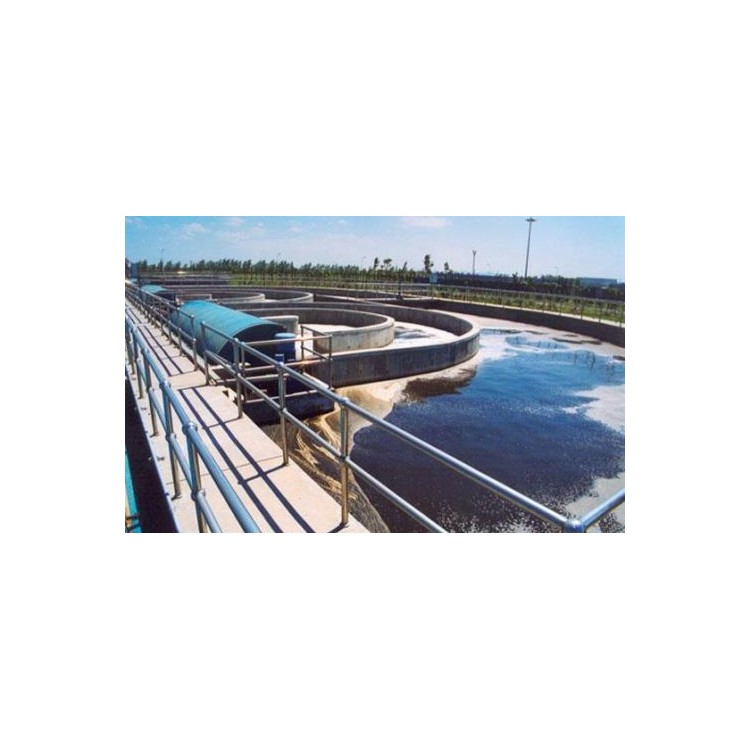
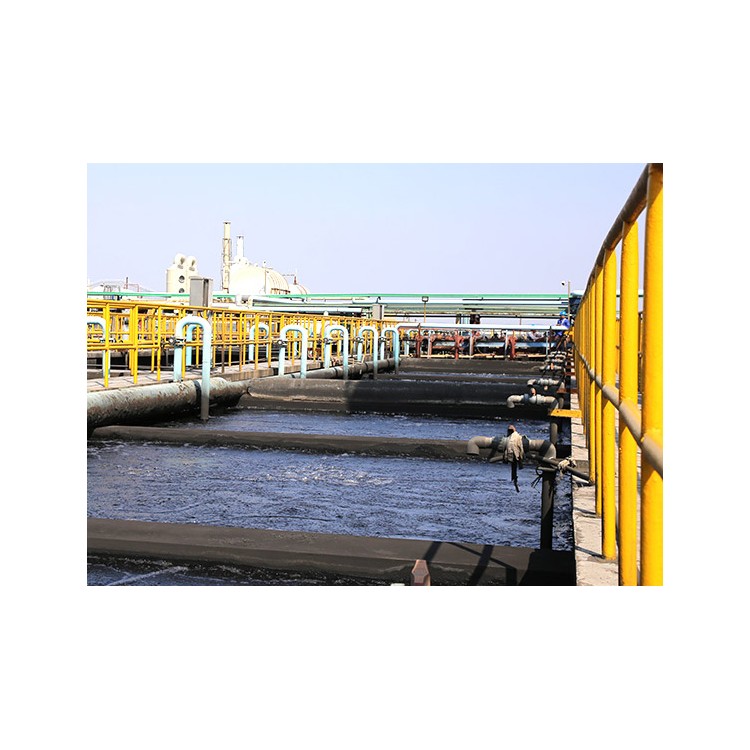
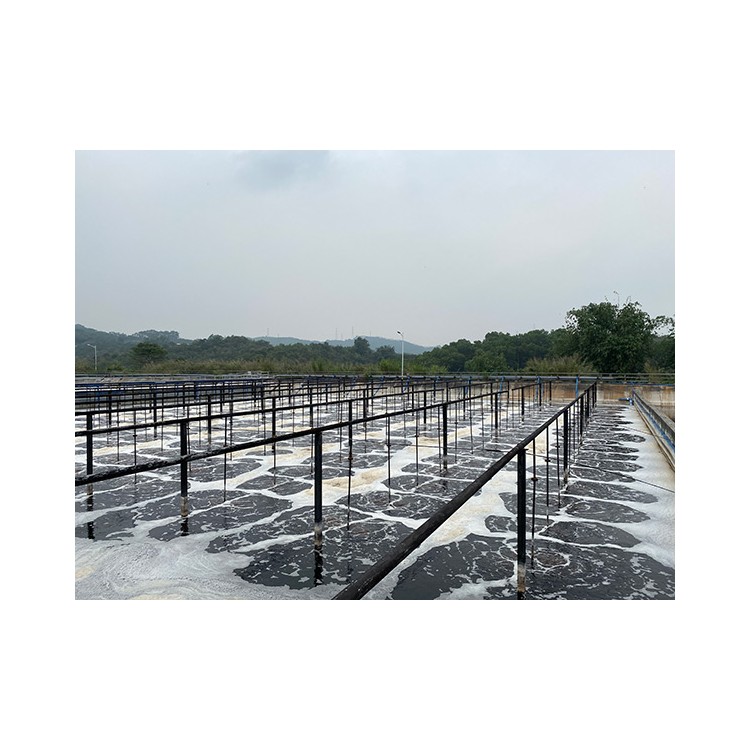
Waste leachate refers to a high-concentration wastewater formed from the moisture contained in the waste itself at the landfill, as well as rain and snowwater entering the landfill and other water sources. It is derived by subtracting the saturation water-holding capacity of the waste and the cover layer, and after passing through the waste layer and the cover layer.
The leachate from waste has a highly complex water quality, typically containing high concentrations of organic matter, heavy metal salts, SS, and ammonia nitrogen. It not only contaminates soil and surface water sources but also groundwater. There have been many studies on the removal of CODCr from leachate, generally employing biological treatment methods. However, the treatment outcomes are not very satisfactory, and the operating costs are relatively high.
Features
Anaerobic ABR: Designed with a rational and effective program to address the characteristic of increased COD concentration in late-stage leachate.
BAF: Under the new standards, increased pressure on total nitrogen compliance; the BAF's ammonia nitrogen and total nitrogen removal performance is superior to other equipment.
Anoxic Reactor Tank: Further total nitrogen removal is possible.
Ultrafiltration Membrane Bioreactor: Effectively increases sludge concentration in the biochemical unit, removes organic matter, ammonia nitrogen, total nitrogen, and other pollution indicators, serving as a pretreatment process before subsequent nanofiltration membrane operation.
Reverse Osmosis: Retains organic matter and heavy metal ions while preventing the accumulation of heavy metals within the system.
Coagulation and Sedimentation: Promptly treat the concentrated water to prevent the accumulation of organic matter within the system during circulation.
Craftsmanship Features
1. Utilizing mature technology to meet new standard requirements
2. Nitrogen removal (ammonium nitrogen and total nitrogen) is one of its major features.
3. Small land area, cost-effective investment, and low operational costs
4. Short construction period
5. Easy maintenance and management
6. Streamlined the cumbersome task of construction drawing design
7. Detachable and transportable
Hazards and Handling
Most cities in our country use sanitary landfilling as the primary method for waste disposal, and this will continue to be the basic approach for urban domestic waste management in the coming period. As a commonly used waste disposal method, sanitary landfilling also presents numerous pollution issues, particularly the large amount of leachate produced during the landfilling process. Improper handling of this leachate can severely contaminate surrounding water bodies and soil.
Pollution characteristics
Leachate is wastewater that seeps out during the process of waste disposal and landfilling due to fermentation, rainwater flushing, and the infiltration of surface water and groundwater. The main sources consist of four aspects: the inherent water content of the waste, water produced by the biochemical reactions of the waste, the reverse osmosis of groundwater, and atmospheric precipitation. Among them, atmospheric precipitation is characterized by its concentration, short duration, and recurrence, accounting for a large portion of the total leachate volume. Leachate is a complex, high-concentration organic wastewater, whose properties depend on factors such as the composition of the waste, the particle size of the waste, the degree of compaction, the local climate, hydrological conditions, and the duration of landfilling. Generally, it has the following characteristics:
1.1 The water quality is complex and highly hazardous. Studies have shown that using GC-MS technology to analyze the composition of organic pollutants in leachate from garbage, 63 main organic pollutants were detected, with 34 having a reliability above 60%. Among them, there are 6 alkenes, 19 carboxylic acids, 5 esters, 10 alcohols and phenols, 10 aldehydes and ketones, 7 amides, 1 aromatic hydrocarbon, and 5 others. One has been confirmed as a carcinogen, 4 are cocarcinogens or co-promoters of carcinogenesis, 1 is a mutagen, and 6 are listed on China's "blacklist" of priority pollutants in the environment.
1.2 High concentrations of CODcr and BOD5. The concentrations of CODcr and BOD5 in the leachate can reach up to 90,000 mg/L and 38,000 mg/L, respectively, even higher. 1.3 High ammonia nitrogen content, which increases with the extension of landfilling time, up to 1,700 mg/L. Nitrogen in the leachate mostly exists in the form of ammonia nitrogen, accounting for about 40%-50% of TNK.
1.3 Significant Water Quality Variations. Based on the age of the landfill, leachate is categorized into two types: one is the young leachate from landfills less than 5 years old, characterized by high CODcr and BOD5 concentrations and strong biodegradability; the other is the old leachate from landfills over 5 years old. As fresh waste gradually turns into decomposed waste, its pH value approaches neutral, and CODcr and BOD5 concentrations decrease, with a reduced BOD5/CODcr ratio and increased ammonia nitrogen concentration.
1.5 High Metal Content. The leachate contains more than a dozen metal ions, with iron and zinc being higher during the acidic fermentation stage, with iron concentrations reaching about 2000 mg/L; zinc concentrations about 130 mg/L; lead concentrations about 12.3 mg/L; and calcium concentrations even reaching 4300 mg/L [4].
1.6 The nutrient element ratio of microorganisms in the leachate is imbalanced, primarily due to an imbalance in the C:N:P ratio. In general, the BOD5:P ratio in typical leachate is usually greater than 300.
Impact on the Environment
An investigation into the leachate treatment at a landfill site revealed that, to date, approximately 800,000 tons of leachate have been processed. Meanwhile, about 320,000 tons of leachate overflowed from the wastewater lagoon directly into the receiving water body, and another 96,000 tons were stored within the lagoon. Chemical analysis at the wastewater lagoon outlet showed an average CODcr of 2800 mg/l, BOD5 of 1750 mg/l, ammonia nitrogen of 708 mg/l, with an average total nitrogen concentration of 700 mg/l and a colorimetric average of 251 degrees. Metal content was low. Organic matter analysis via chromato-mass spectrometry indicated carbon content in the leachate could reach 12, primarily consisting of naphthenes, esters, carboxylic acids, phenols, and sulfur. After treatment, the CODcr value of the water discharged into the receiving water body was 283 mg/l, still exceeding the standard by 1.83 times. The BOD5 value was 108 mg/l, exceeding the standard by 2.6 times, with an NH3-N value of 190 mg/l, exceeding the standard by 11.67 times, total nitrogen of 679 mg/l, and a colorimetric value of 133 degrees, containing a large amount of organic matter. This indicated that the wastewater treatment process at the site had not yet met the standards for effluent discharge. Consequently, the water quality of the primary receiving water body at the landfill has significantly deteriorated, which has garnered high attention from local authorities.
Process Improvement
Regarding the issues at this landfill, the following improvement suggestions for the wastewater treatment facilities are proposed:
In selecting processing techniques, it's essential to shift from old thinking patterns. Abolish processing schemes that fail to meet processing standards and adopt energy-saving MVC steam-pressure evaporation treatment technology.
(2) Enhance the operational management of oxidation ponds. Hope this improvement will ensure that the treated wastewater meets the standards for discharge, and effectively control the pollution caused by leachate to the surrounding environment.
(3) Implementing an ion exchange process at the terminal as a security filtration system can effectively prevent fluctuations in ammonia nitrogen levels.
Waste Leachate Treatment Manufacturer
Zhongke Guosheng is a team jointly established by Guangzhou Zhongkang Environmental Protection and the Chinese Academy of Sciences, specializing in the treatment of high-concentration, high-hazard industrial wastewater. It is applied in the treatment of high-concentration wastewater from petrochemicals, food breeding, surface treatment, dyeing and papermaking, garbage leachate, and hazardous waste industry organic solvents. It offers more choices for wastewater solutions, significantly reducing costs for owners and contributing to green environmental protection and energy conservation.
