



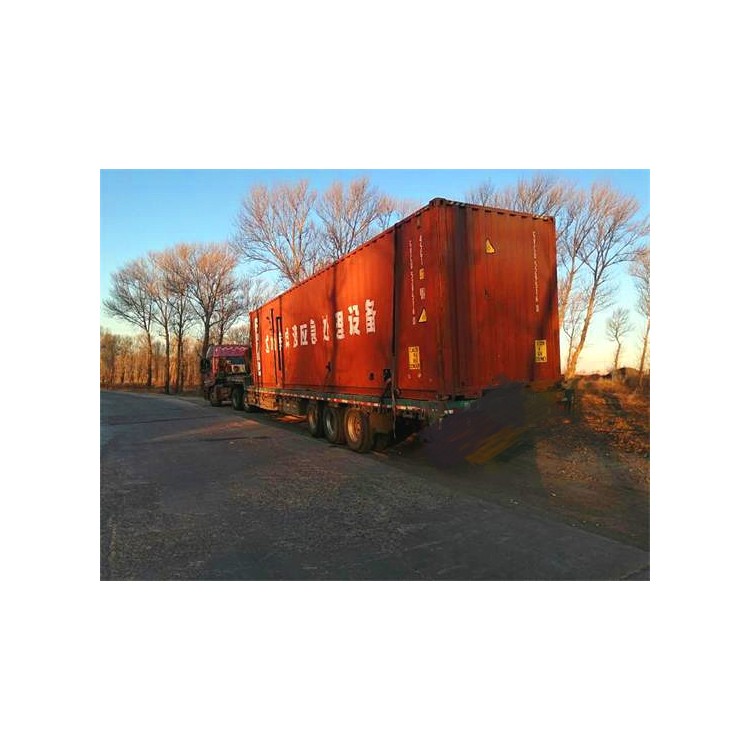

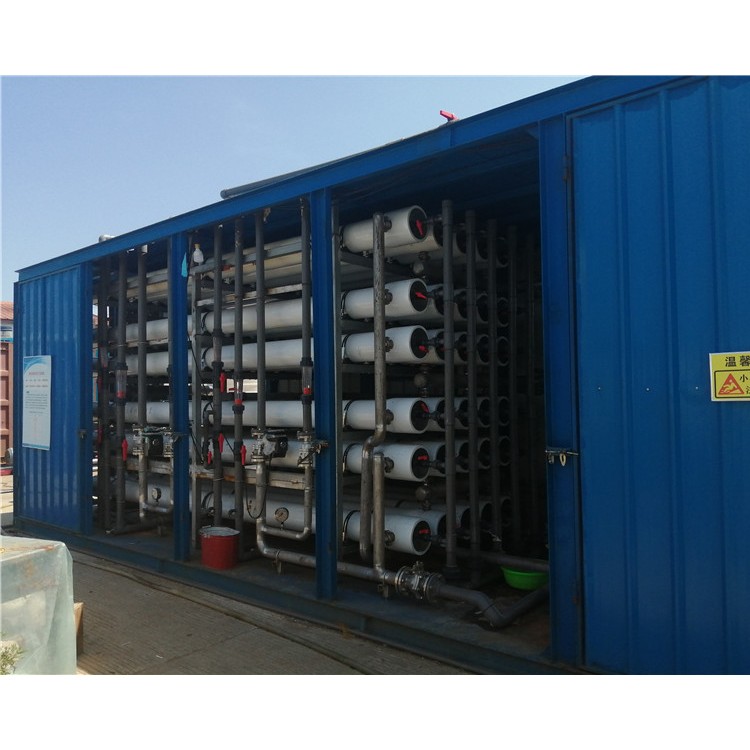
Mobile leachate treatment equipment analyzes the focus on waste leachate treatment. During the treatment process, waste leachate contains excessive harmful substances and is difficult to degrade. How to utilize advanced waste leachate treatment technology to improve the treatment rate, conserve energy, and promote resource utilization, the Zhongke Guosheng manufacturer first needs to summarize the existing problems in waste leachate treatment and address these issues accordingly.
1. Nitrogen Removal Issue
Ammonia-nitrogen content is known to be a characteristic of landfill leachate, especially in aging landfills that have been in use for over 10 years, where the ammonia-nitrogen levels typically reach 3,000 to 4,000 mg/L. In one landfill, the measured ammonia-nitrogen level exceeded 5,000 mg/L. We've likely also heard of many leachate treatment projects experiencing total nitrogen in effluent exceeding the standard.
Section II: Energy Consumption Reduction
Nowadays, society is highly developed, but resources are increasingly scarce. Mobile leachate treatment equipment has very high energy consumption in leachate treatment projects, and reducing the energy consumption of leachate treatment must be implemented in earnest.
Section 3: Secondary Pollution
Some by-products from leachate treatment processes, if not properly disposed of, can cause severe secondary pollution. For example, in the ammonia stripping process, sulfuric acid is used to absorb ammonia gas, and the disposal of the resulting ammonium sulfate poses a challenge; improper handling can lead to secondary pollution. Other by-products from evaporation treatment processes and direct membrane filtration processes contain not only a large amount of salt and heavy metals but also high concentrations of organic pollutants. It is essential to properly dispose of these residuals in engineering, and they must not be randomly stacked or discharged.
In response to the existing issues in waste leachate treatment, we must adopt targeted solutions to reduce energy consumption in waste leachate treatment, avoid by-products in the treatment process, and handle them rationally to prevent secondary pollution. Nanjing Wande Environmental Protection Co., Ltd. has been engaged in the field of waste leachate treatment, conducting further research and innovation based on traditional waste leachate treatment processes, designing reasonable waste leachate treatment methods, and preparing to address these issues effectively.
What are the main advantages of waste leachate treatment equipment?
Traditional waste leachate treatment equipment has many drawbacks, but with the continuous innovation of science and technology, waste leachate treatment technology is constantly improving, and the application of DTRO membrane separation technology has effectively treated waste leachate. What are the main advantages of waste leachate treatment equipment?
1. Stable and compliant water output
Hrle technology boasts a high rate of pollutant retention, ensuring stable compliance with discharge standards throughout the initial, intermediate, and final stages of leachate, particularly for older landfill sites in the mid to late stages.
2. Long-lasting film lifespan, easy maintenance
(1) This module features a 3mm wide open channel and a unique guide plate with protrusions. The liquid material forms a turbulent state within the module. The waste leachate treatment equipment of this invention significantly reduces membrane surface contamination, fouling, and concentration polarization, thereby reducing membrane fouling and extending the service life of the reverse osmosis membrane. In actual engineering applications, the service life of the feed solution can reach 5 years, which is unprecedented for a typical reverse osmosis treatment system.
(2) Any individual component within the assembly can be replaced separately.
3. Low investment and operational costs
The waste leachate treatment equipment features a short process flow, low energy consumption, and low investment and operating costs.
High degree of automation, easy to operate
The system is fully automated. The entire system is equipped with a comprehensive monitoring system. The PLC can automatically adjust according to sensor parameters and promptly send out alarm signals to protect the system. No high experience is required for the operator.
